Doing It Yourself
Oakland sits 12 miles from our shop in Bowling Green
And that drive changes how a spring call here actually works. It's not a same-block job where a tech can swing back twice in an afternoon if the first part doesn't fit. That means getting the spring size and winding direction right on the first trip matters more here than it does on a job five minutes from the shop.
- 12 miles
If you're tempted to pull the spring yourself before calling, don't
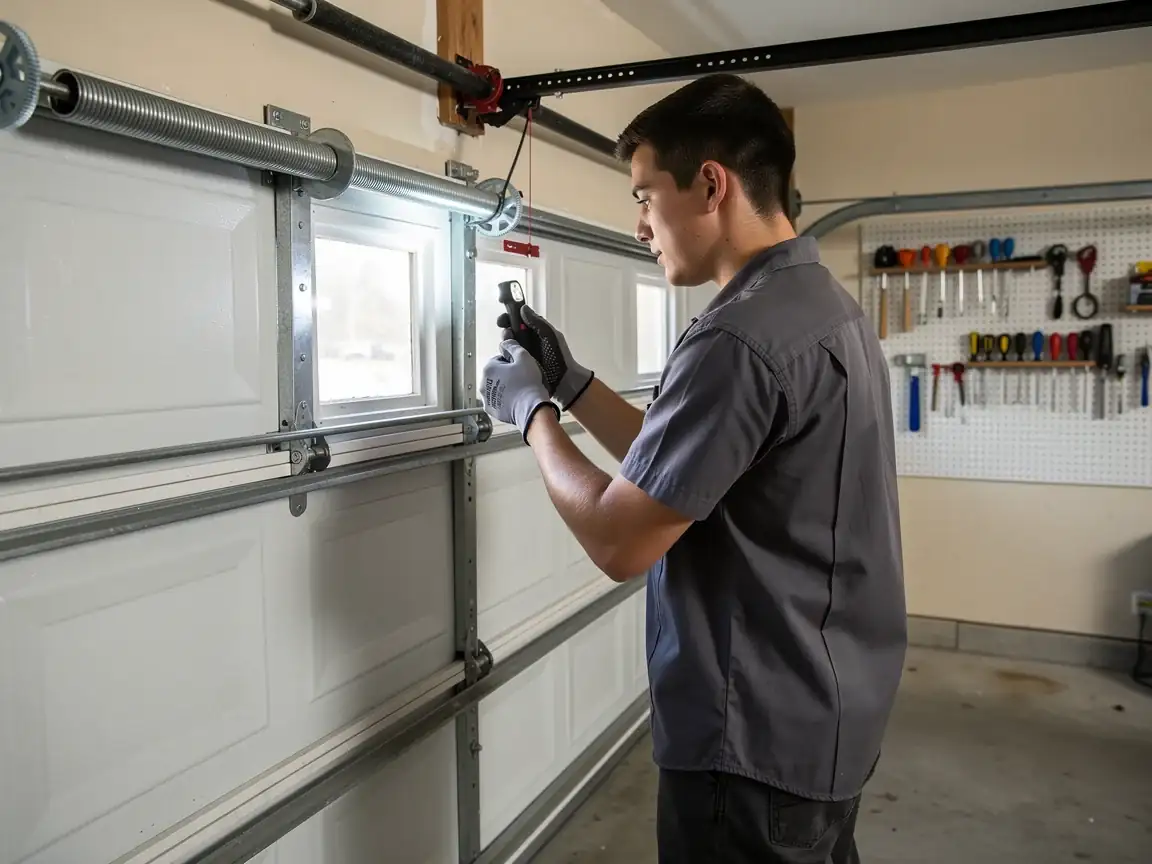
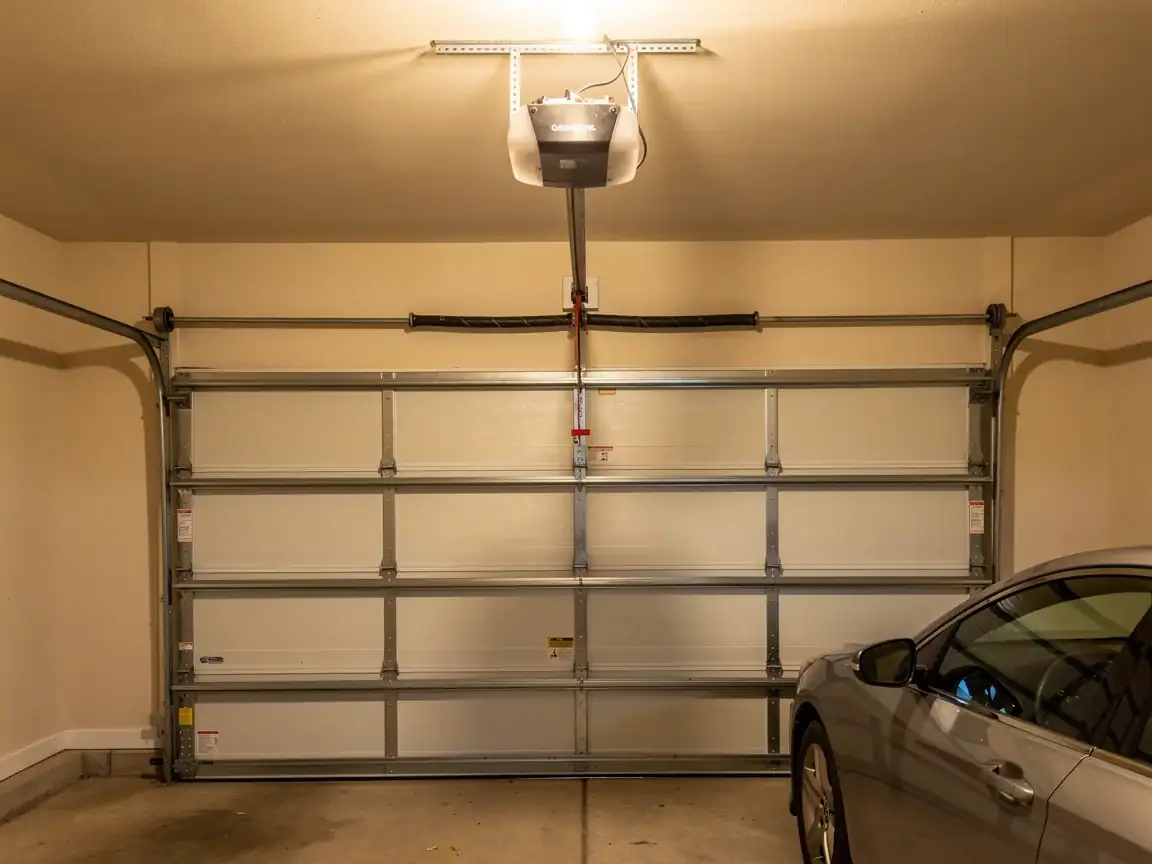
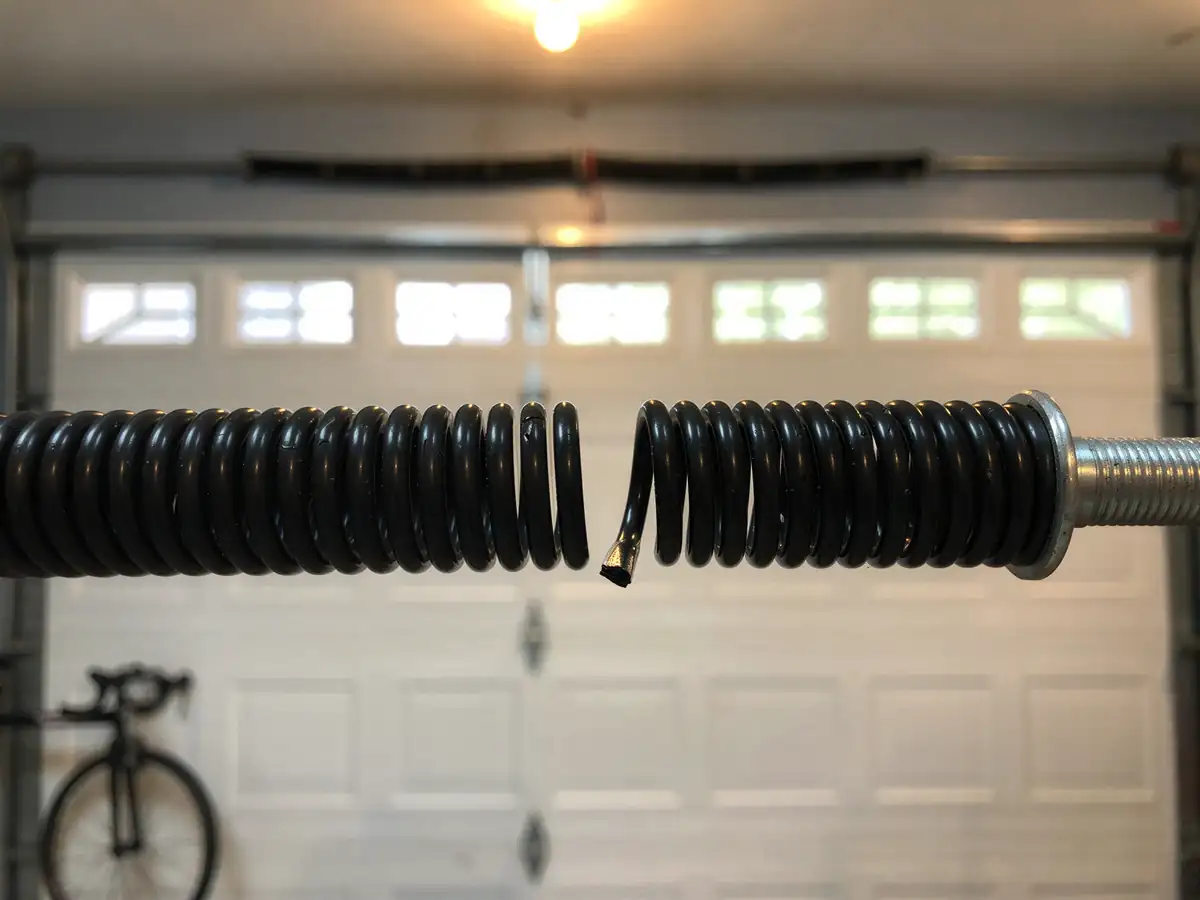
A wound torsion spring holds enough stored energy to break a bone or worse, and a broken extension spring under tension is no gentler. We're not going to pretend there's a safe shortcut version of this job. What you can safely do is note which spring failed (the door won't budge, or it slams down hard) and whether it's one spring over the opener shaft or two on either side of a wider door. That's useful information to give us on the phone before the 12-mile drive out, so the right spring is on the truck the first time.
The one thing we won't do is quote a repair over the phone sight unseen and call it final
Spring size depends on door weight and wind, and guessing wrong on either means a second trip.
How It Shows Up
Most houses in this part of the service area, including Oakland, went up between 1966 and 1982, with the median landing around 1975 - and Oakland's own stock centers almost exactly there, at 1976. That matters for springs because a door built in the mid-'70s is almost always on its second or third spring set by now, not its first, and the bracket and shaft it's riding on has usually seen one replacement opener bolted to original hardware that was never resized for it.
The failure looks the same as anywhere: the door won't lift, or it drops fast and uneven, or you hear a bang from the garage and the door is stuck halfway. What's different in a house from this era is what's behind the spring - older torsion tube, older end bearings, sometimes a center bracket that's been drilled and redrilled. We check that hardware before we quote the spring, because a spring swap on a bent shaft just moves the failure a few months down the road.
What Can Go Wrong
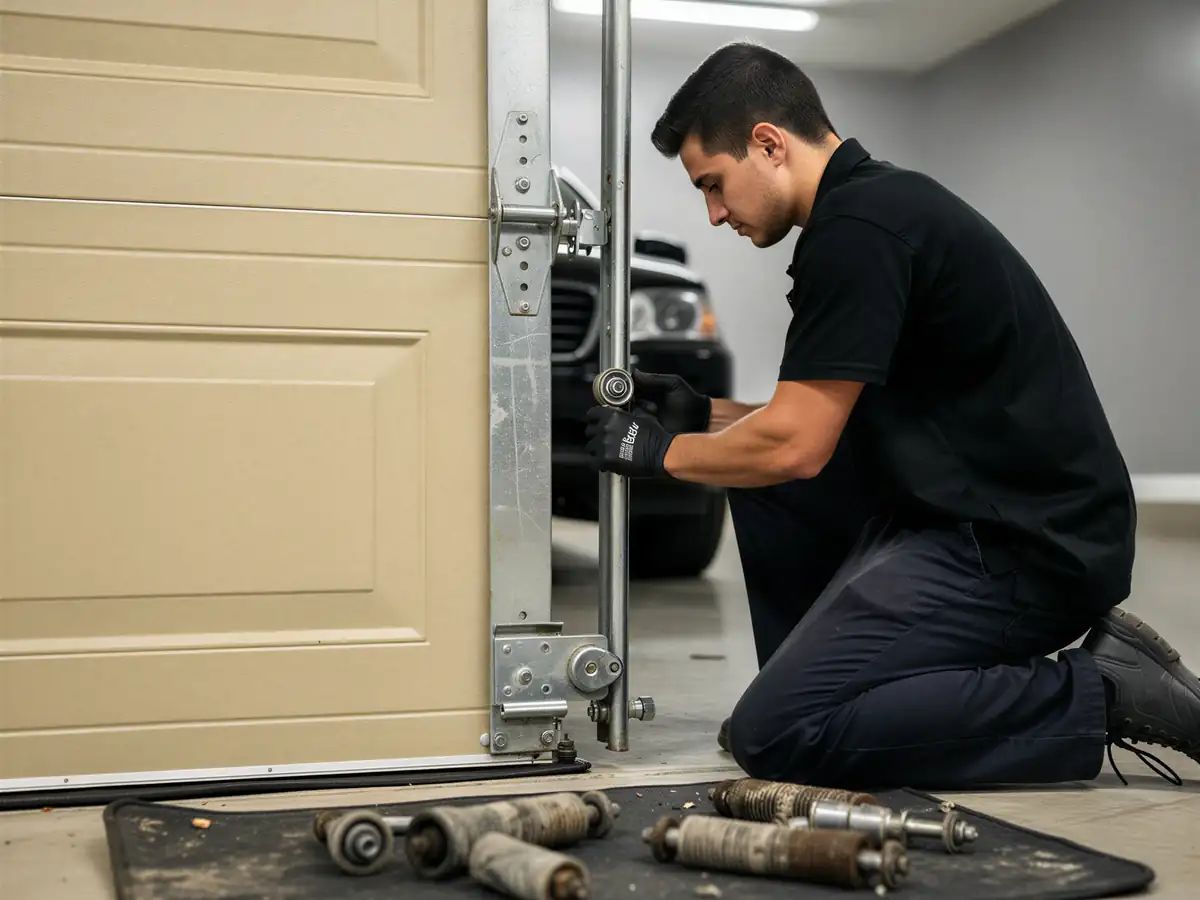
On a 1970s-era door, the spring itself is rarely the only thing wrong. The cones that hold the spring to the shaft wear oval over fifty years of cycling, and a new spring on a worn cone will slip or bind within weeks. End bearing plates on original hardware are often undersized for the heavier insulated doors homeowners have swapped in since - the door got upgraded, the spring math around it didn't.
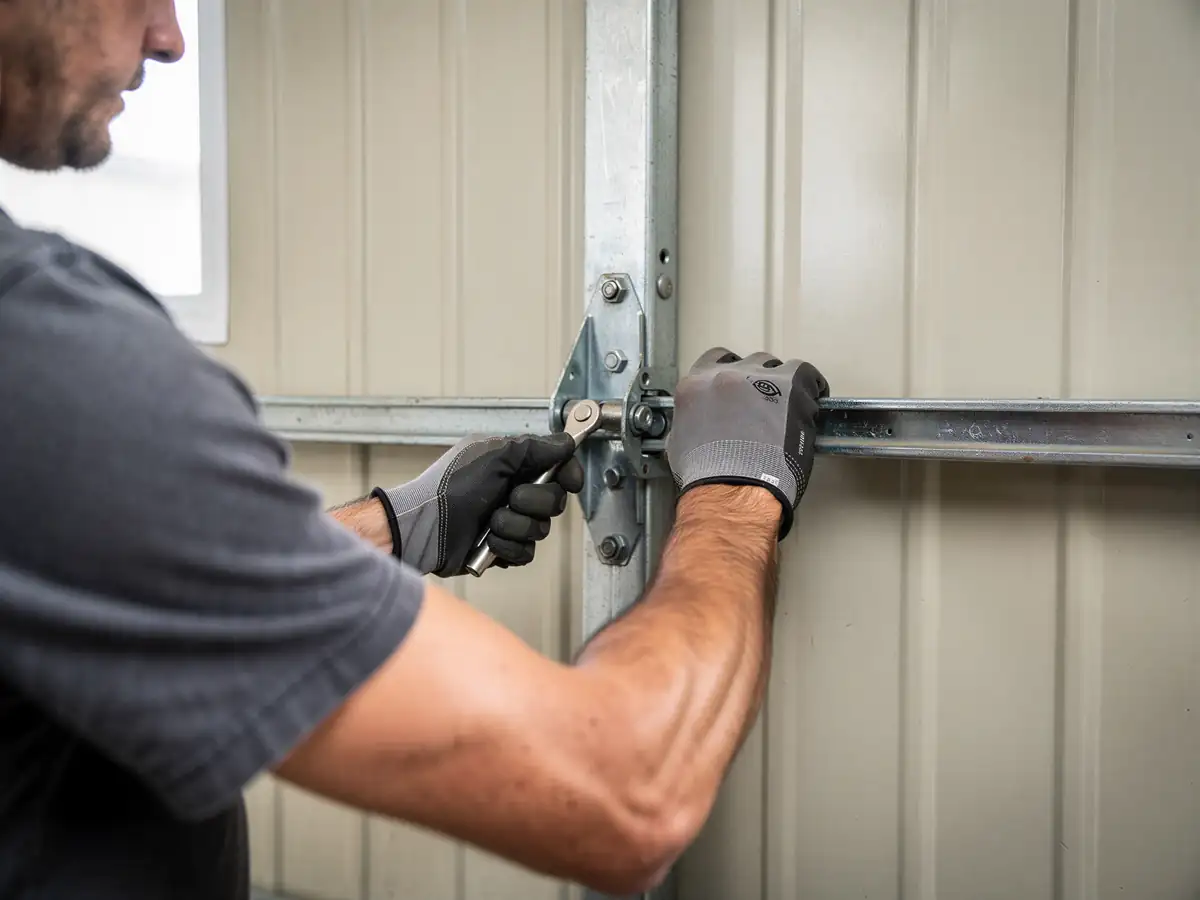
We're straight about one limit here: if the torsion shaft is bent or the center bracket is cracked, replacing the spring alone is a waste of your money. That's a hardware job, not a spring job, and we'll tell you which one you're actually buying before we start.
How Long It Takes
A standard torsion spring swap, once the right springs and cones are on the truck
Usually runs a straightforward couple of hours on site. The variable for Oakland isn't the repair - it's getting the correct parts out there on the first run, given the 12-mile trip from Bowling Green. That's why we ask for door width, spring count, and symptom up front: it lets us load the truck for a mid-1970s torsion setup instead of guessing and making the drive twice.
Cold mornings add a small wrinkle
In this climate band, winters bring real cold stretches, and a spring under load in a cold garage behaves a little stiffer than the same spring in July - we account for that when we test the balance before we leave, not just when we hang the new spring.
Why This Fails Locally
The short version: Oakland's housing clusters tightly around 1976, which puts a lot of doors here on original or first-generation torsion hardware that's now carrying forty-plus years of winding and unwinding. Combine that with 109 households in a town this size, and you've got a fairly uniform batch of garages hitting the same spring fatigue window at roughly the same time, not a scattered mix of eras like you'd see in a bigger, older neighborhood.
The springs don't fail because Oakland is far from Bowling Green - they fail because of what's attached to them. But the distance decides how the call gets handled: fewer guesses, more questions up front, and parts chosen before the truck leaves the shop rather than after it arrives.