Why This Fails Locally
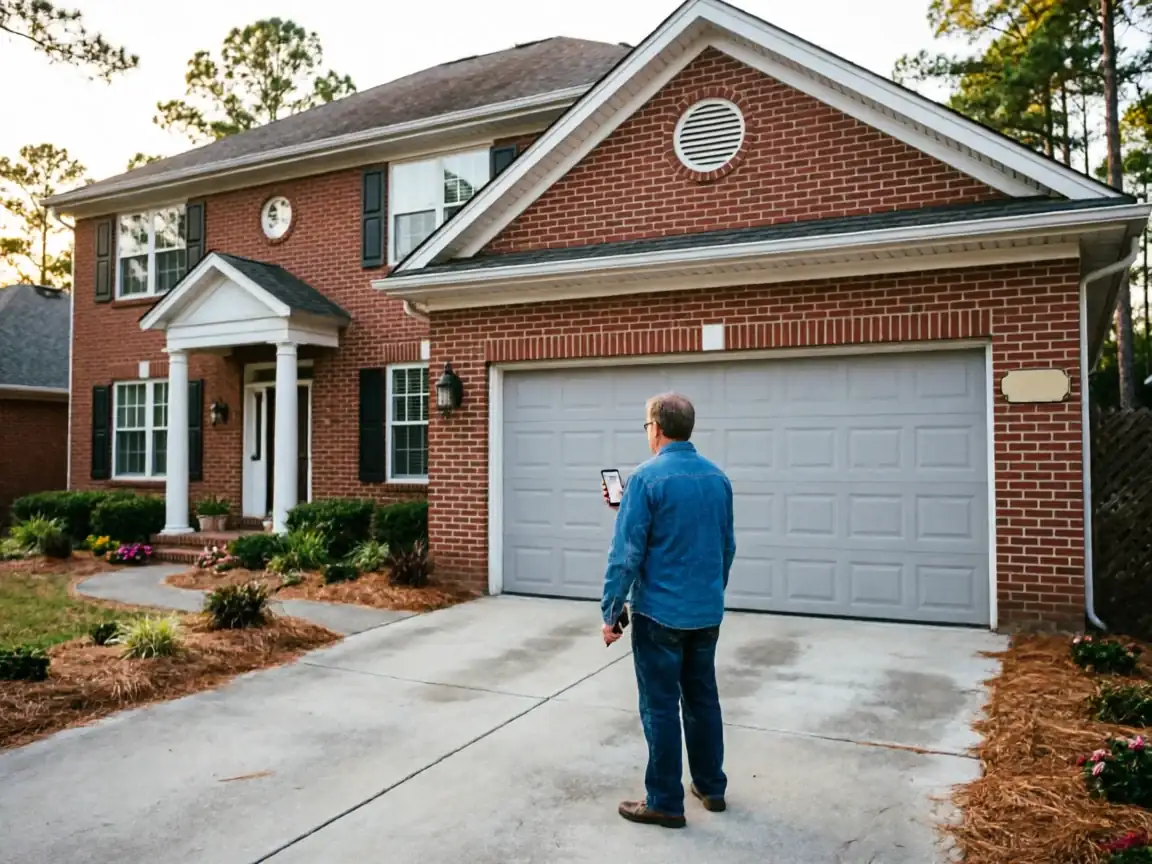
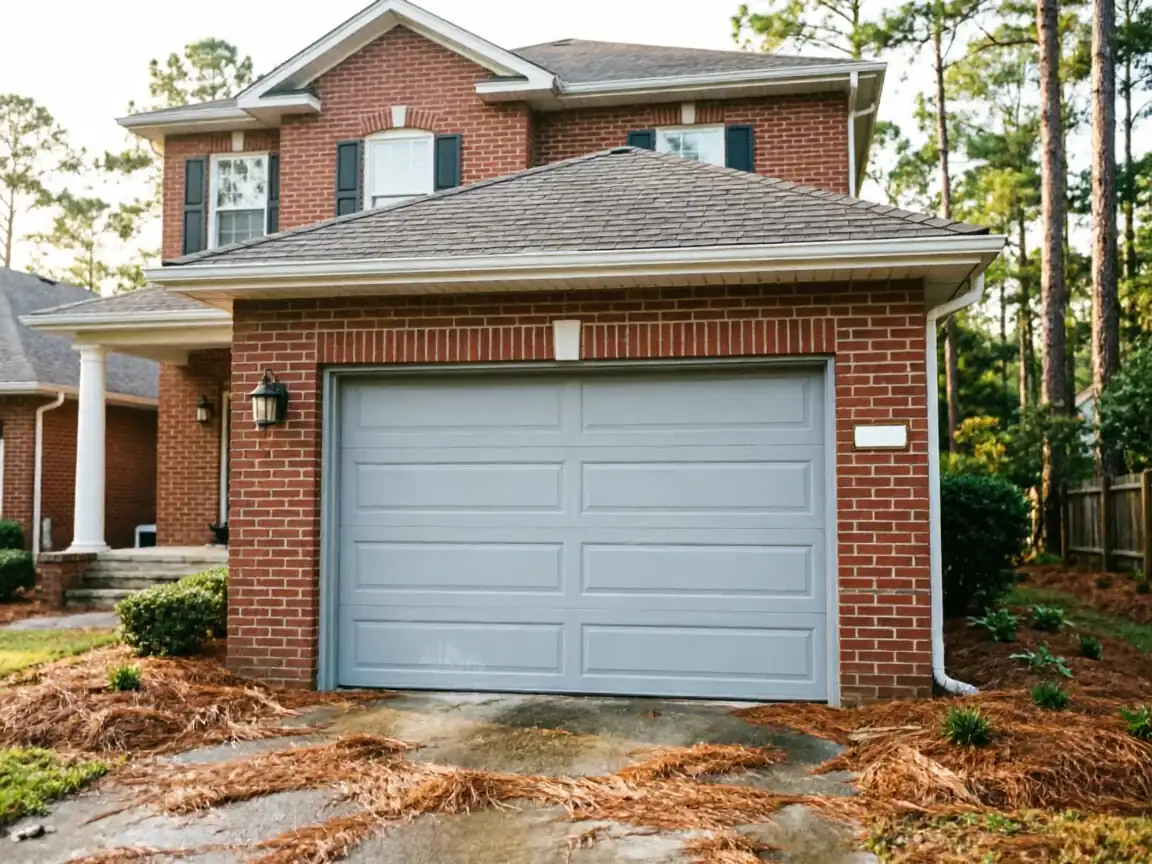
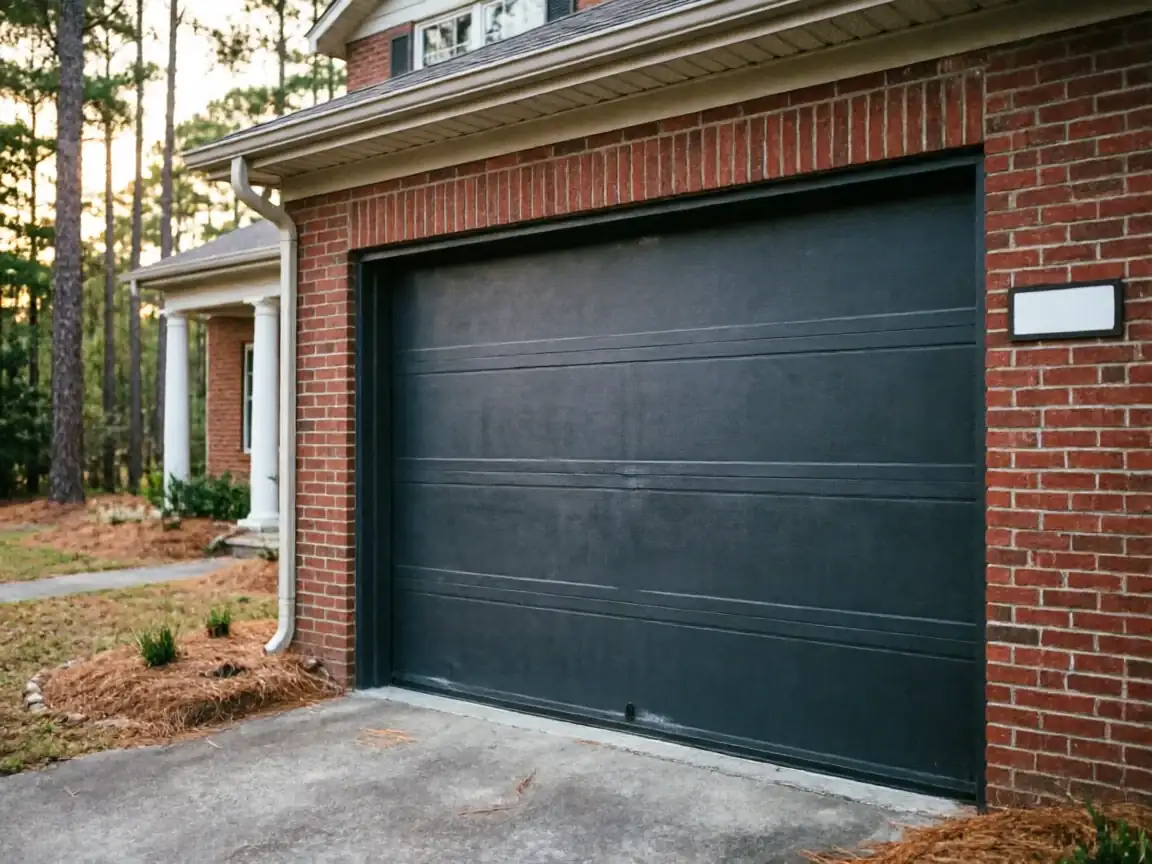
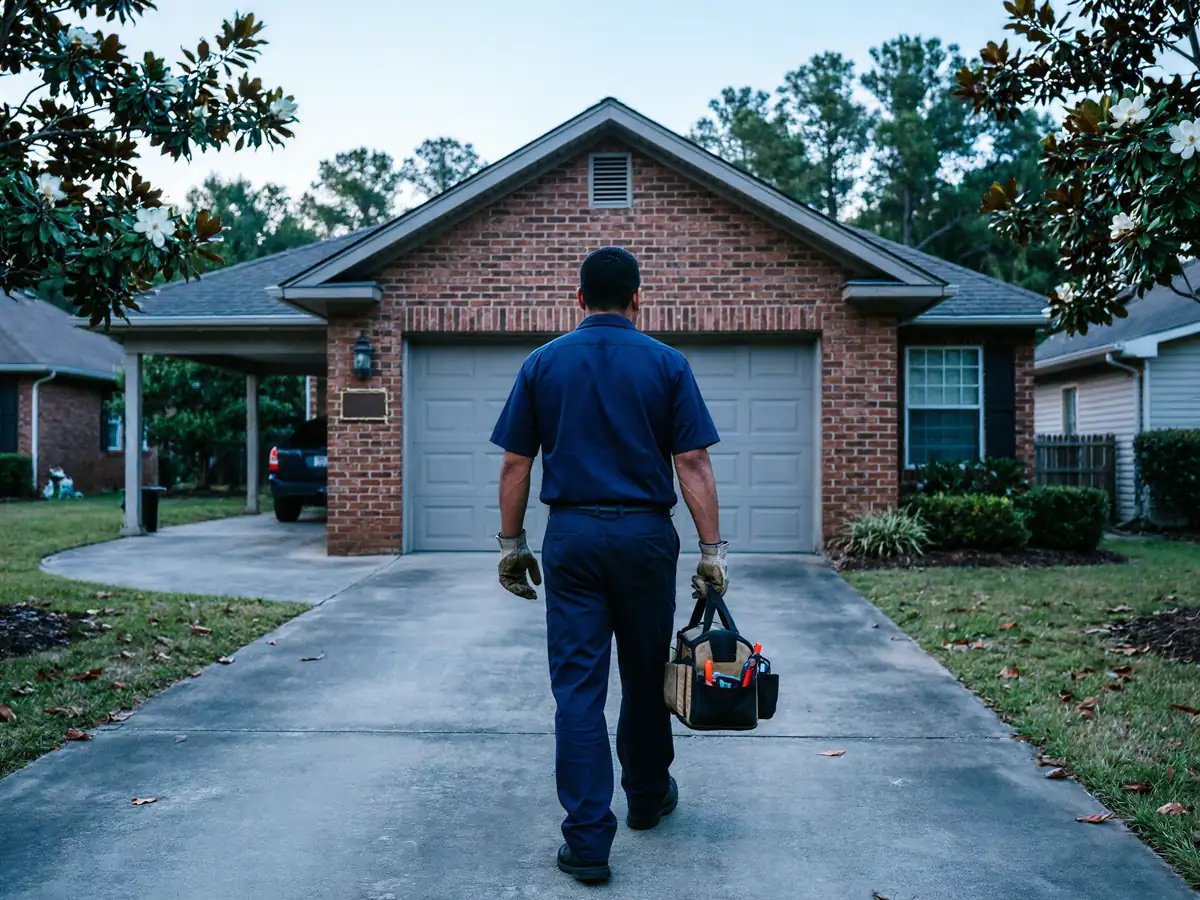
Most of the housing across this service area went up between 1966 and 1982
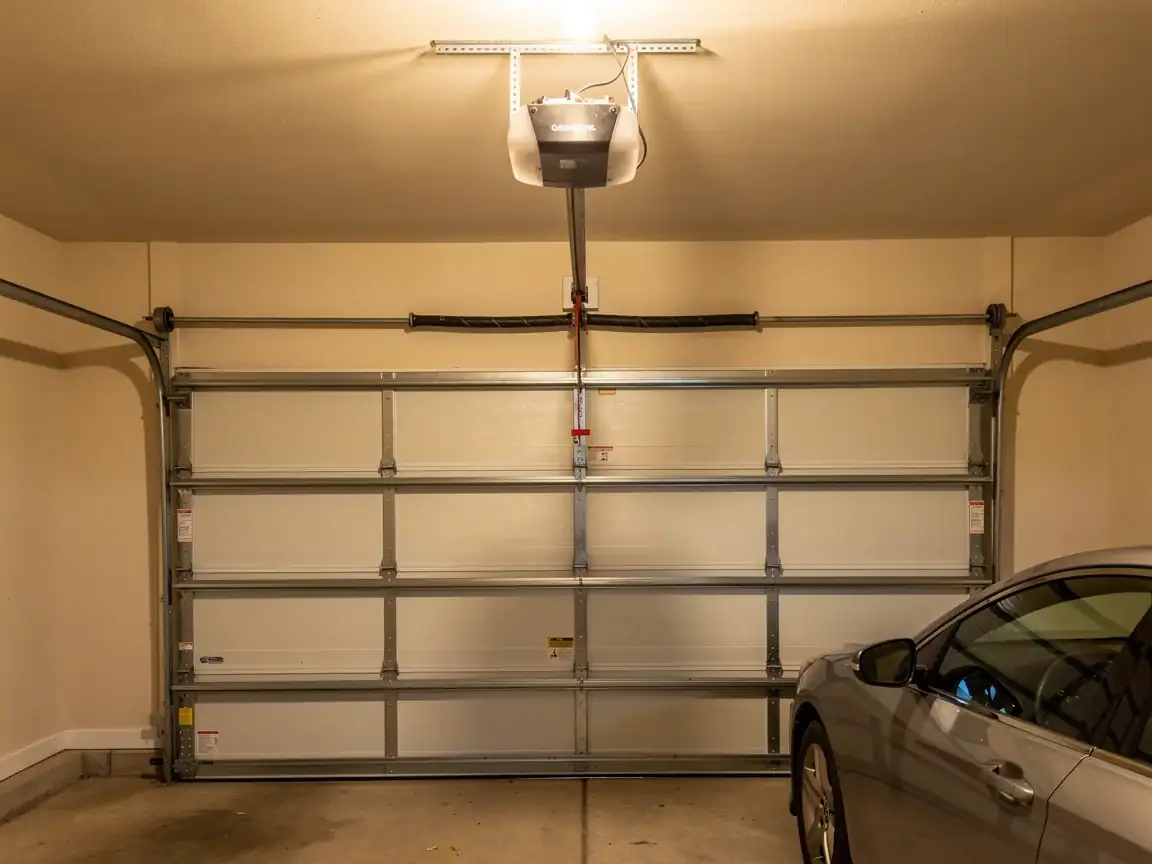
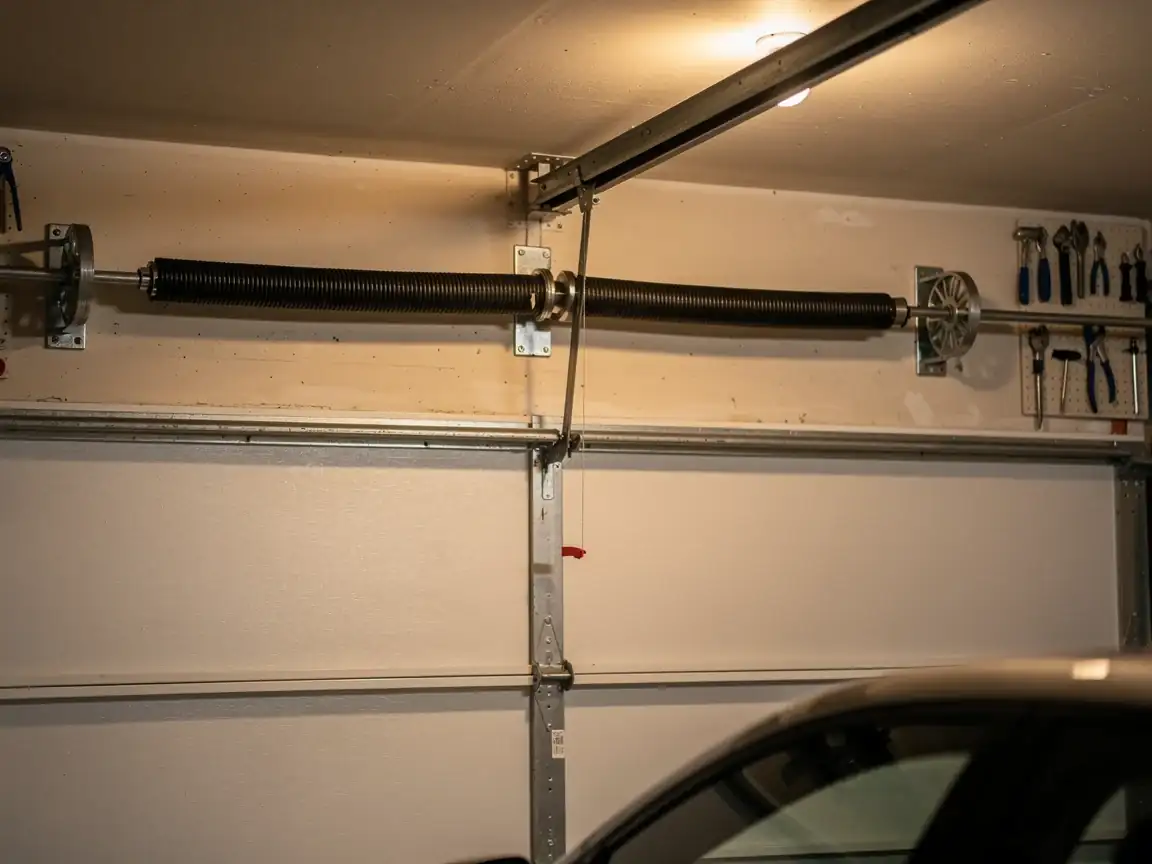
With a median build year around 1975. That matters for garage doors because a door installed when a house was built is usually still running on its original hardware, or close to it - the springs, the track brackets, the opener, all from an era when galvanized steel and single torsion springs were standard and nobody was thinking about insulation.
Across the four named areas we cover, the stock is overwhelmingly 1960s-70s construction
Which means a lot of doors and openers are well past the point where a spring or cable should still be trusted. Add a cold-moderate climate with real swings between summer heat and winter cold, and you get metal that expands and contracts every season. That cycle is what fatigues torsion springs and corrodes cable ends - not one bad storm, but forty years of temperature swings on hardware that was never meant to last that long.
This is why emergency calls cluster the way they do here
It's not random bad luck, it's a predictable outcome of pairing older torsion hardware with a climate that stresses metal twice a year, every year.
What Can Go Wrong
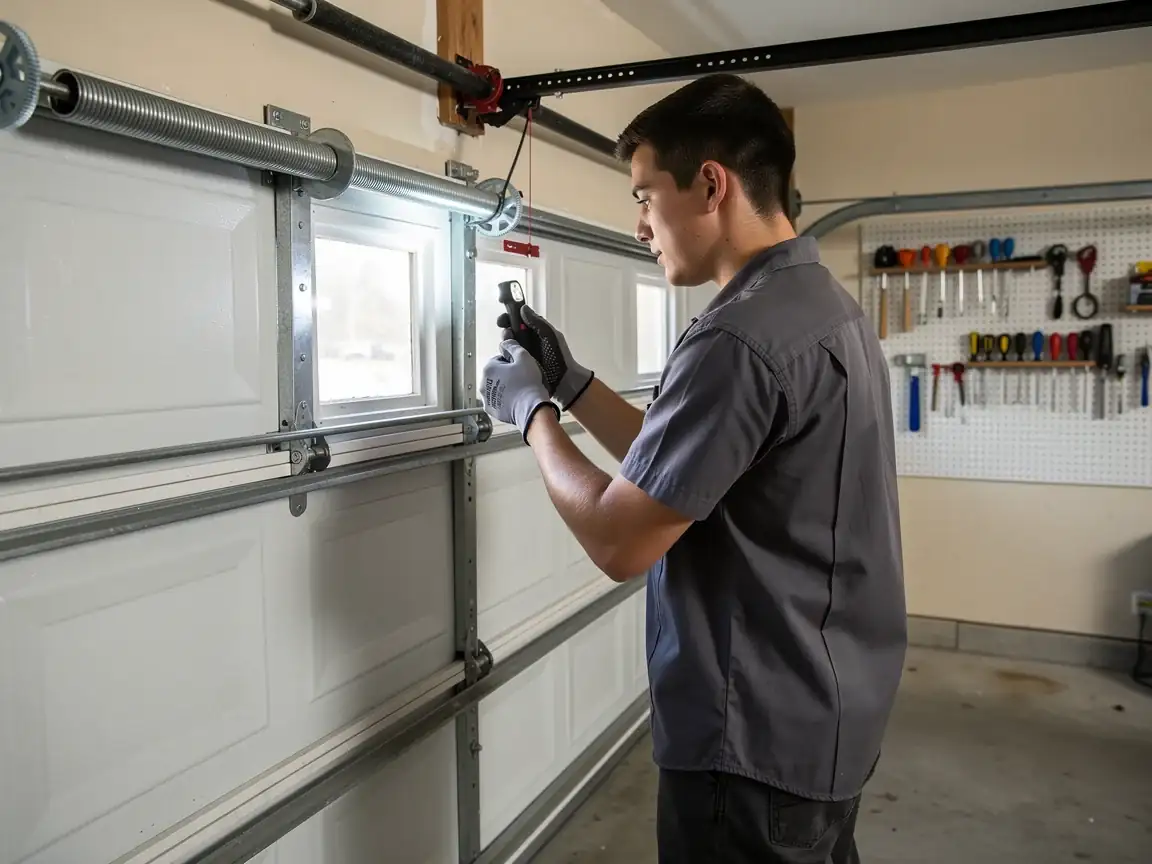
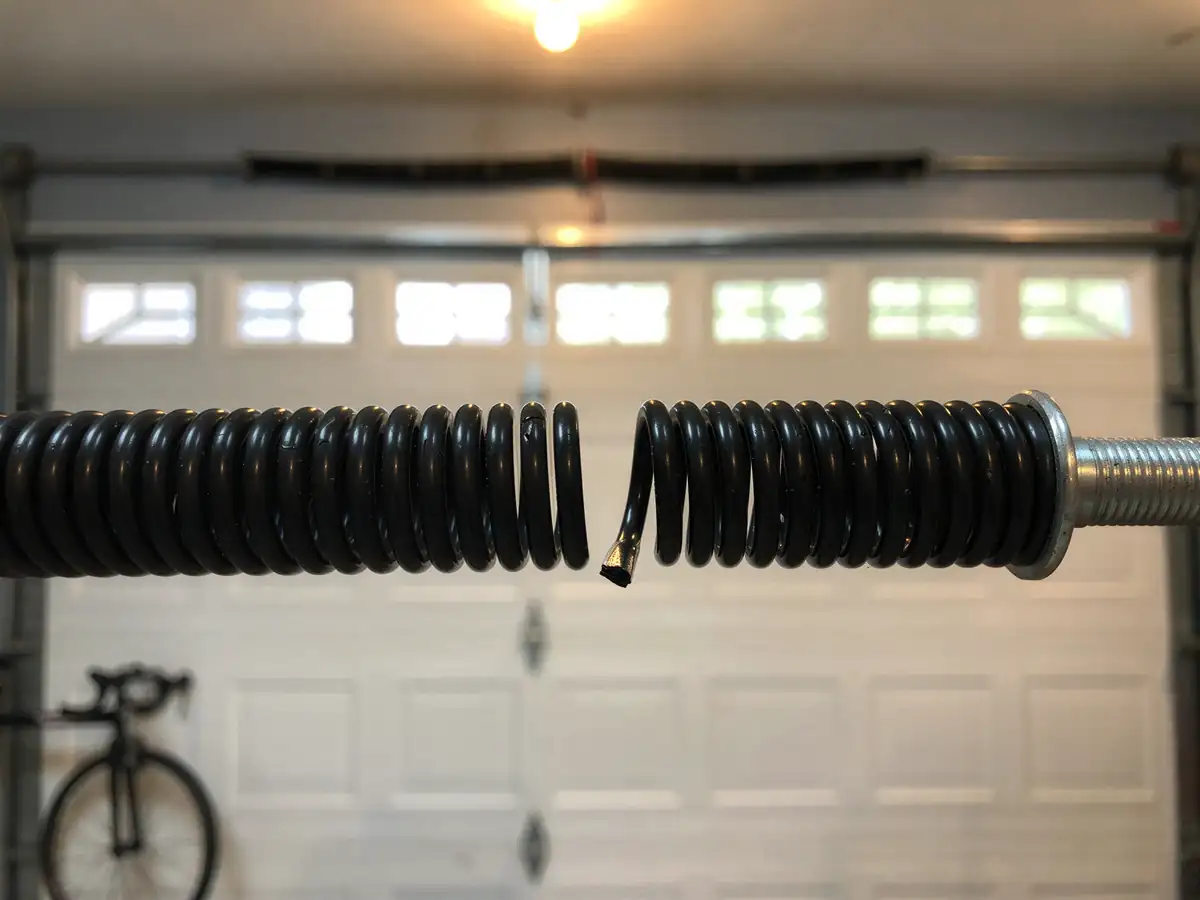
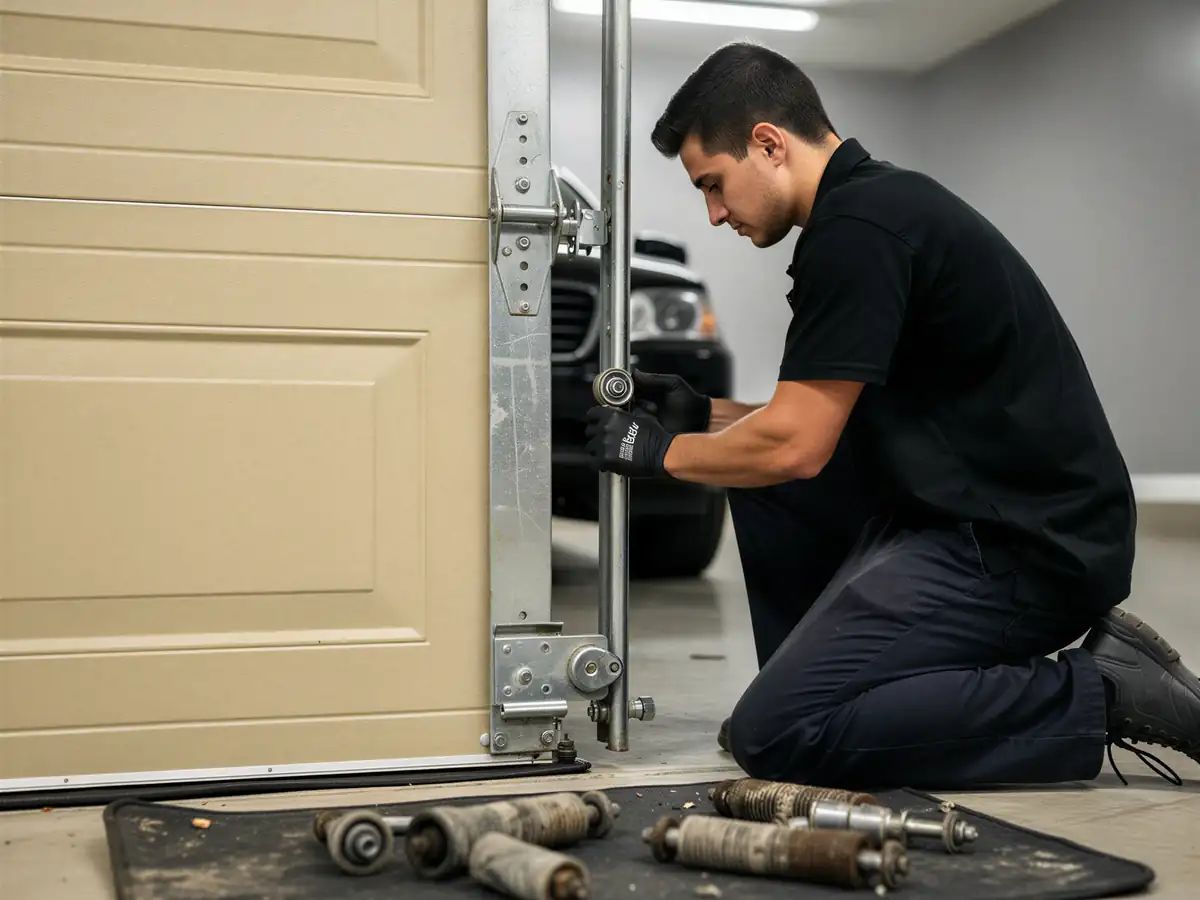
The call we get most is a torsion spring that's let go - usually with a bang loud enough that the homeowner assumes something structural broke. On the original-era doors common here, that spring has often been cycling since the house was new, and cold snaps are when the fatigued coil finally snaps.
Cables fray and jump the drum for the same reason: galvanized cable from that era wasn't rated for forty-plus years of seasonal expansion and contraction. When one side lets go, the door racks sideways in the track and can jam a panel or bend a roller bracket on the way down.
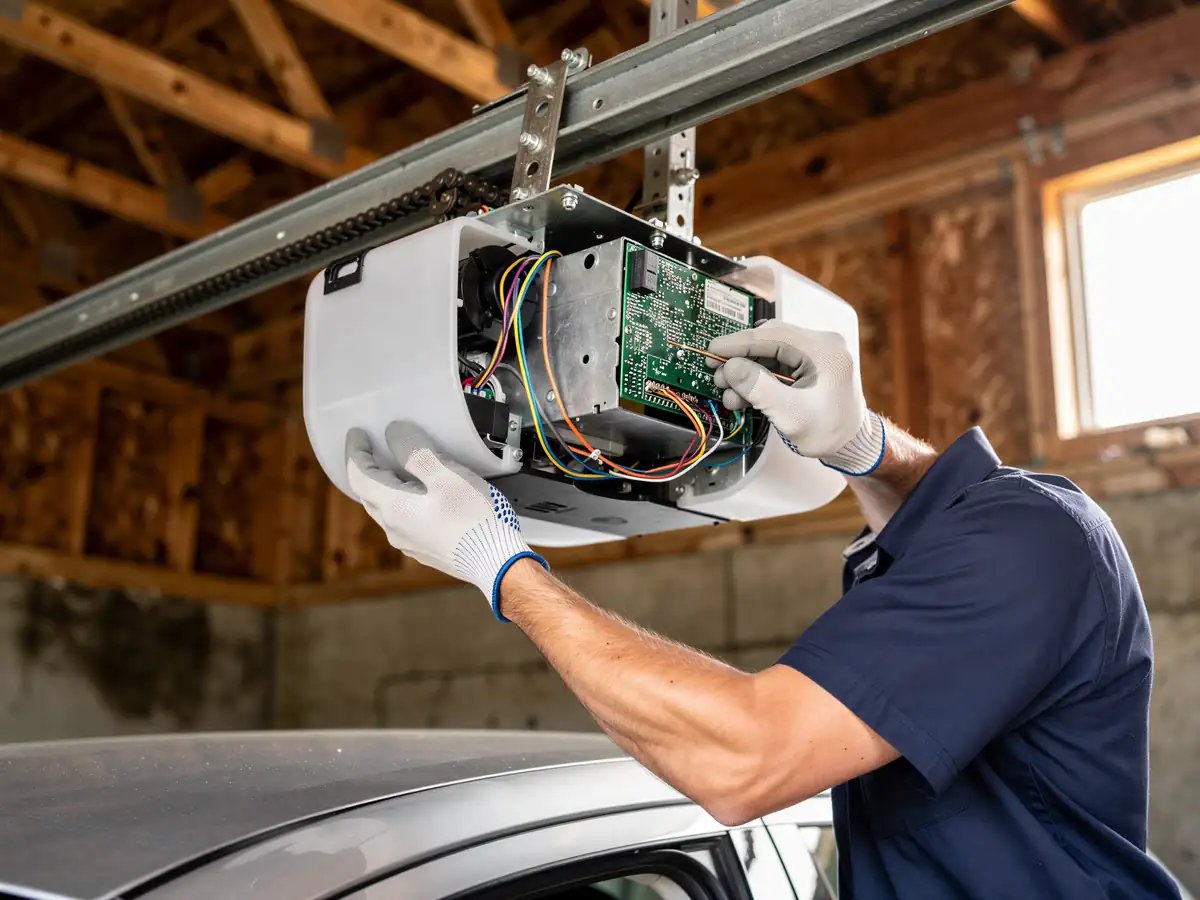
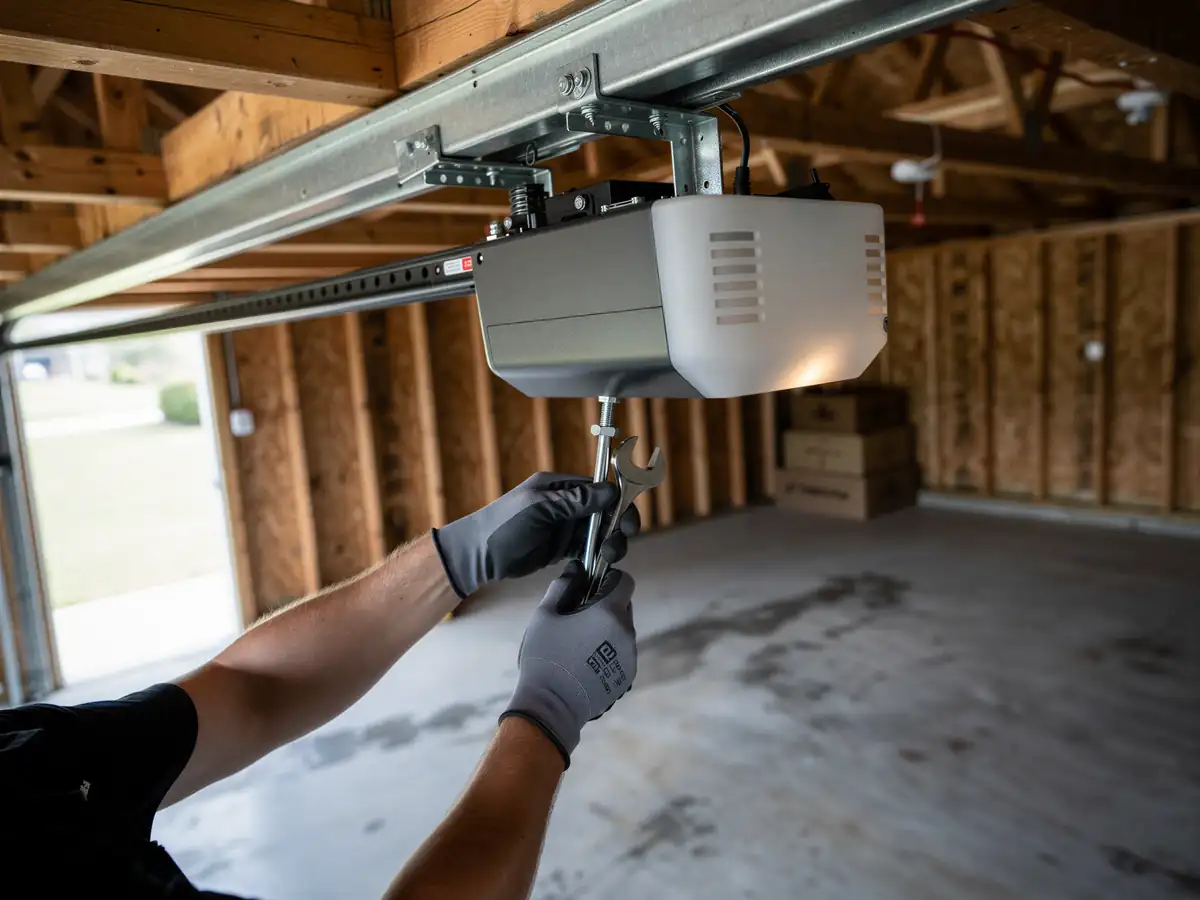
Openers from the same build window are a separate problem - gear-drive units with stripped sprockets, or logic boards that finally give out after enough seasonal temperature swings. A dead opener isn't usually an emergency by itself, but paired with a door that won't release from the trolley, it can trap a car inside or leave a door stuck half-open overnight.
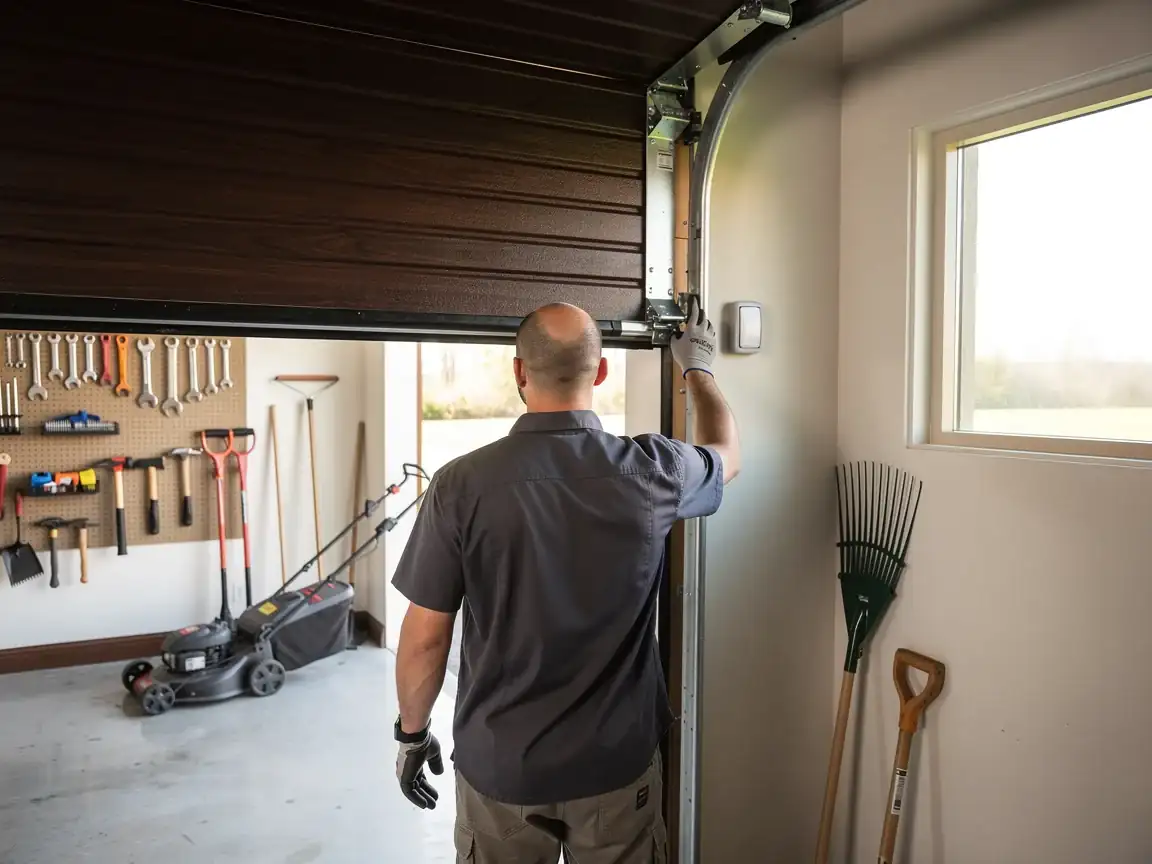
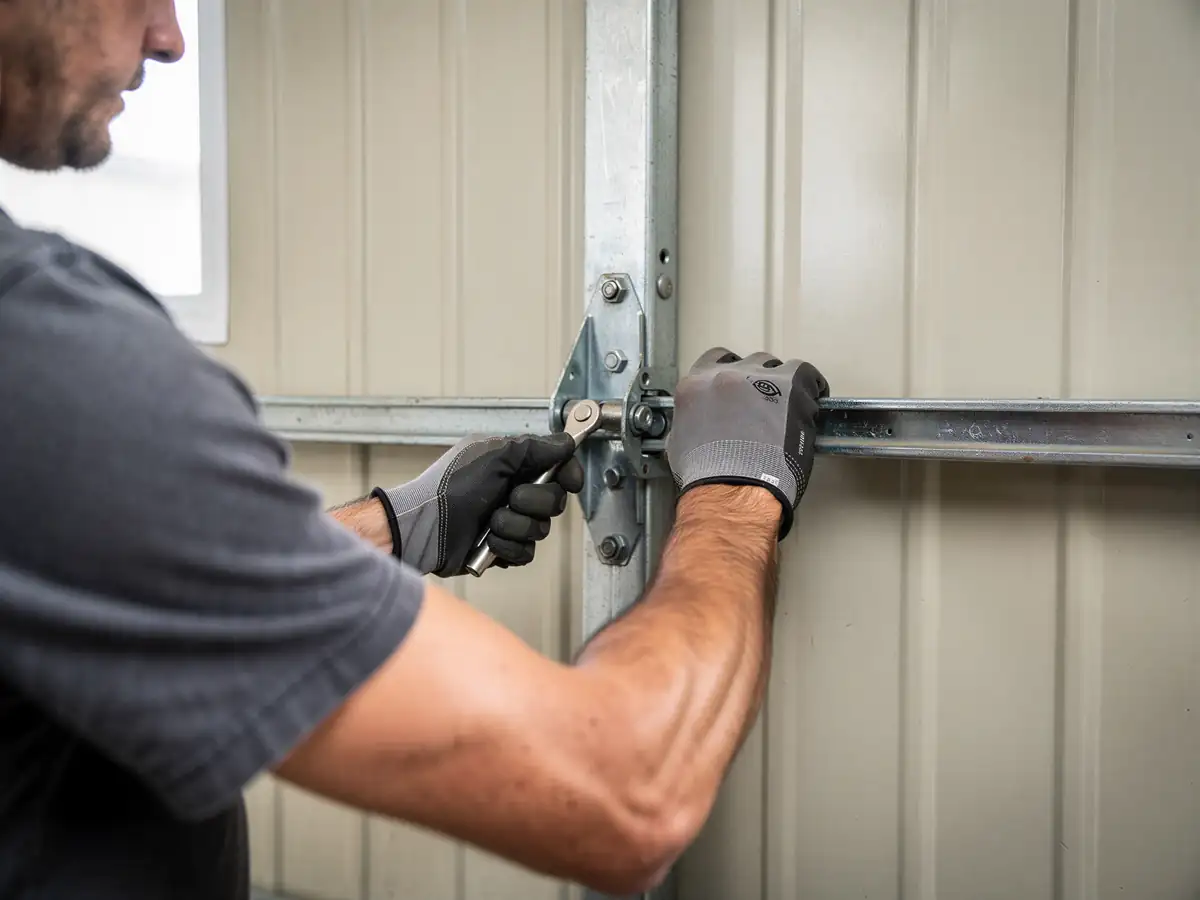
We also see bottom brackets and end hinges fatigued to the point of cracking, which is a safety issue, not just a nuisance - that's the one that can let a cable whip loose under tension.
What You Pay
We don't have a flat emergency rate to quote you here, and padding this section with an invented number would do you no good - it depends on whether it's a spring, a cable, an opener board, or a full panel replacement, and whether it's after-hours.
What we can tell you honestly: this is a working-income service area, with median household income around $46,000 across roughly 4,889 households and about 2,306 owner-occupied houses. We price jobs with that in mind - we're not going to recommend a full door replacement when a spring and a service call solves it, and we'll tell you straight when a repair isn't worth it versus swapping the door.
The one real limitation worth saying plainly: if your door needs a part that's no longer made for that era of hardware, we may need to order it, and that can push a same-day emergency call into a two-visit job - stabilize it safely on the first visit, finish it once the part's in hand.
How It Shows Up
It's almost always one of two moments
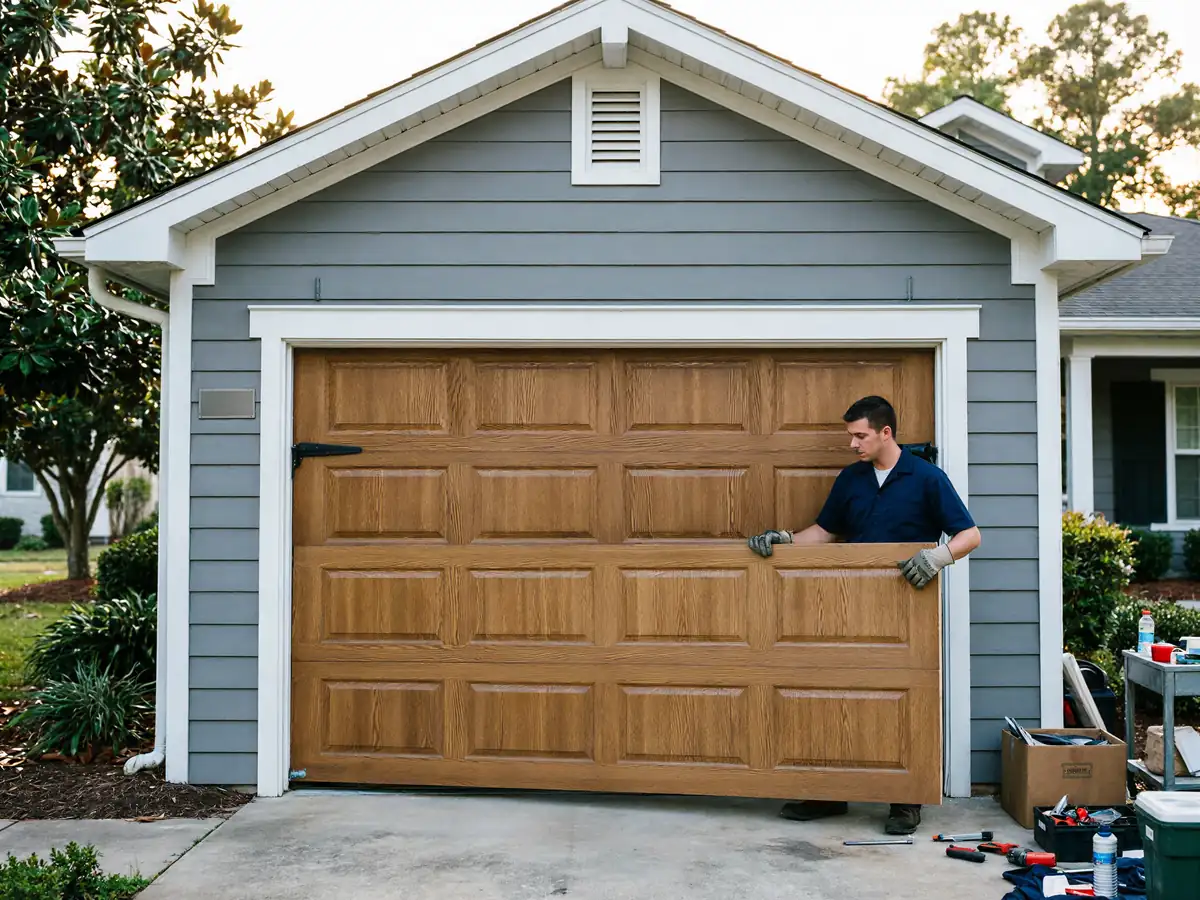
Either the door won't move at all - opener running, door dead - or it's halfway up and stuck, with a spring or cable visibly off its track. Both are more common on cold mornings here, when overnight temperature drops tighten already-fatigued metal.
We cover the full service area
Which stretches out to Oakland (12 miles), Auburn (17 miles), Brownsville (18 miles), and Franklin (19 miles) from Bowling Green. Each of those areas has its own page with the specifics for that town - this page is about the failure pattern you'll see across all of them, tied to the same housing age and the same climate swings.
If your door is down and won't budge, don't force the opener past a few tries
That's how a stripped gear or a bent track turns a spring job into a full opener replacement.