Season by Season
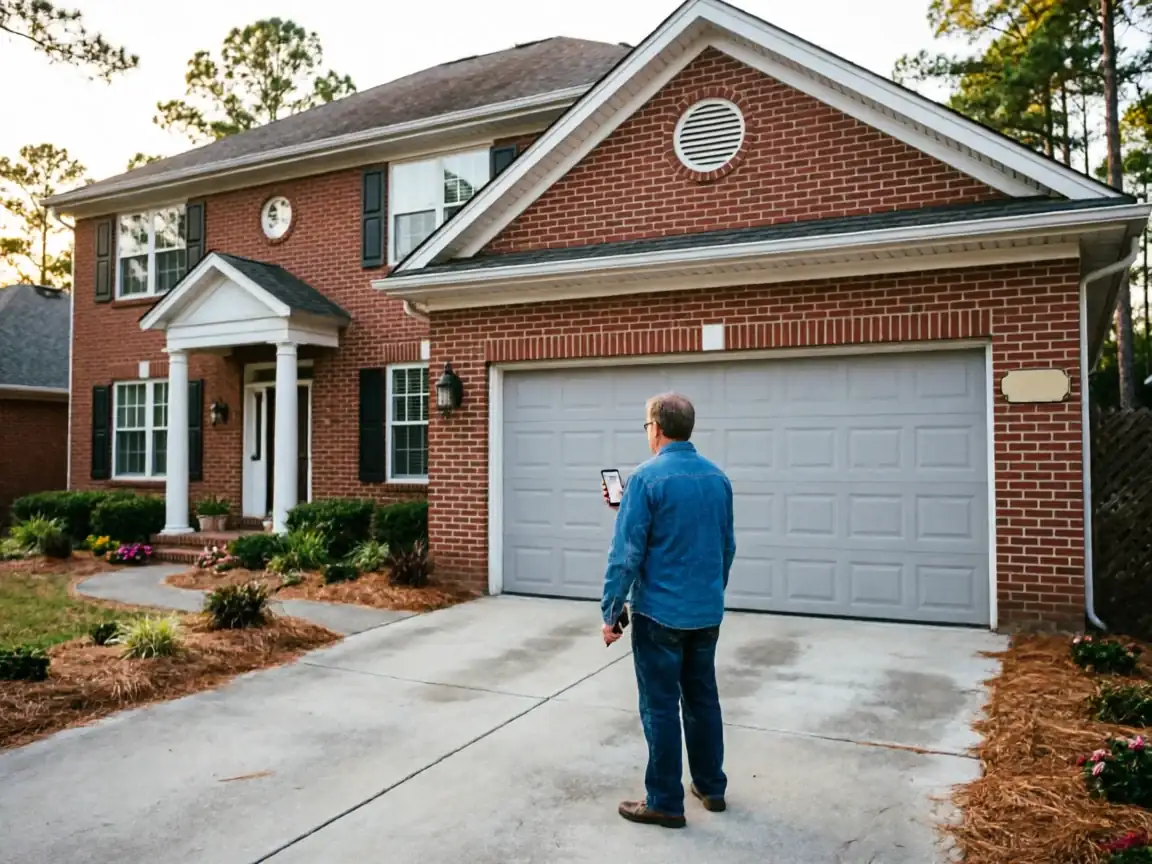
Most of the houses we work on in the Bowling Green area went up between 1966 and 1982
With the median build year sitting around 1975. That matters more than people think, because a door and track system from that era was engineered for a milder set of expectations than what we actually get here. The region sits in a cold-moderate climate band, which means real freeze-thaw cycles every winter, not just a cold snap or two.
In late fall, before the first hard freeze
Check the weatherstripping along the bottom of the door and the seal where the track meets the jamb. On a 1970s-era door, that seal has usually been replaced once or twice already, and if it's cracked, cold air gets into the spring assembly and the metal contracts. Through winter, cold makes torsion springs stiffer and more likely to bind if they're even slightly out of adjustment - this is the season we see the most spring failures. Spring and summer bring the opposite problem: humidity swells wood jambs and panels on the original doors still out there, and tracks that were fine in January start binding in June.
A quick seasonal habit
Lube the rollers and hinges twice a year, check spring tension visually, and listen for new grinding or popping sounds - catches most of what this climate does to older hardware before it becomes a lockout.
When It Stops Being a DIY Job
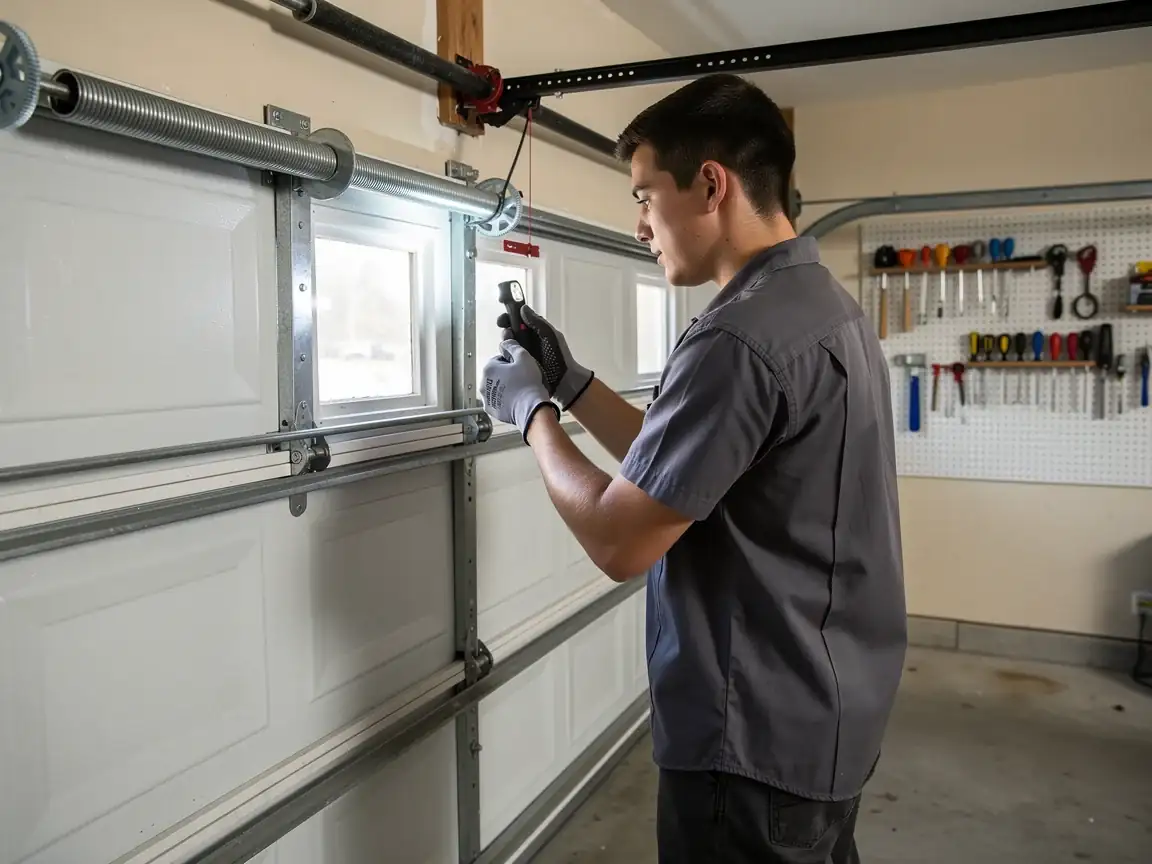
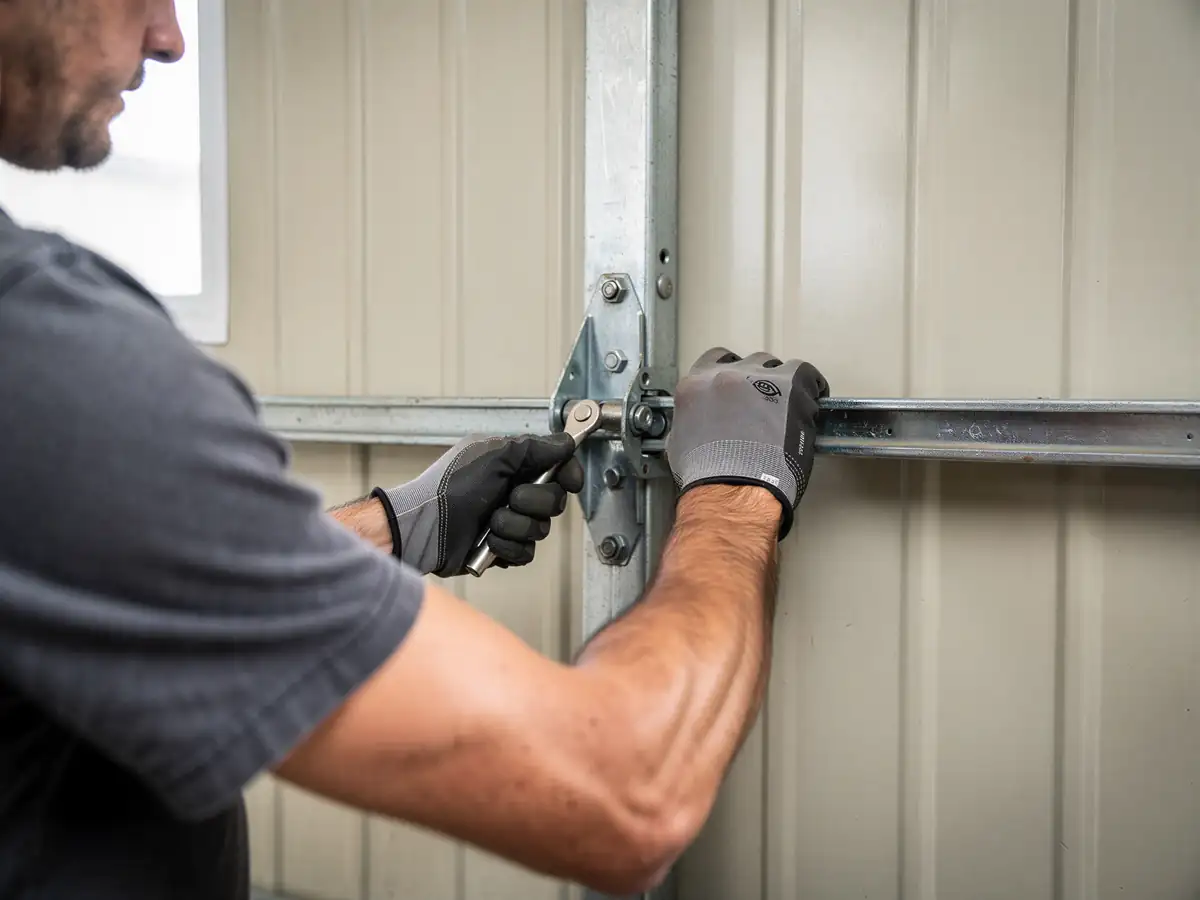
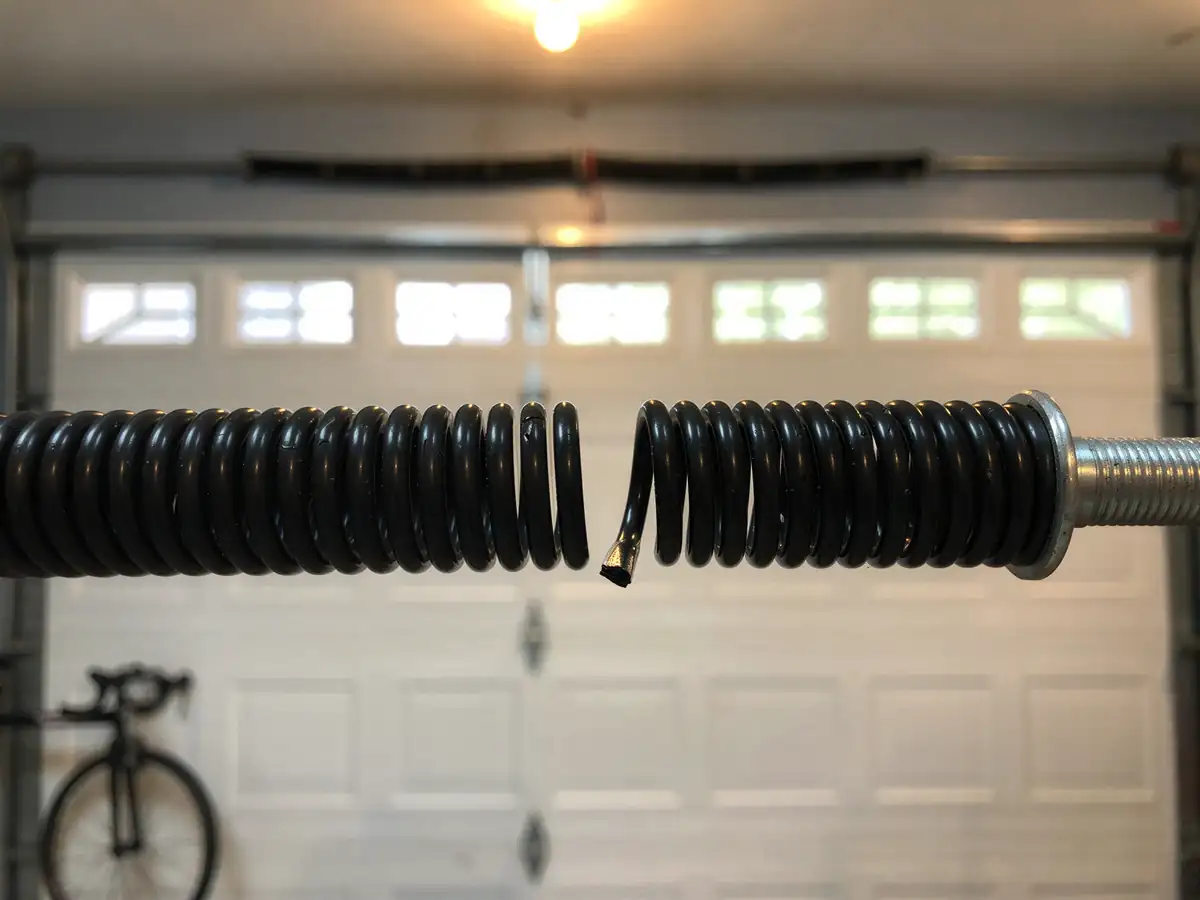
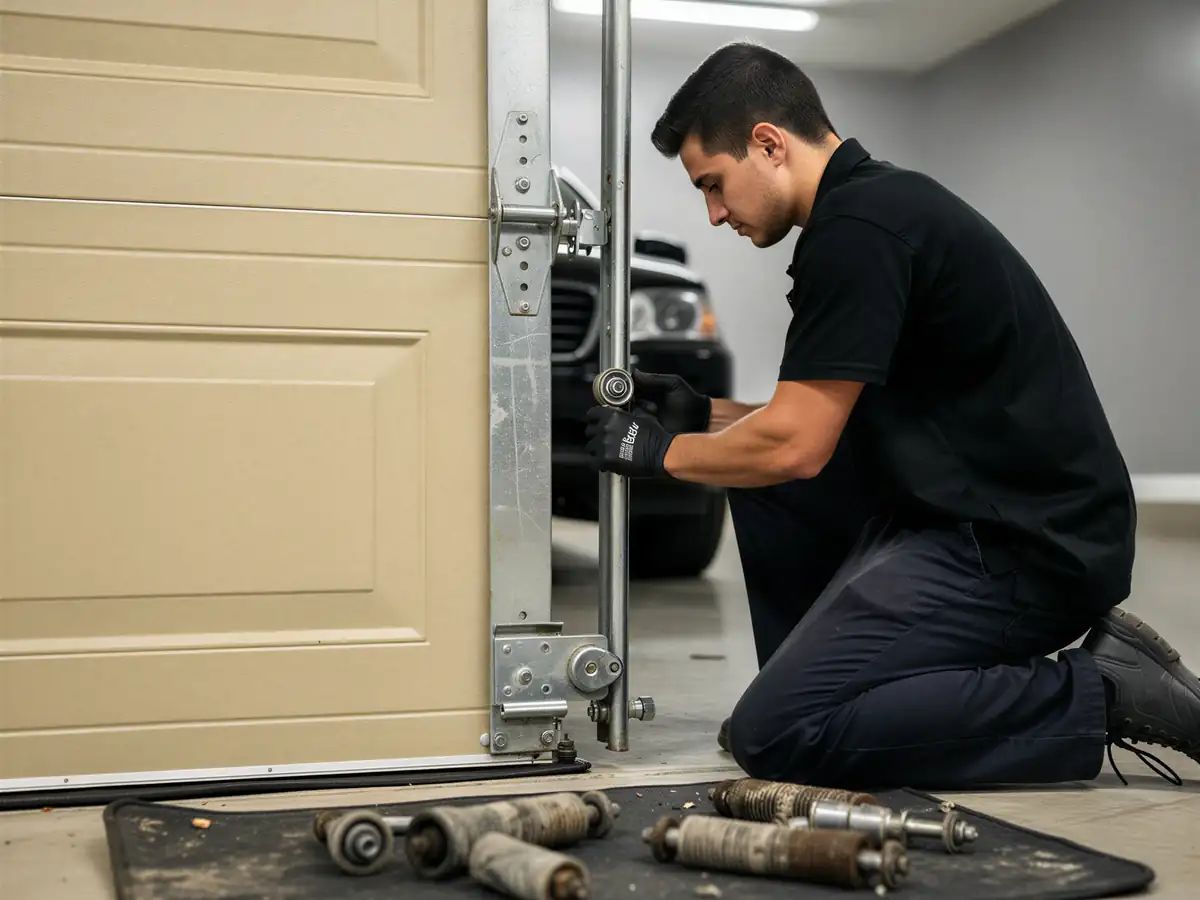
Lubricating hinges, tightening loose bolts, and clearing the track of debris are reasonable jobs for a homeowner to do themselves. Torsion springs are not. A door from the 1966-1982 building wave is heavy, and the spring holding it up is under enough tension to break a wrist or worse if it lets go while you're working on it.
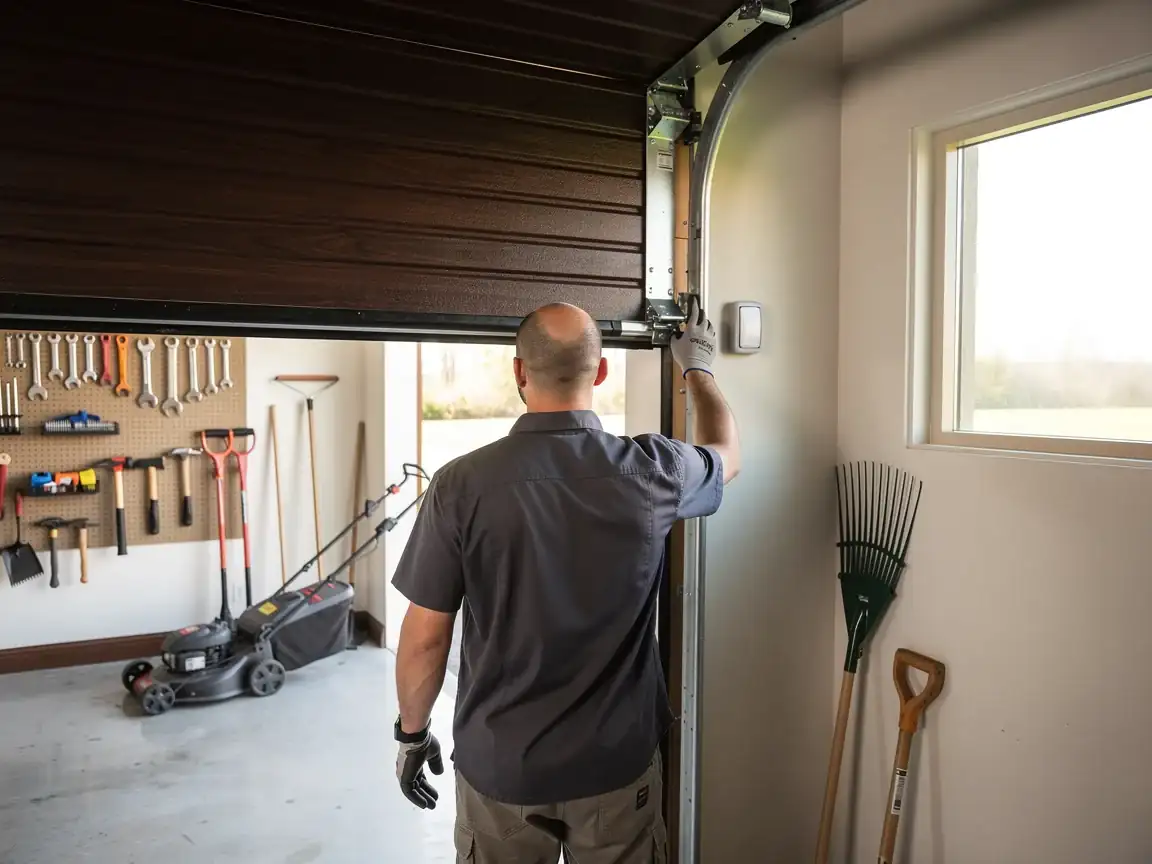
If your door won't open at all, or opens a few inches and stops, that's almost always a broken or badly unbalanced spring - stop there and call someone. Same goes for cables that look frayed, or a door that's noticeably crooked when it's halfway up. Those are structural problems, not adjustment problems.
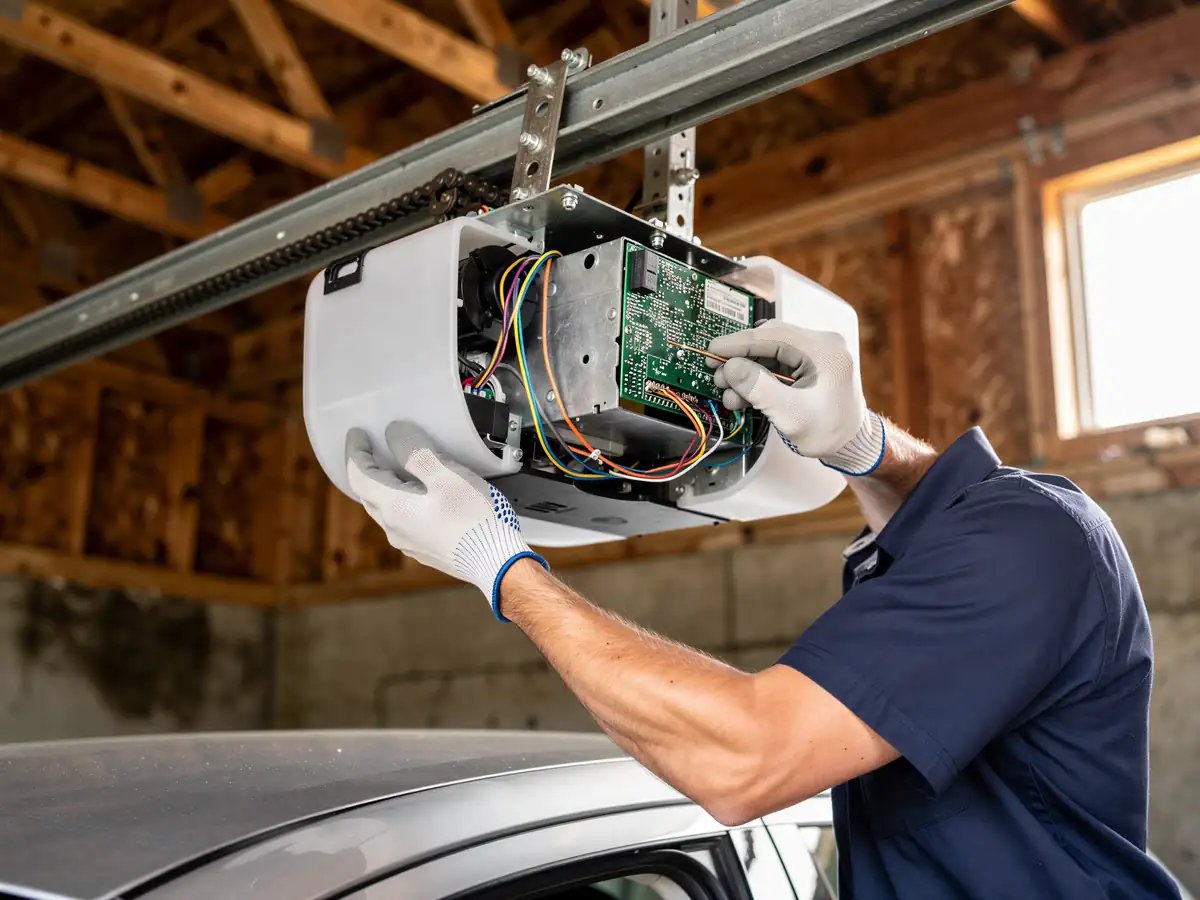
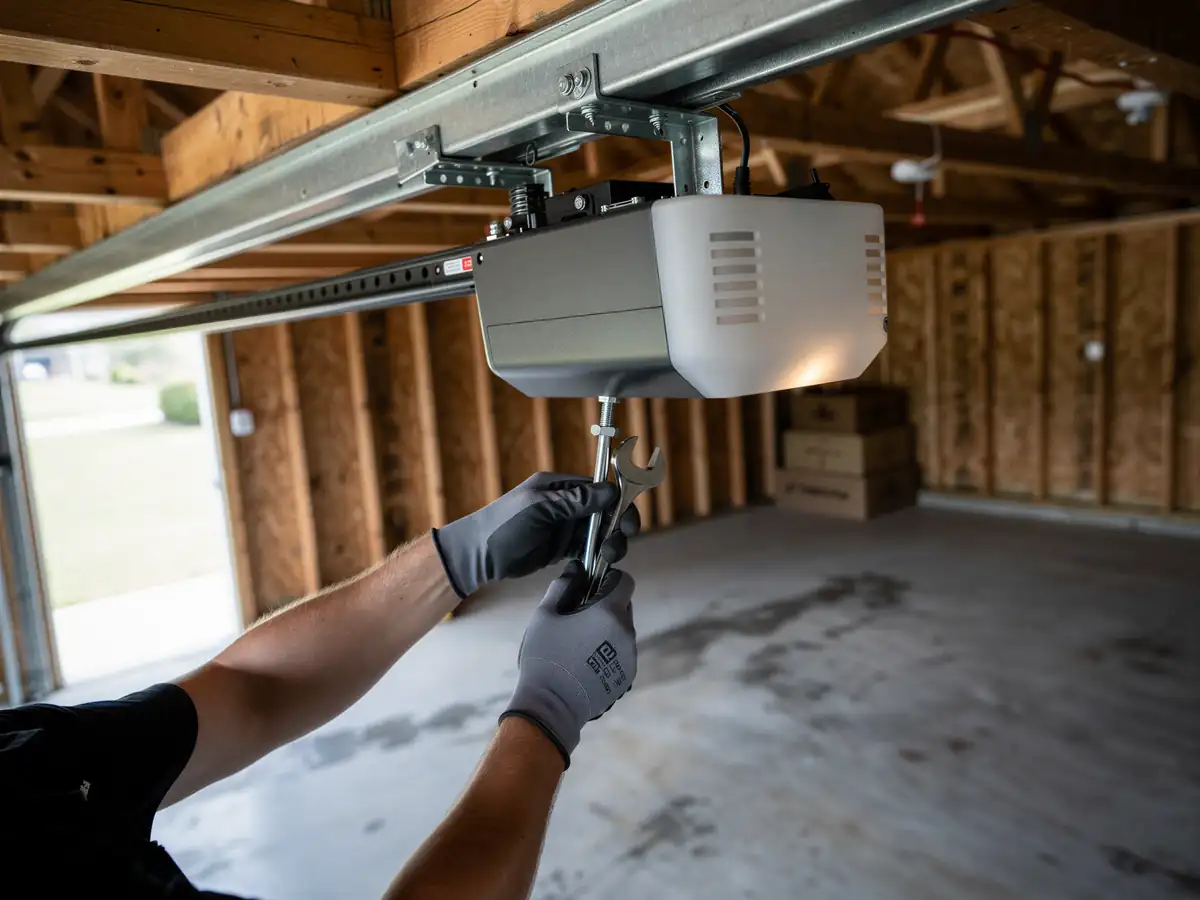
Where we draw an honest line: if your opener motor is original to a 1970s build, parts for it may simply not exist anymore, and we'll tell you to replace the unit rather than chase a repair that won't hold. We don't try to keep 50-year-old openers alive past the point where it makes financial sense.
What Is Going On
Across the Bowling Green service area, the housing stock is heavily concentrated in that 1960s-70s window, and it shows up in the hardware we find on service calls - a lot of original or first-replacement torsion springs, side-mounted rail systems that newer doors don't use the same way, and panels that were never designed for today's insulation standards. With roughly 2,306 owner-occupied houses among the 4,889 households we cover, a large share of the doors out there are original equipment or one generation removed from it.
The practical effect: hardware ages out around the same time across a lot of these houses at once, because they were all built in the same narrow window. When one torsion spring on a street fails from cold-weather fatigue, it's common to get three or four more calls nearby within the same season, because the neighbors' springs are the same age and under the same conditions.
Median household income here runs around $46,071, which is part of why we try to be straight about what's worth fixing versus replacing rather than defaulting to a full door swap on every call.
What Local Conditions Do
Cold-moderate winters do two specific things to a garage door system
They stiffen torsion springs so they wind tighter under load, and they shrink metal tracks just enough that alignment that was fine in August is off by a fraction in January. On a door built before insulation rules tightened, that fraction matters more, because the panel itself isn't holding its shape as well against temperature swings.
We see this most in the stretch of houses built in the 1966-1982 wave
A door that's been fine for years suddenly binds on the first genuinely cold week, or a spring that was already fatigued finally lets go. It's not bad luck, it's the same physics hitting the same era of hardware at the same time of year.
For the towns we reach out to
Oakland, about 12 miles off, Auburn at 17, Brownsville at 18, and Franklin at 19 - the housing ages and climate exposure are close enough to Bowling Green's that the same seasonal pattern holds, though we size each job on what we actually find at the door, not assumptions.
- 12 miles