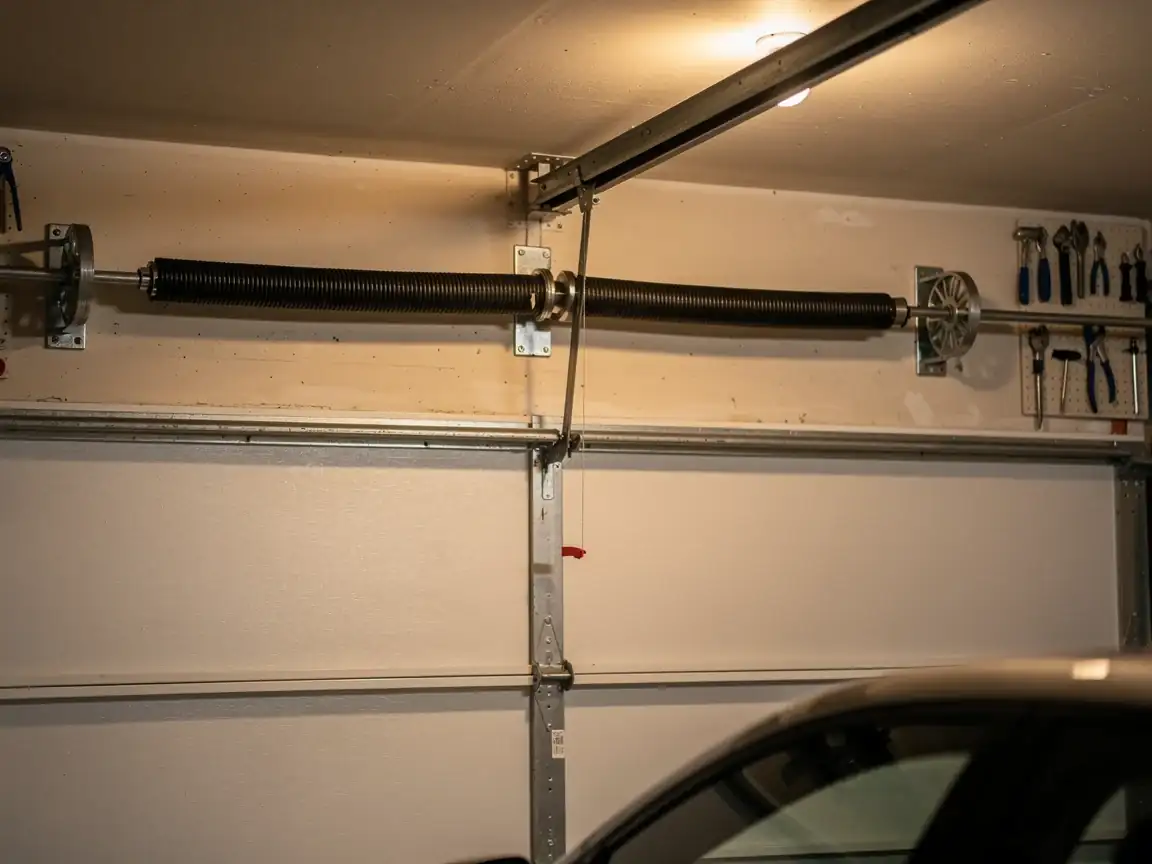
Why This Fails Locally
Most of the housing stock across this service area went up between 1966 and 1982
With a median build year around 1975. That's the exact stretch when builders moved away from steel rollers on most residential doors and started hanging nylon ones instead - lighter, quieter, cheaper to install, and good for maybe fifteen to twenty years of regular opens and closes before the wheel face wears flat or the stem cracks. Four decades on, that original roller set is either long gone or on its last few cycles in a lot of these houses.
The climate here doesn't help
This area sits in a cold moderate band, and nylon doesn't like hard freeze-thaw swings - it gets brittle in the cold, especially on an unheated garage with a north-facing door that never sees sun. A roller that's fine in August can start binding and squealing the first real cold snap of the year, because the plastic has lost flex it had all summer.
So this isn't really a product defect or bad luck
It's a predictable outcome of when these houses were built and what kind of winters they sit through. A roller job here is usually overdue hardware meeting a cold morning, not a mystery.
What Can Go Wrong
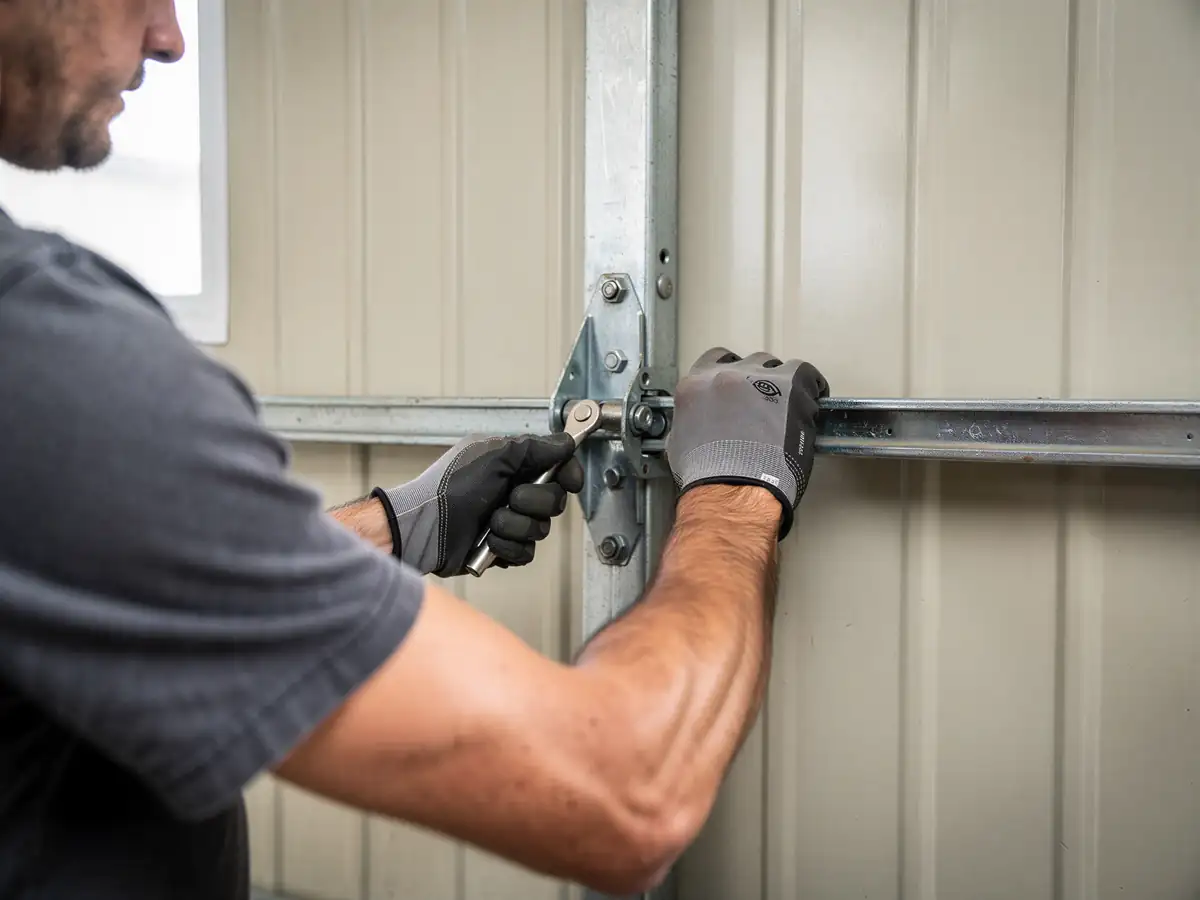
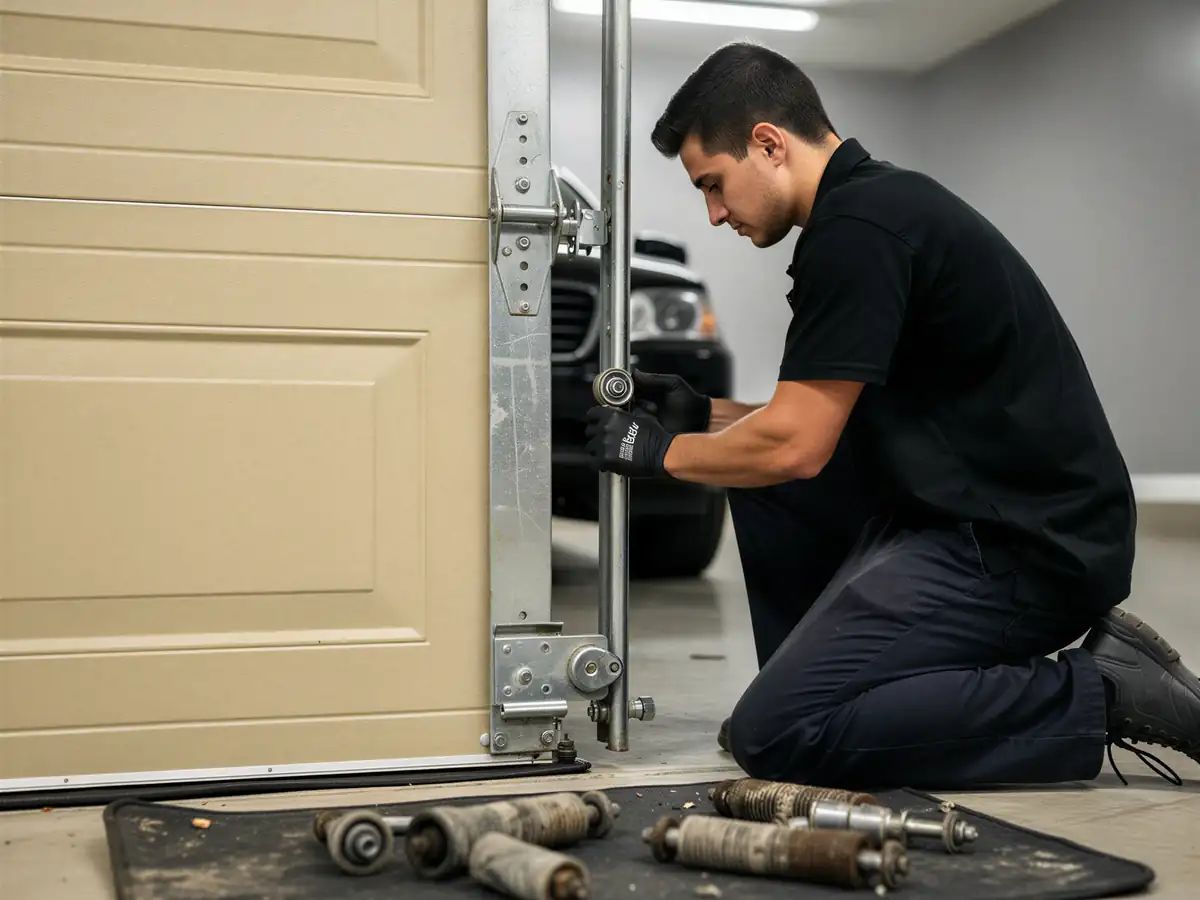
The usual failure starts small: one roller on the bottom section starts to flat-spot, and the door develops a stutter or a thump at the same point in the track every time. Left alone, that flat-spotted roller can split clean through its nylon wheel, and the stem either snaps off or works its way out of the roller bracket. Once a roller is gone, the hinge it rides in is unsupported, and the next thing to go is usually the hinge itself or the edge of the track where metal now drags on metal.
On older doors - the ones most common in this 1960s and 70s stock - the rollers often sit on steel stems with no bearing, so a dry or rusted roller doesn't just squeak, it can bind hard enough to stall the opener mid-cycle. That's when people think they need a new opener, when really it's a $10 roller seizing in the track.
The honest limitation here: if a roller has been failing for months and dragging on a bent or rusted track, replacing just the roller doesn't fix it. At that point the track itself may be out of alignment, and swapping rollers without checking the track is a callback waiting to happen. We won't sell a roller job on a track that needs straightening or replacing too.
What You Pay
We don't have a posted number for this job across the board, because the honest range depends on how many rollers are bad, whether it's a 2-panel or a full set of ten to twelve, and whether the track needs attention at the same time. A single roller swap is a small job. A full set on a double door, especially if the hinges or a section of track come with it, is a bigger one.
What we can tell you is that this area runs a median household income of $46,071, and most of the roller calls we get are from people who want the door fixed, not replaced. That's usually the right call - a worn roller set on an otherwise sound door, sound track, and working opener is a straightforward repair, not a reason to start pricing a new door.
Where it gets more expensive is when the rollers have been bad long enough to chew up the track or wear out a hinge. At that point you're paying for roller plus track plus labor to realign everything, which is a different job than a clean roller swap. We'll tell you up front which one you're looking at before we start.
How It Shows Up
It usually starts as noise before it becomes a stuck door
A grinding or squealing sound at one spot in the travel, repeating every cycle, is a flat or dry roller. A door that jerks or hesitates at the same point going up or down is often the same thing a step further along - the roller's starting to bind in the track rather than roll through it.
In this area, the clearest tell is a door that works fine most of the year and then starts acting up the first cold stretch of winter
That's brittle nylon losing what flex it had left. If you hear a pop followed by the door suddenly running rough on one side, a roller stem has likely broken and the section is now riding unevenly.
A door that comes fully off the track, or won't move at all, isn't a roller-only job anymore
At that point something else has given out too, and it needs a look before anyone forces it back into the track. If you're hearing the grinding and the door still moves, that's the window to get the rollers swapped before it gets to that point.