Season by Season
Bowling Green sits in a cold moderate climate band
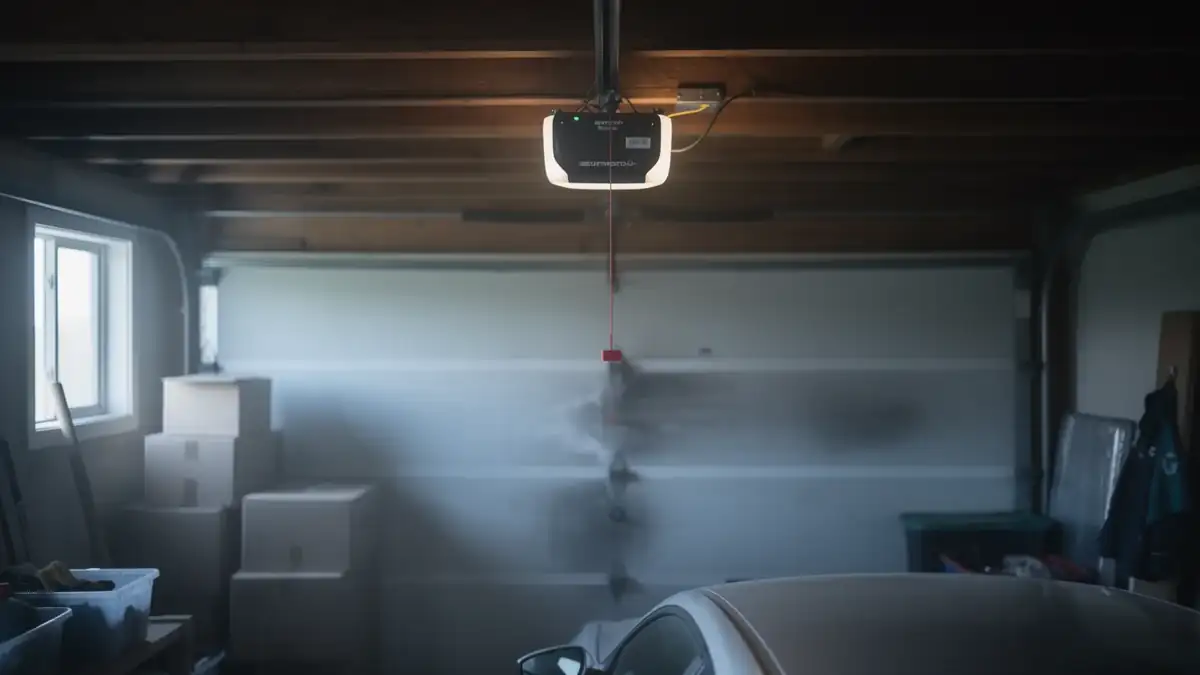
And that matters more for your opener than for your door panels. Winter here brings hard freezes and the kind of weather that trips breakers and knocks out power at the worst moment - usually when you're trying to get the car out before a shift or get it back in before the temperature drops further. An opener with no battery backup just sits there dead, chain or belt locked in place, until the power comes back or you pull the manual release.
Spring and fall bring their own issue
Temperature swings that make steel contract and expand, which tightens up tracks and binds rollers that were already worn. Summer is the easy season here - less strain on the motor, fewer power interruptions, and a good window to get ahead of repairs before the cold comes back. If you're going to schedule opener work, late summer or early fall is the better time, before the first freeze finds the weak point for you.
When It Stops Being a DIY Job
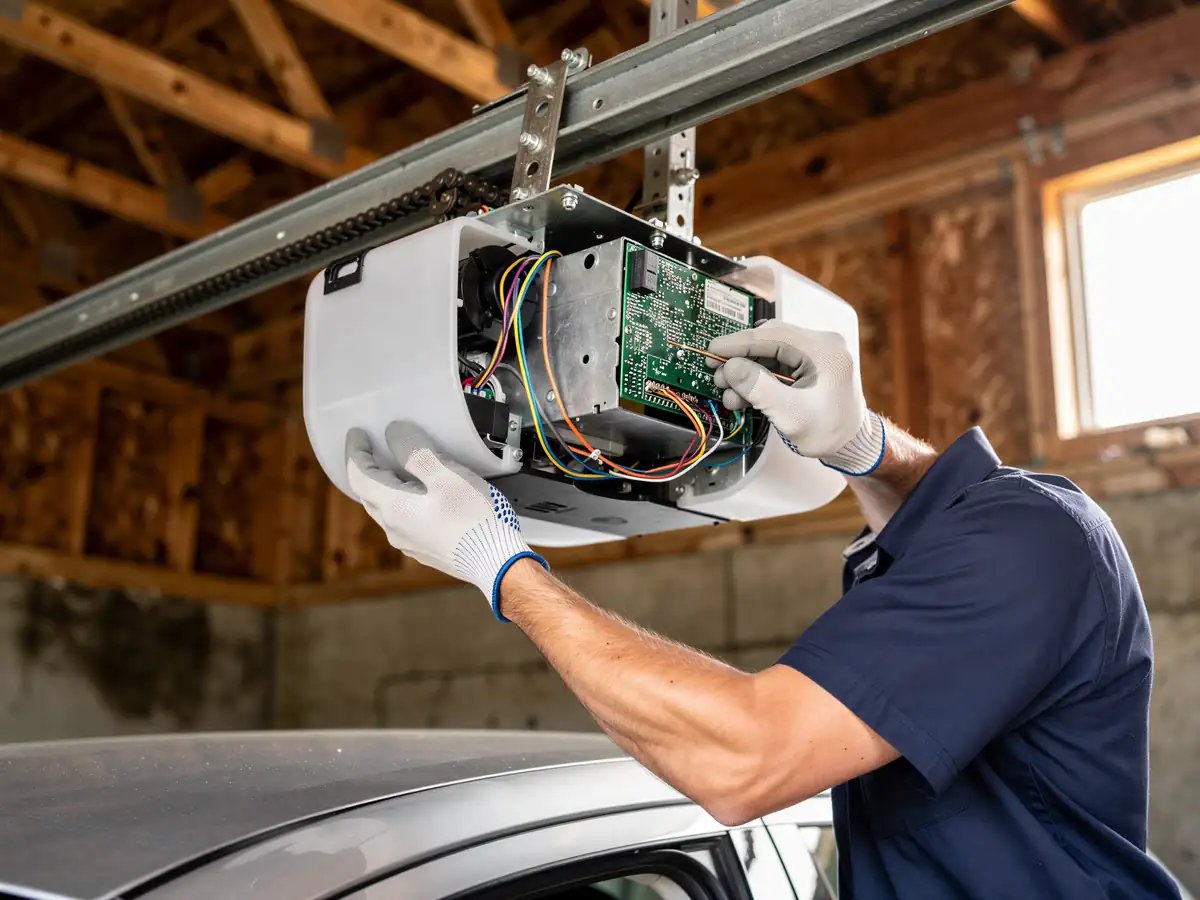
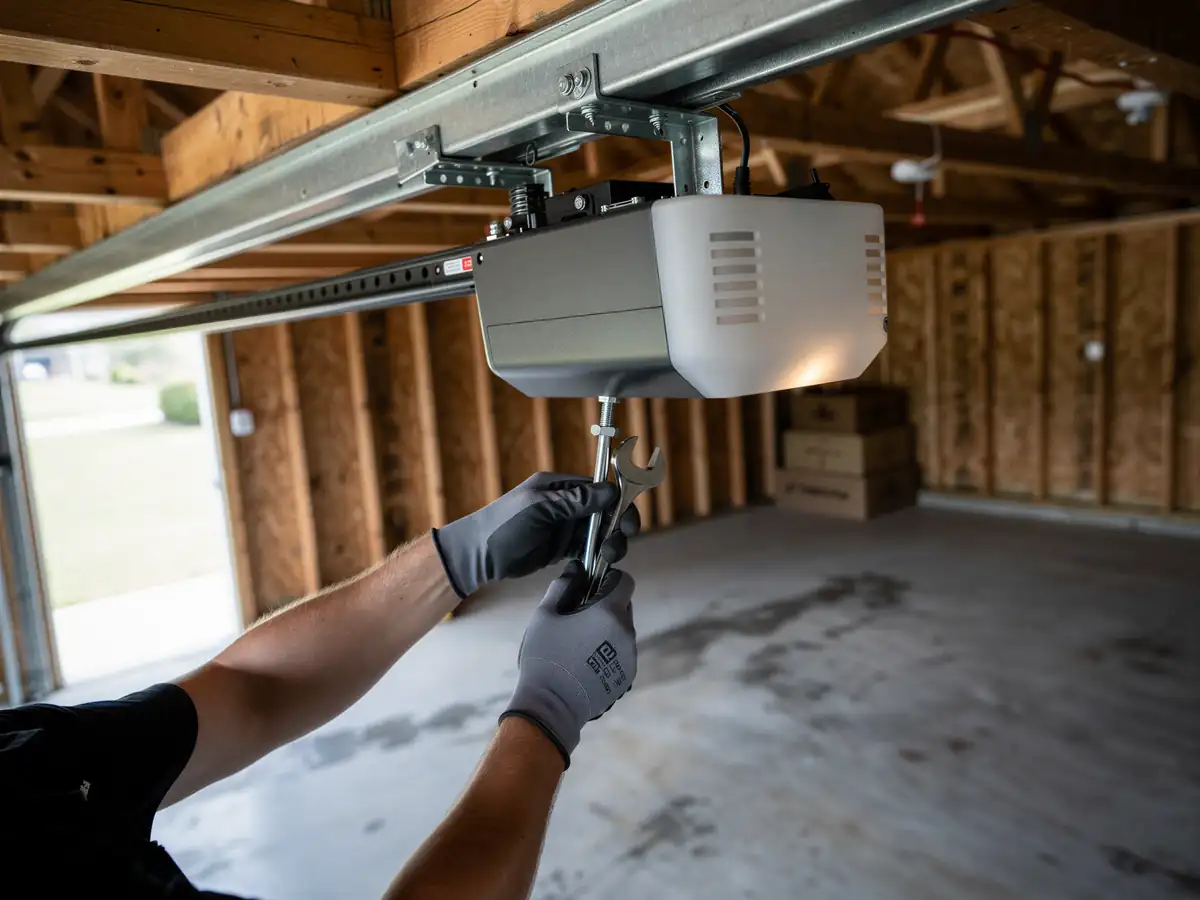
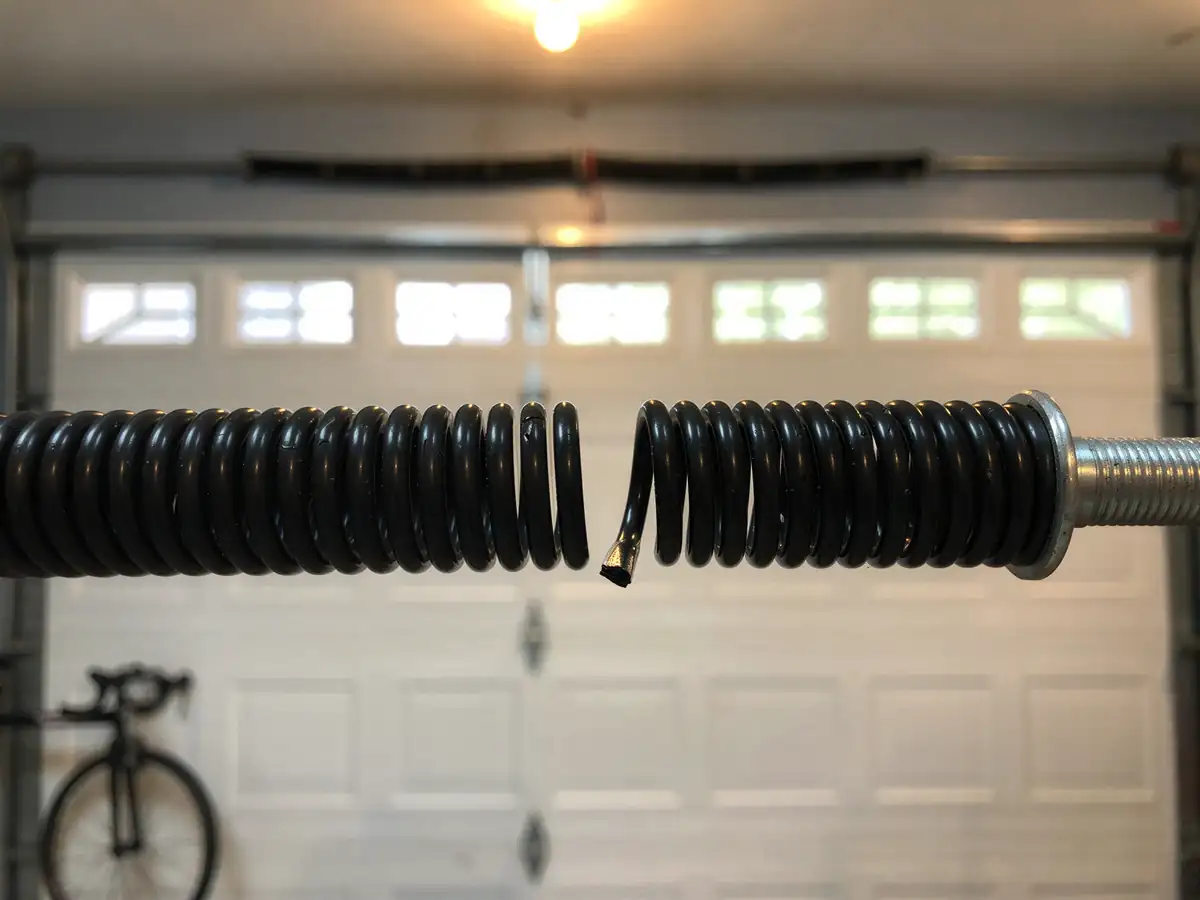
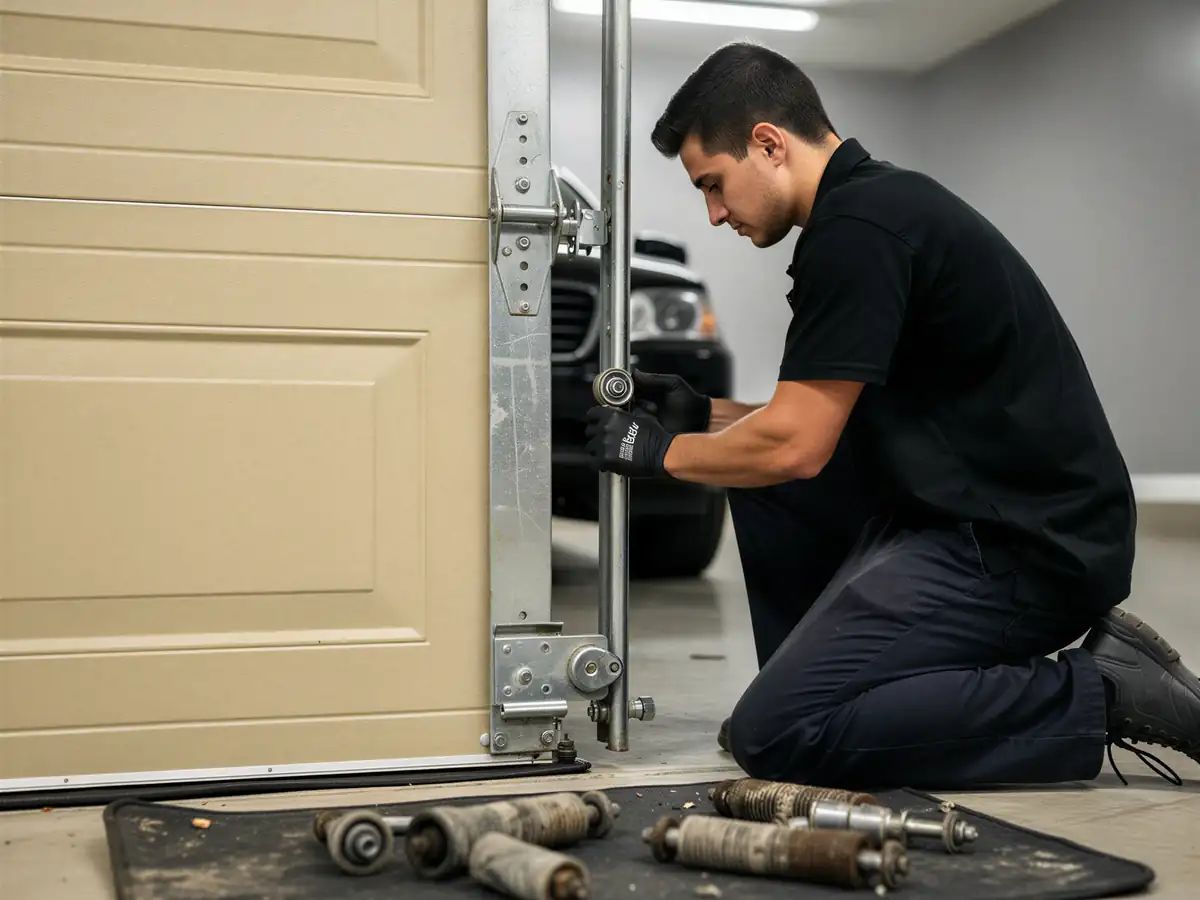
Swapping a remote battery or resetting a keypad code is fine to handle yourself. What isn't a DIY job is anything involving the opener's drive gear, the circuit board after a power surge, or a torsion spring on a door that's lost power mid-cycle and is sitting half-open under tension. A lot of the housing in this area was built between 1966 and 1982, median year 1975, which means a fair number of openers still running are either original units or early replacements - older motors, older gearing, and no safety reversal sensors in some cases.
If your door won't respond after a power cut even once power is restored, that's not a remote problem, that's usually a burned-out circuit board or a motor that seized while trying to run on a brownout. At that point you're not troubleshooting, you're replacing a part you can't source at a hardware store. We don't carry parts for every opener model still running on original 1970s hardware - some of those just aren't made anymore, and the honest answer is a new opener costs less than hunting down an obsolete board.
What Is Going On
The pattern is straightforward once you see it. Across the four main pockets of 1960s and 70s construction that make up this service area, openers were installed before battery backup was ever standard equipment. So when the power goes out - which it does here, given the winters - the opener just stops, full stop, no fallback. The door is stuck wherever it was in its travel.
That's different from a spring problem or a track problem. The door itself is usually fine; it's the opener that's the single point of failure. And because so much of the stock here dates to the same decade and a half, a lot of houses on the same street are running the same vintage of hardware, which means the same failure shows up block by block when a storm knocks out power to a whole section at once. It's not bad luck hitting one house - it's the same build era hitting a whole neighborhood the same way.
What Local Conditions Do
With 4,889 households in this service area and 2,306 of those owner-occupied
A lot of garage doors here are tied to the opener that came with the house, not something upgraded since. At a median household income of $46,071, replacing an opener before it fails isn't always first on the list, and we get that - it's a reasonable thing to put off until it stops working.
- 4,889 households
- 2,306 owner-occupied
- $46,071 median household income
The trade-off is that when it does fail, it tends to fail during the same cold snap that's already making everything else harder
We cover Bowling Green and out to Oakland, Auburn, Brownsville, and Franklin, and the same pattern holds across that stretch: older opener stock, the same winter power interruptions, and owners who'd rather fix it once than replace it twice. A battery backup unit is the one upgrade that actually solves the power-cut problem directly, rather than just delaying the next failure.