What a Service Call Actually Covers in Bowling Green
What a Bowling Green Garage Door Pros service call actually covers, tied to this area's 1966-1982 housing stock and cold-moderate winters that wear out original hardware.
Most of the houses we work on in this area went up between 1966 and 1982, and that stretch of construction matters more than people think when it comes to what a spring tune-up or a cold-morning no-start call involves. Winter here sits in a cold-moderate band - not brutal, but enough freeze-thaw cycling each year to stiffen grease on torsion springs and tighten up metal track that was already installed forty to fifty years ago. A service call in January usually starts with us checking whether the door is dragging because of cold-thickened lubricant or because the spring itself has lost tension from decades of temperature cycling. Spring and fall calls look different - we're checking for rust creep on original hardware that's been through enough wet-to-dry swings to start pitting. Summer calls are mostly about heat-expanded panels binding in tracks that were sized for a door half a century younger than the one now hanging in it. None of this is dramatic weather. It's slow wear from an ordinary cold-moderate climate acting on hardware that's well past its expected service life in a lot of the housing stock we see.
When It Stops Being a DIY Job
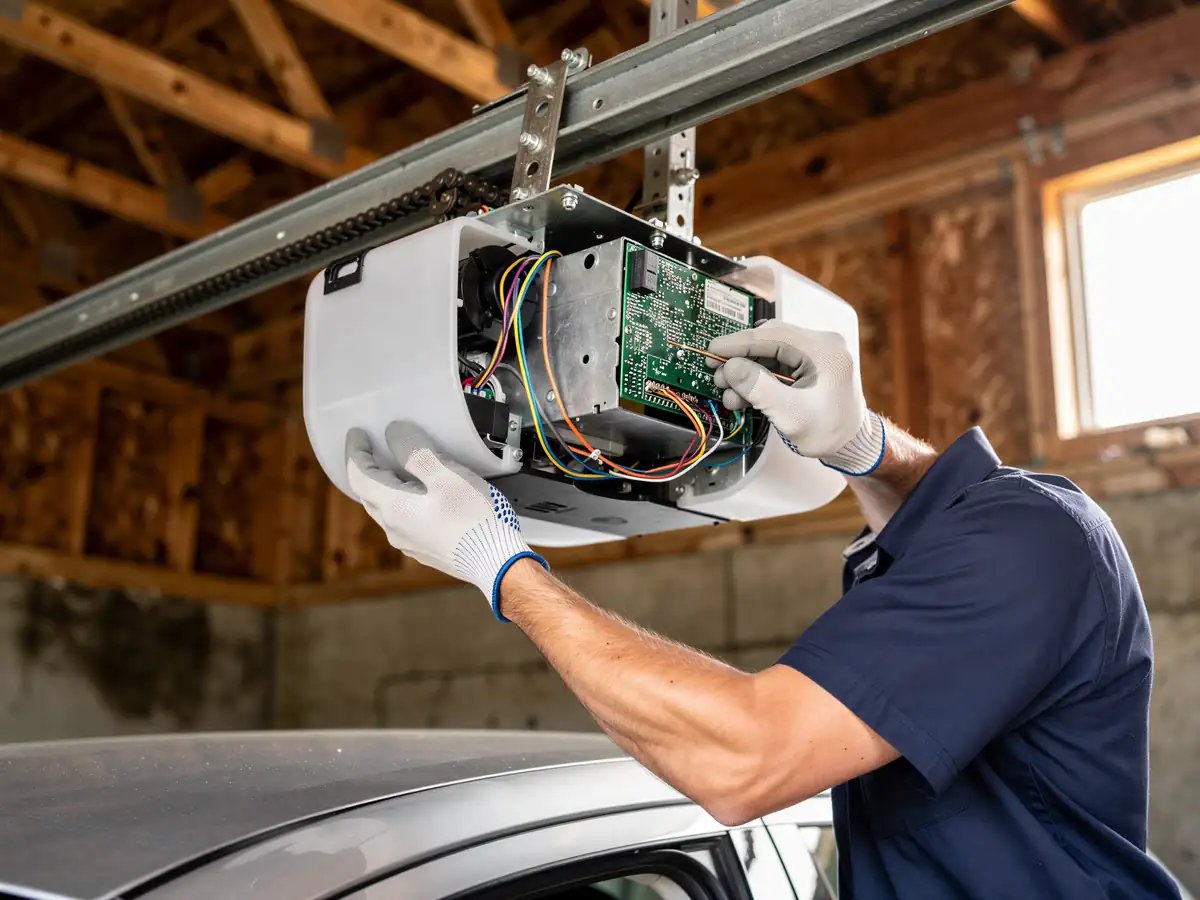
A lot of owners in homes from the 1966-1982 era try to handle a sticking door themselves, and that's fine right up until the job involves the torsion spring or anything under tension. If your door was installed during that build window, there's a real chance the spring system is original - and original springs from that era were sized for the door weight and winding specs of the time, not for whatever replacement panel might have gone on since. Swapping a spring on a system you don't know the wind direction or wire gauge for is how people end up in the ER, not how they save a service call fee. We also draw a line at opener logic boards and circuit work - that's an electrician's job past a certain point, not ours. With a median household income of $46,071 in this service area, we know most people are weighing whether a repair is worth it against just replacing the unit, and we'll tell you honestly which way the math points once we've seen the hardware.
What Is Going On
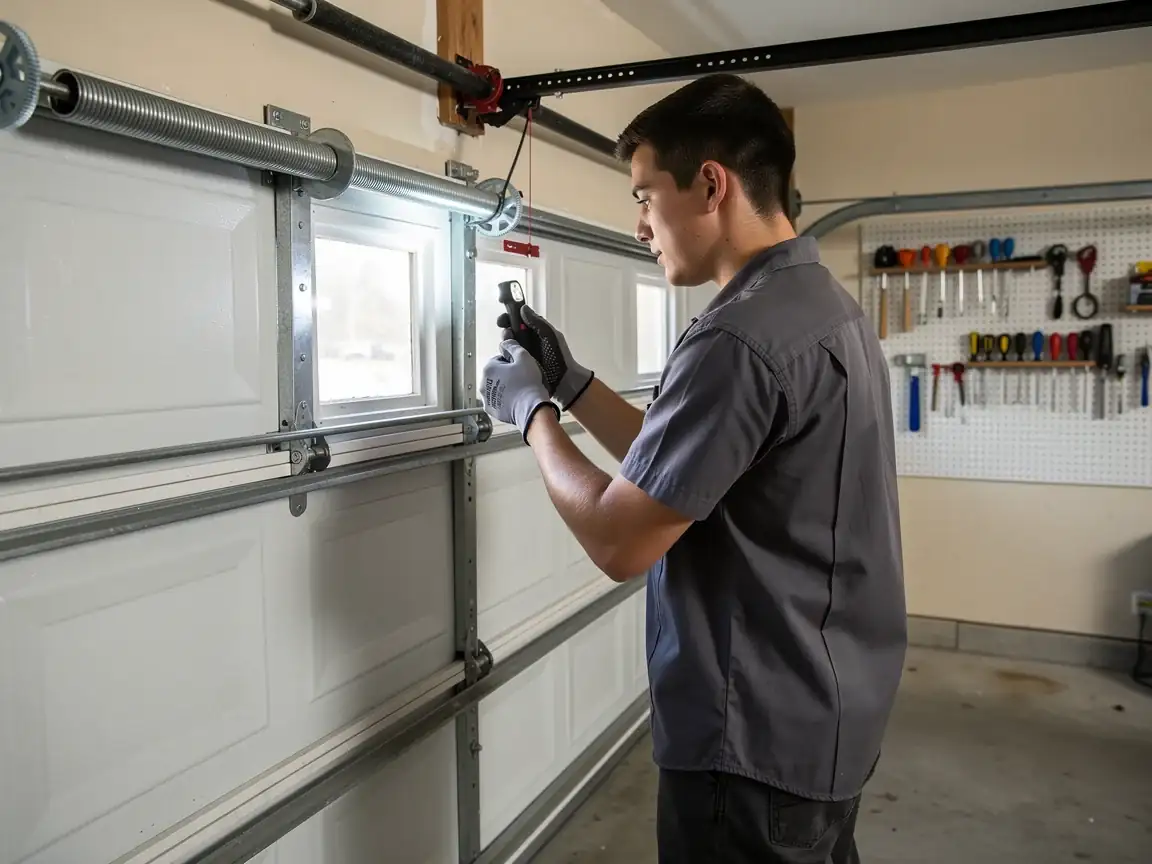
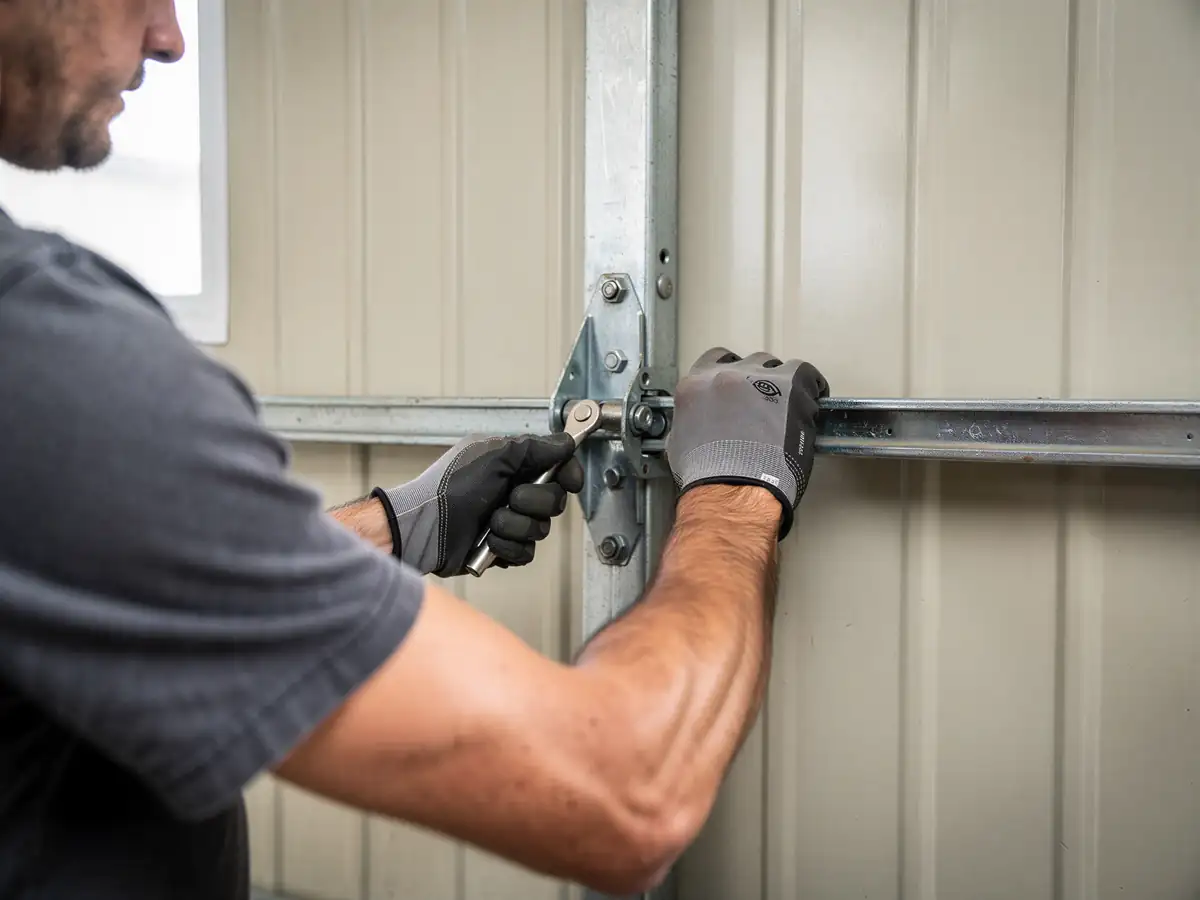
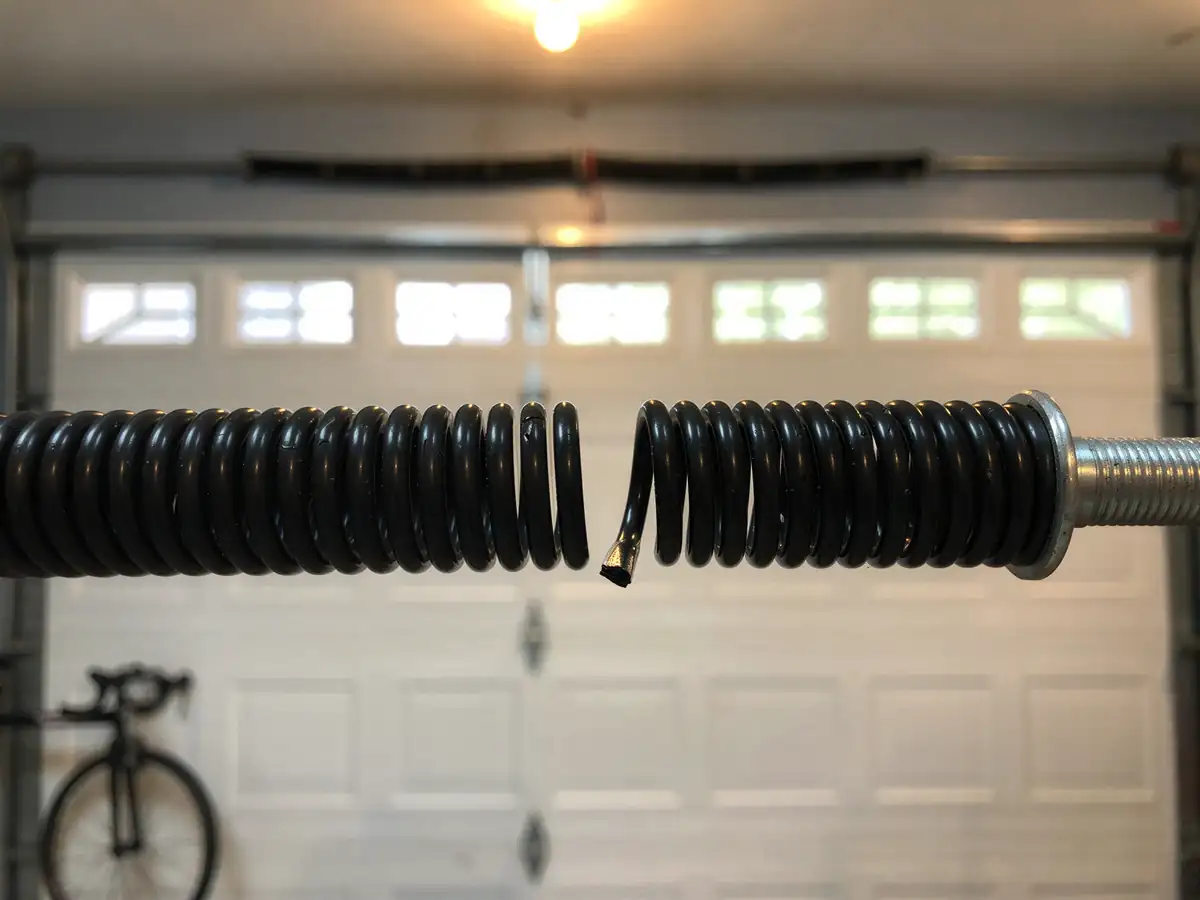
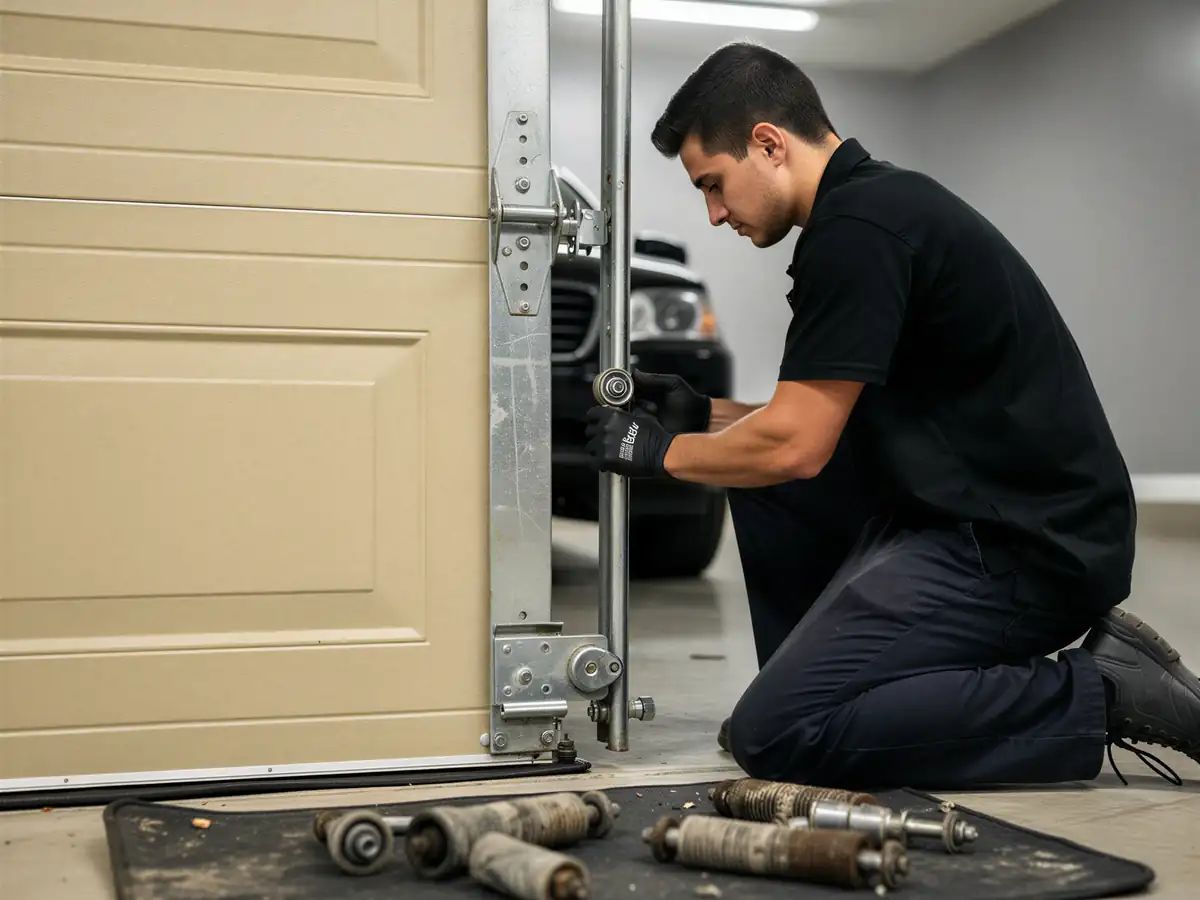
When we get called out, the first question isn't "what's broken" - it's "how old is this door" and "what's it attached to." Given that most of the housing stock in the service area dates to the 1960s and 1970s across the handful of neighborhoods we cover, we're often looking at original torsion hardware that's simply reached the end of its rated cycle count, not a defect. A spring rated for roughly 10,000 cycles, installed in 1972, has likely been wound and unwound well past that by now. Rollers on these older doors are frequently the original steel type, not nylon, and steel rollers on fifty-year-old track wear the track itself unevenly over time, which then throws the whole door out of alignment. We check cable fray, bottom bracket wear, and whether the header bracket has pulled loose from lumber that's shrunk over decades - common in houses this age, rare in anything built in the last twenty years.
What Local Conditions Do
The cold-moderate climate here doesn't produce the kind of extreme swings that crack concrete overnight, but it does mean steady freeze-thaw stress on anything metal and anything bolted into a foundation that's settled over fifty-plus years. That slow movement is why so many service calls in houses from this build era start as a "the door won't close all the way" complaint and turn out to be a track that's shifted a half-inch out of plumb. We cover the service area out to Oakland about 12 miles off, Auburn at 17, Brownsville at 18, and Franklin at 19 - distances that matter for scheduling more than for the actual diagnosis, since the housing stock and climate exposure are similar across that whole radius. With 4,889 households and 2,306 owner-occupied houses in this area, we see the same handful of failure patterns repeat house after house, which is part of why a service call here tends to be a quick diagnosis rather than a guessing game.
How it works
From “it’s stuck” to “it’s fixed”
01
Tell us what’s wrong
Describe the symptom - won’t open, loud bang, opener runs but the door won’t move.
02
On-site diagnosis
A technician tests the door under power and by hand and finds what actually failed.
03
Clear, up-front plan
You get the fix that’s needed and what drives the cost - before any work starts.
04
Repaired & tested
The repair is done, the door is set true and tested, and the work area left clean.
Not sure which repair your door needs in Bowling Green, KY? Describe what it’s doing - every job starts with a diagnosis.
Cold-moderate winters here thicken the grease on torsion springs and tighten up track clearances, especially on hardware original to houses built in the 1966-1982 window. It's rarely a new problem - it's an old spring or track finally showing its age once temperatures drop.
Is my door's hardware original to the house?
If your house was built in that 1966-1982 stretch common to this area and no one's mentioned a door replacement, there's a good chance the torsion spring and track are original. We check wind type and cycle wear on the first visit to tell you for sure.
Do you serve areas outside Bowling Green itself?
Yes - we cover out to Oakland (about 12 miles), Auburn (17 miles), Brownsville (18 miles), and Franklin (19 miles). Housing stock and winter conditions are similar across that whole radius, so diagnosis and the work itself don't change much by distance.
When is it not worth repairing an old door?
When the spring system, track, and rollers are all original to a house from the 1960s-70s and failing together, patchwork repair often costs close to what a new door and opener would run. We'll lay out both numbers honestly rather than push one option.
Ready to get your garage door sorted?
Tell us what it’s doing and where you are in Bowling Green - we’ll take it from there.