Garage Door Installation That Fits Bowling Green's Older Housing Stock
Original Bowling Green homes built 1966-1982 often run original garage doors and openers. See why installation fails locally here and what it costs to fix.
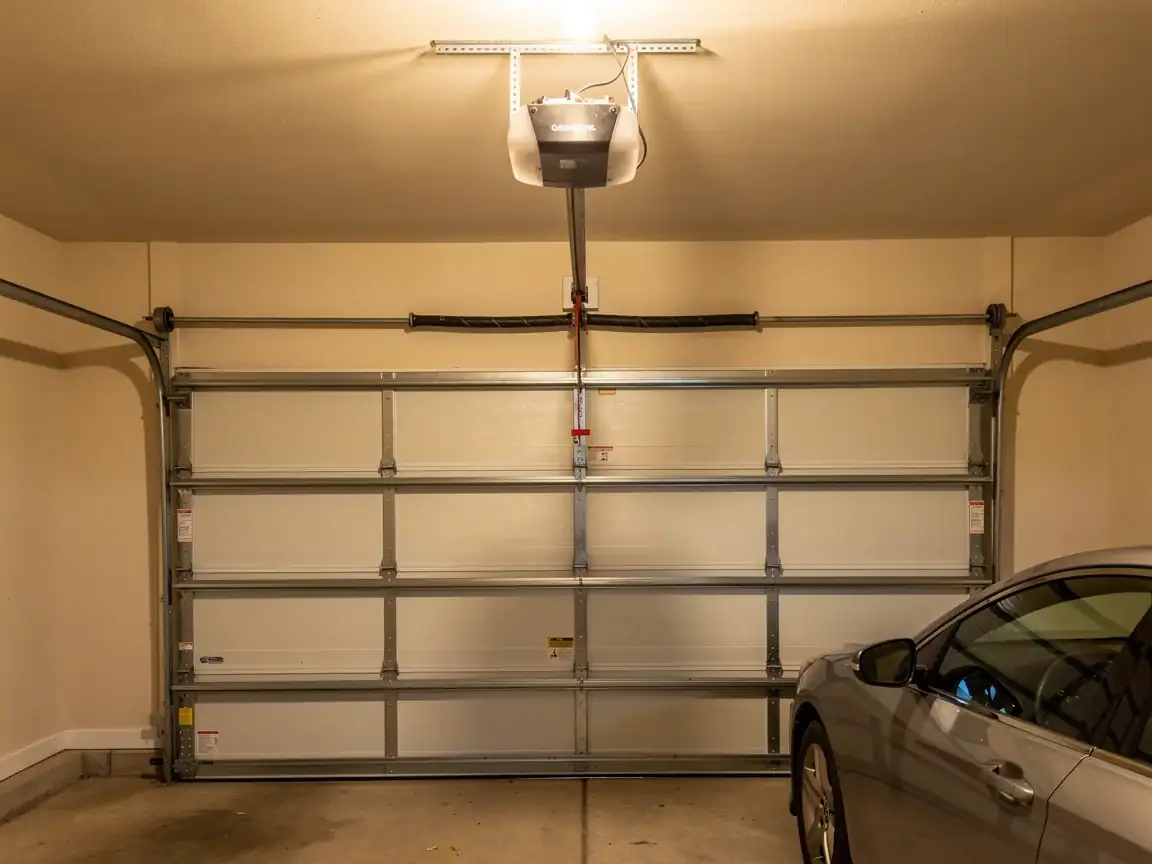
Most of the houses we work on in Bowling Green went up between 1966 and 1982, with the median build year landing around 1975. Across the four main residential pockets we cover, that means a lot of garages are still running the door and track hardware that came with the house - single-layer steel panels, non-insulated sections, and openers that were never rated for the duty cycle a modern household puts on them. None of that was a problem in 1975. It's a problem now, forty-plus years later, in a climate band that swings cold enough to stiffen grease, contract steel, and crack brittle weatherstripping that was already past its service life a decade ago. A door built for a mild-weather era doesn't flex well with a colder cycle layered on top of it. That combination - old hardware, cold swings - is exactly why installation calls here skew toward full replacement rather than a quick patch. The door isn't failing because of bad luck. It's failing because it's doing a job it was never built to do in a house that's older than the parts suppliers still stock for it.
What Can Go Wrong
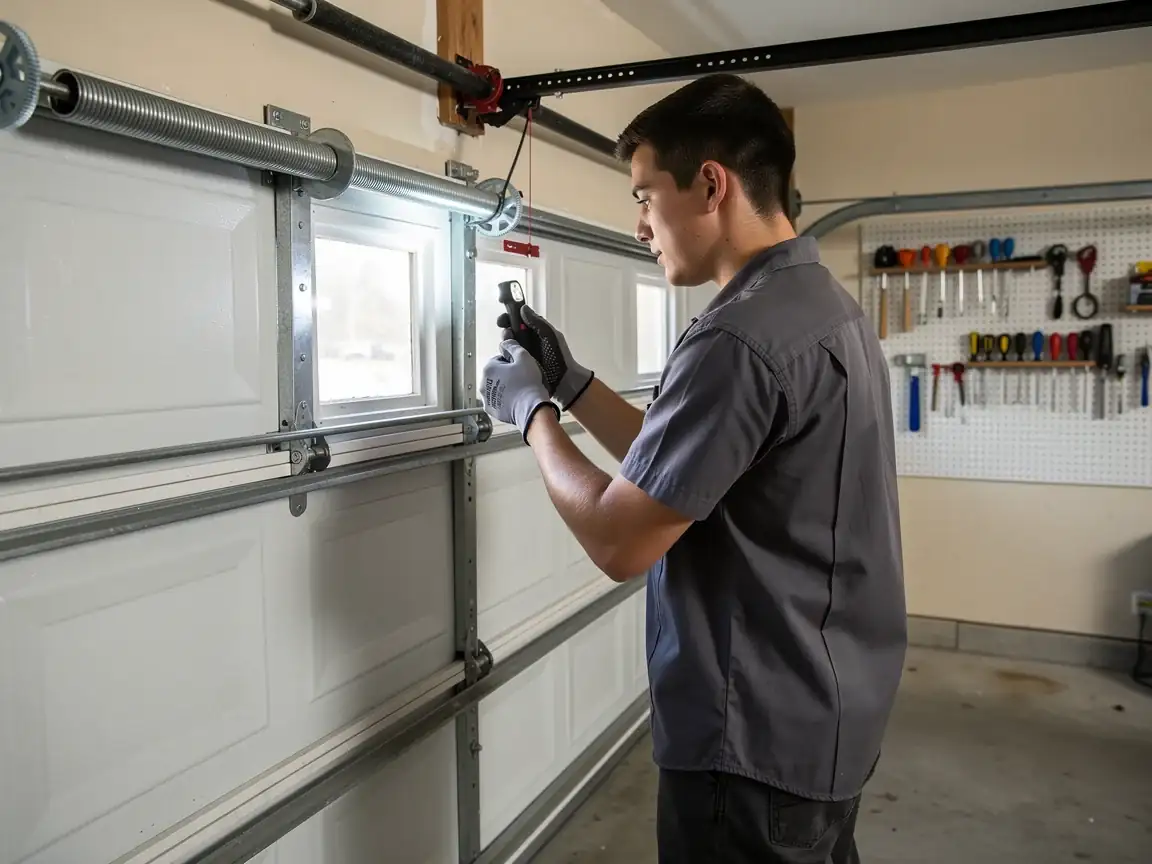
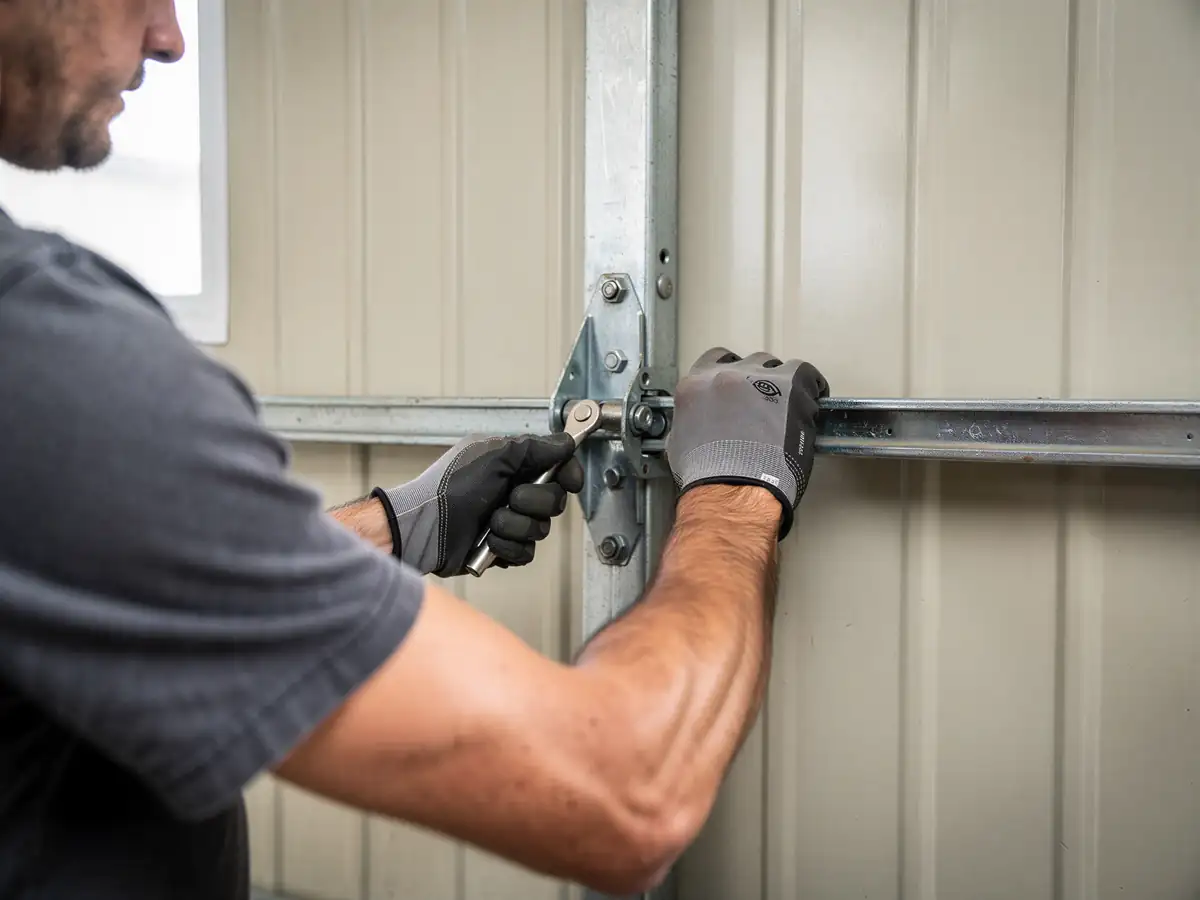
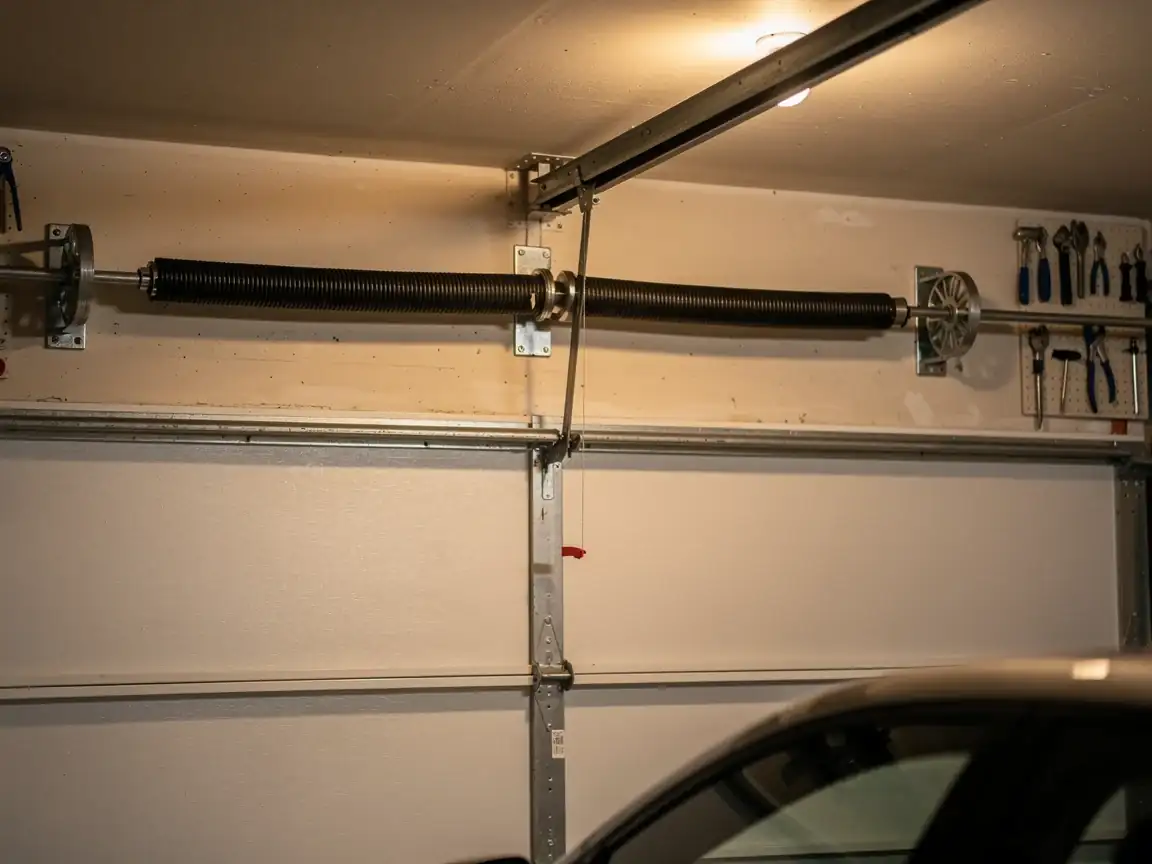
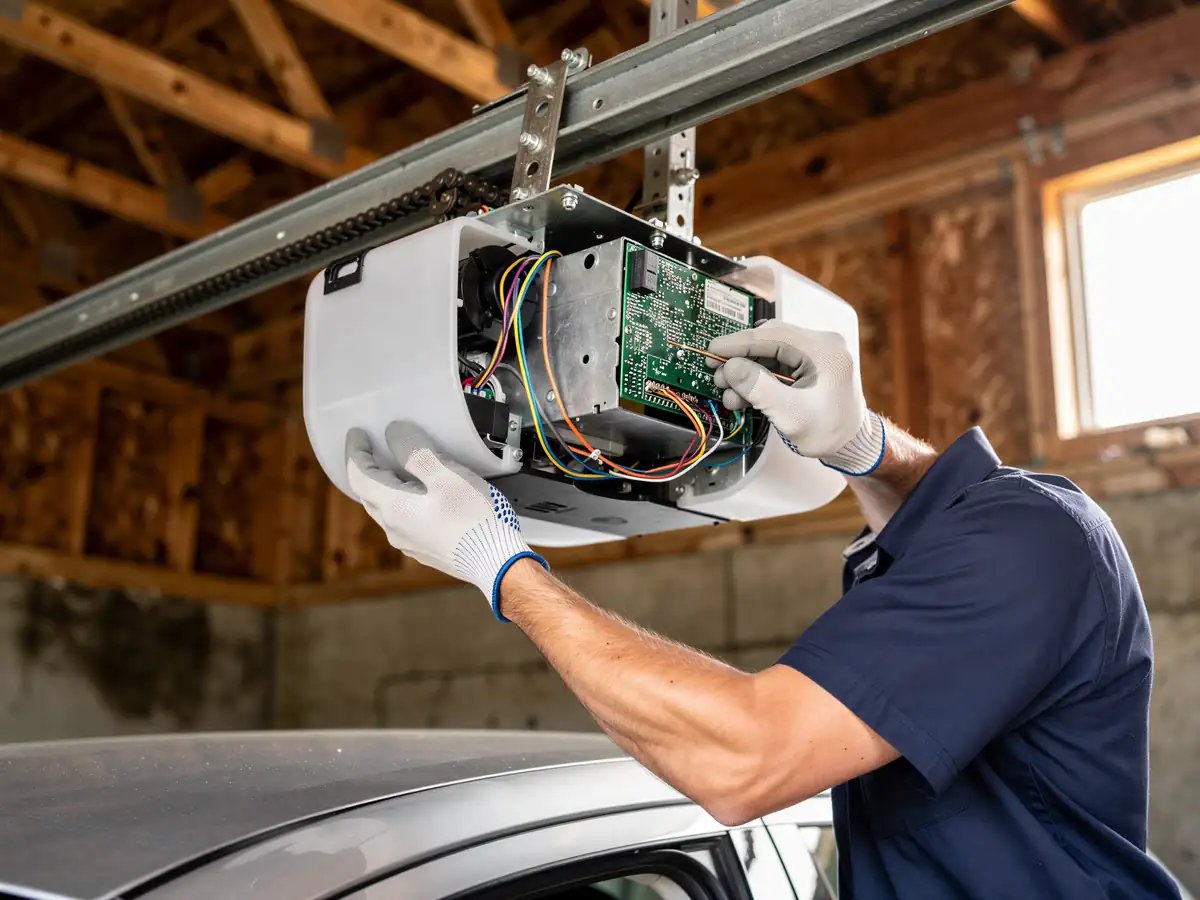
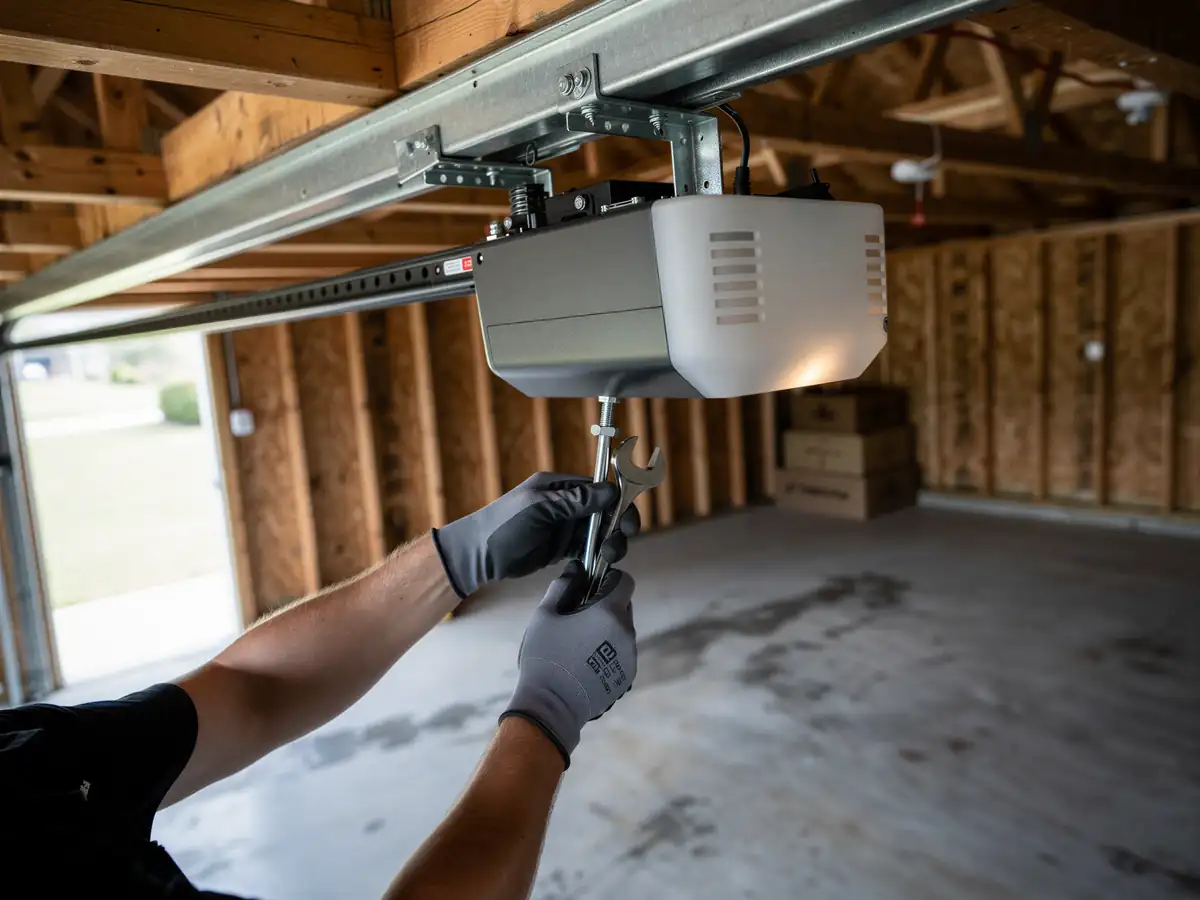
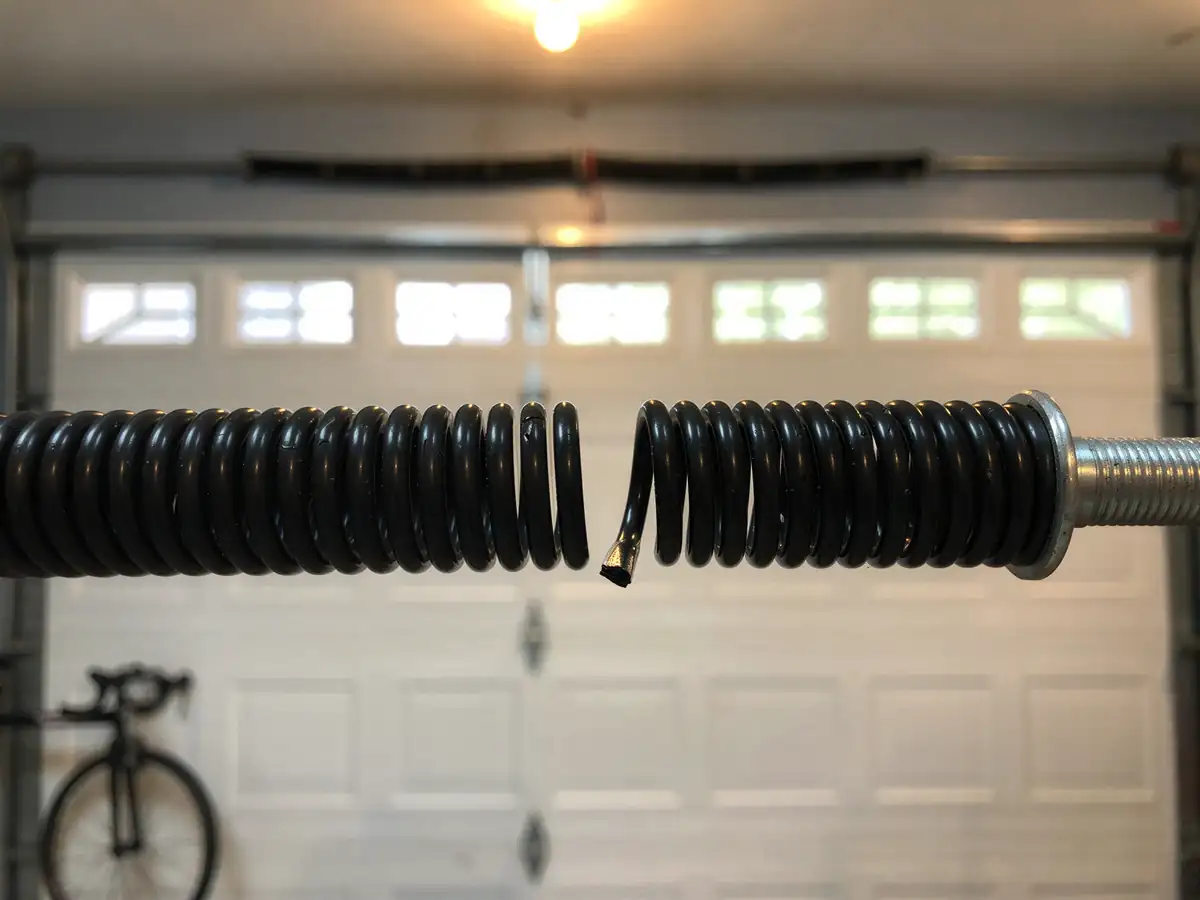
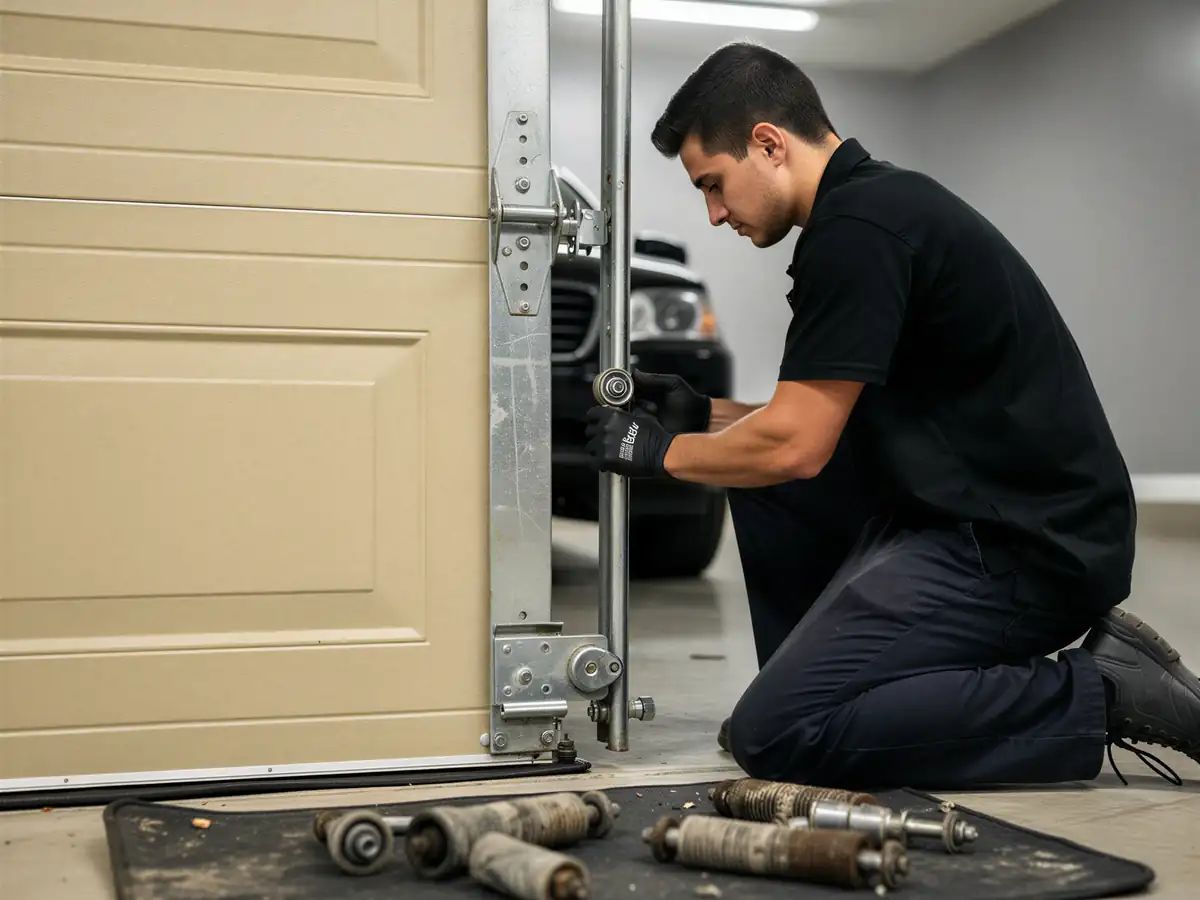
On a house from the 1966-1982 run, the torsion spring is usually original or a mismatched replacement from whenever it first snapped, and it's sized for a lighter, non-insulated panel. Swap that panel for anything heavier down the road and the spring tension is wrong before you even open the door. Track brackets on these garages were often lag-bolted into framing that's shifted slightly over fifty-some years, so alignment drifts and rollers wear unevenly - you'll hear it before you see it. Openers from that era, or early replacements of them, don't have the force-limiting safety reversal that current units require, which matters if there are kids or pets in the house. Cold swings make all of this worse: steel contracts, old grease thickens, and a track that was a quarter-inch off in July binds hard in January. We also see a lot of single-layer doors with no thermal break, which isn't a safety issue but does mean the garage never holds heat, and anything stored against that wall stays cold all winter.
What You Pay
We don't post a flat number here because the job isn't the same from one garage to the next - door size, insulation level, whether the opener needs replacing with it, and whether the track and spring are salvageable or not all move the total. What we can tell you is what drives the estimate up or down: single doors cost less than double-wide ones, insulated sections cost more than bare steel, and if the existing track is bent or the spring is the wrong size for the door you're putting in, that gets priced separately rather than folded into a vague number that doesn't hold up once we're actually in the garage. With a median household income around $46,071 across the area, we try to spec a job that matches the house rather than upselling features nobody asked for. If a repair genuinely gets you another several years out of the existing door, we'll say so instead of pushing a full replacement you don't need yet.
How It Shows Up
Usually it starts small. The door hesitates for a second before it lifts, or it closes a little crooked and you nudge it the rest of the way by hand. On a cold morning the opener strains and groans before it catches - that's thickened grease and a spring that's lost tension fighting a steel panel that's slightly contracted from the overnight temperature drop. Some owners notice daylight at the bottom corner of the door that wasn't there last year; that's the weatherstrip giving out, not the door itself. Others hear a rhythmic thump as it travels, which is almost always a roller that's worn through its bearing. None of these are emergencies on day one. Left alone through a few more cold cycles, though, a spring that's already working too hard for an old, heavy panel is the kind of thing that fails without warning, usually while the door is open. If you're within a short drive of Bowling Green - out toward Oakland, Auburn, Brownsville, or Franklin - the housing age and the cold-swing pattern are similar enough that the same symptoms show up the same way.
How it works
From “it’s stuck” to “it’s fixed”
01
Tell us what’s wrong
Describe the symptom - won’t open, loud bang, opener runs but the door won’t move.
02
On-site diagnosis
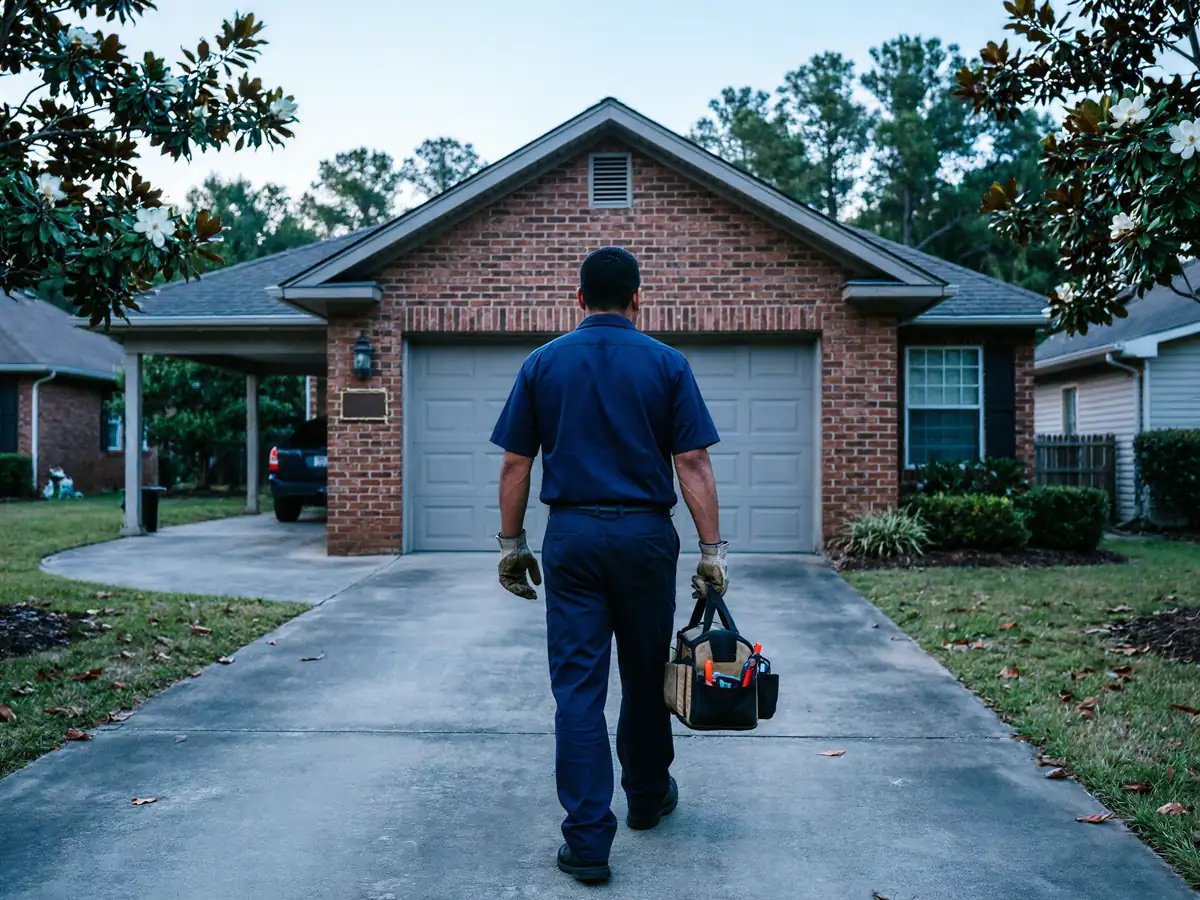
A technician tests the door under power and by hand and finds what actually failed.
03
Clear, up-front plan
You get the fix that’s needed and what drives the cost - before any work starts.
04
Repaired & tested
The repair is done, the door is set true and tested, and the work area left clean.
Not sure which repair your door needs in Bowling Green, KY? Describe what it’s doing - every job starts with a diagnosis.
Why does my garage door stick in the winter but not the summer?
Cold contracts the steel track and stiffens old grease, so clearances that were fine in July get tight in January. On a house from the 1966-1982 era, the hardware is usually original and already a little worn, so the cold swing exposes problems that were marginal the rest of the year.
Is it cheaper to repair my old door or replace it?
It depends on what's actually wrong. A worn roller or a bad spring is usually a repair. If the panel is single-layer steel from the original build and the track is bent, replacement often makes more sense long-term, but we'll look at the specific door before recommending either.
Do older Bowling Green homes need insulated doors?
Not required, but most garages built in the 1966-1982 window went up with bare single-layer steel, and the cold band here means an uninsulated door never holds heat. It's worth considering if you use the garage as workspace or store anything that doesn't do well cold.
Ready to get your garage door sorted?
Tell us what it’s doing and where you are in Bowling Green - we’ll take it from there.