Doing It Yourself
When a spring breaks or a cable comes off the drum, the honest answer is
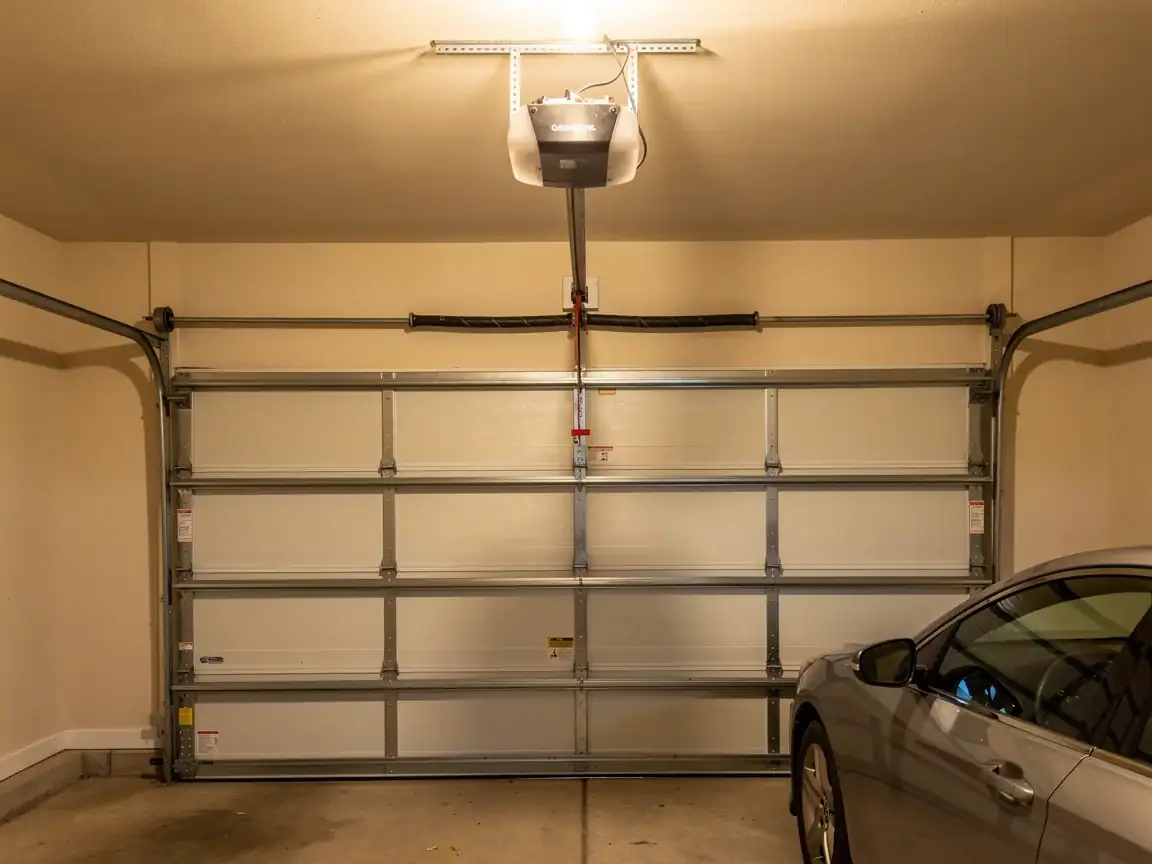
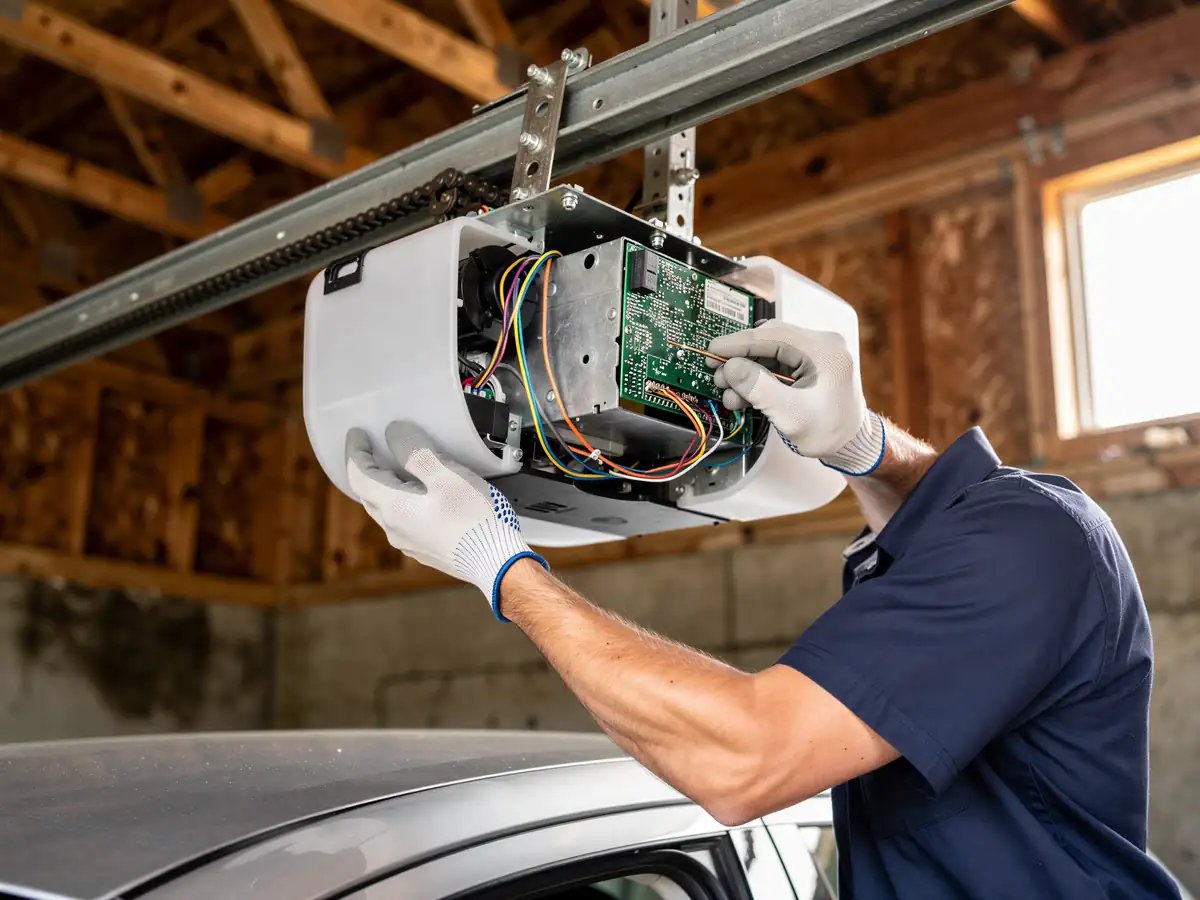
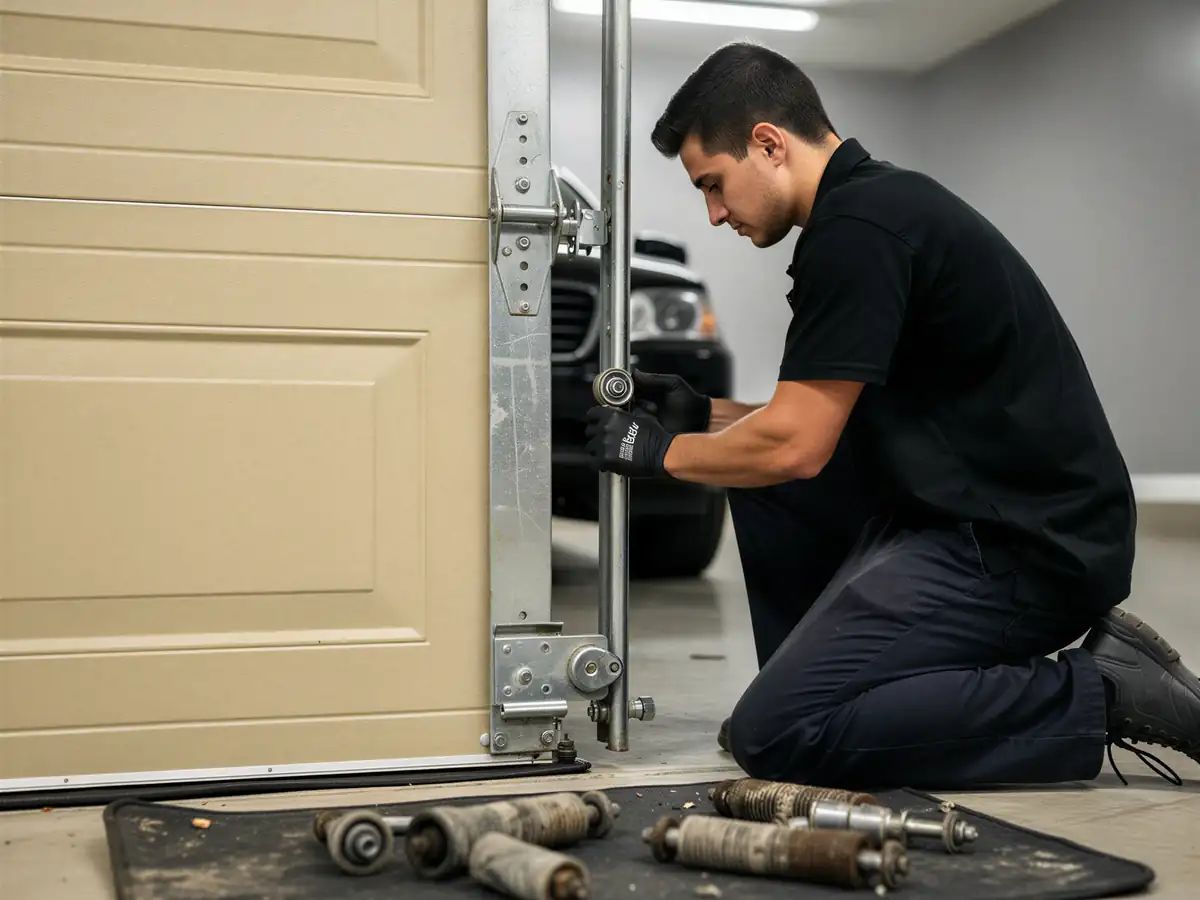
Don't try to lift the door yourself. A door with a broken torsion spring can weigh twice what it feels like fully counterbalanced, and if the opener still has power, forcing it with the wall button can strip the gears or bend the track. Unplug the opener, pull the manual release only if the door is already down, and leave the spring itself alone.
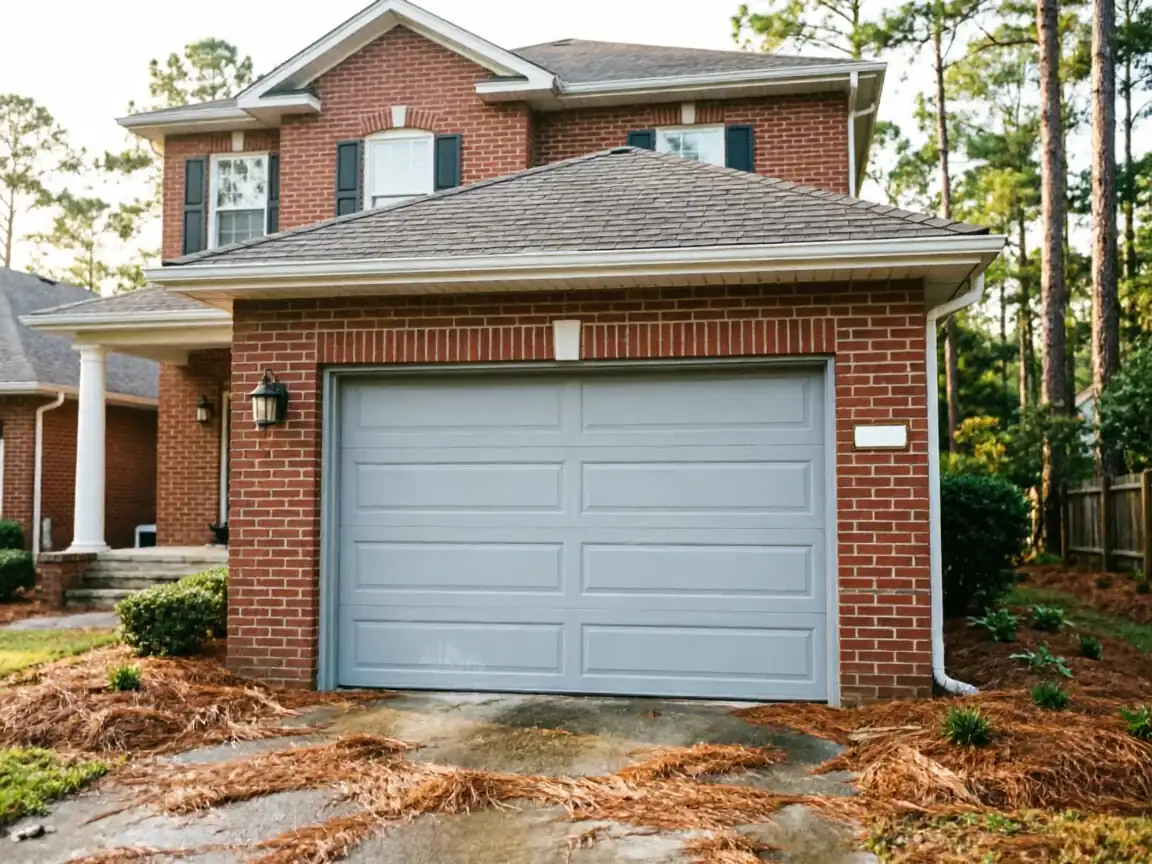
Oakland's housing mostly went up around 1976
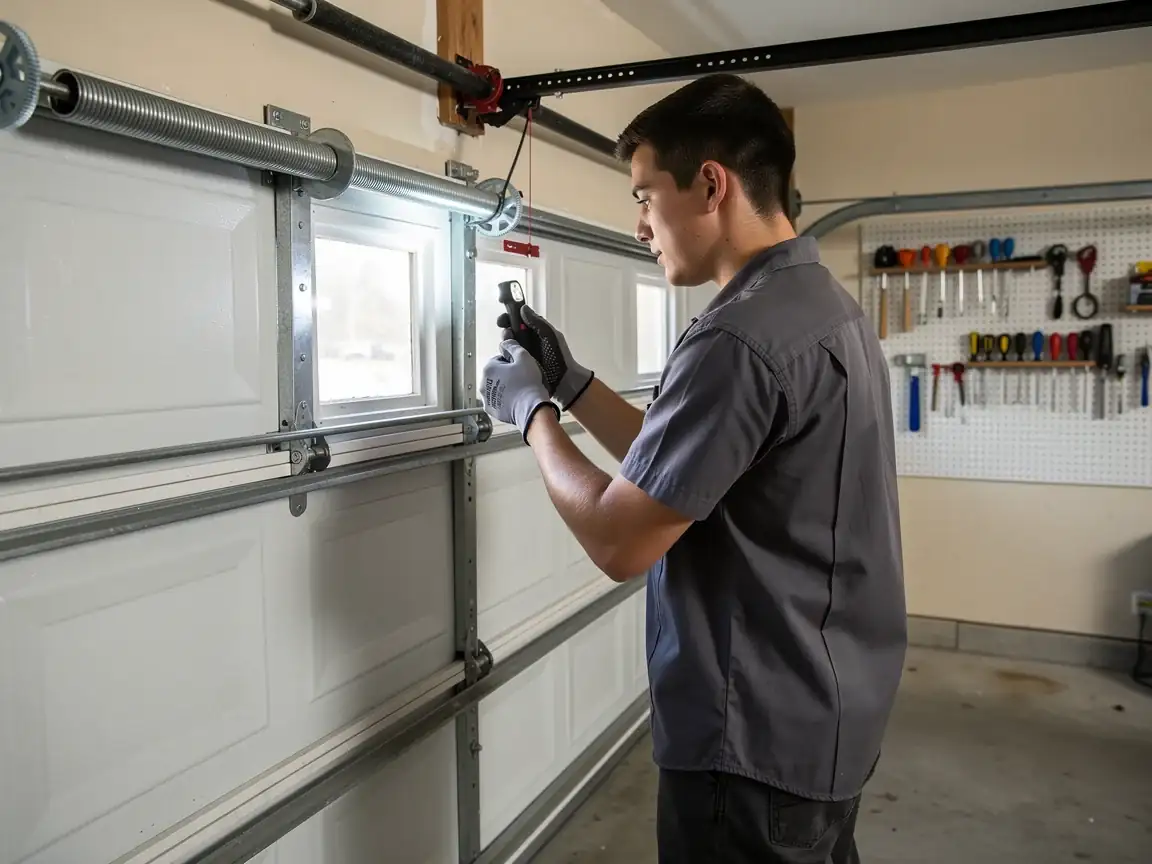
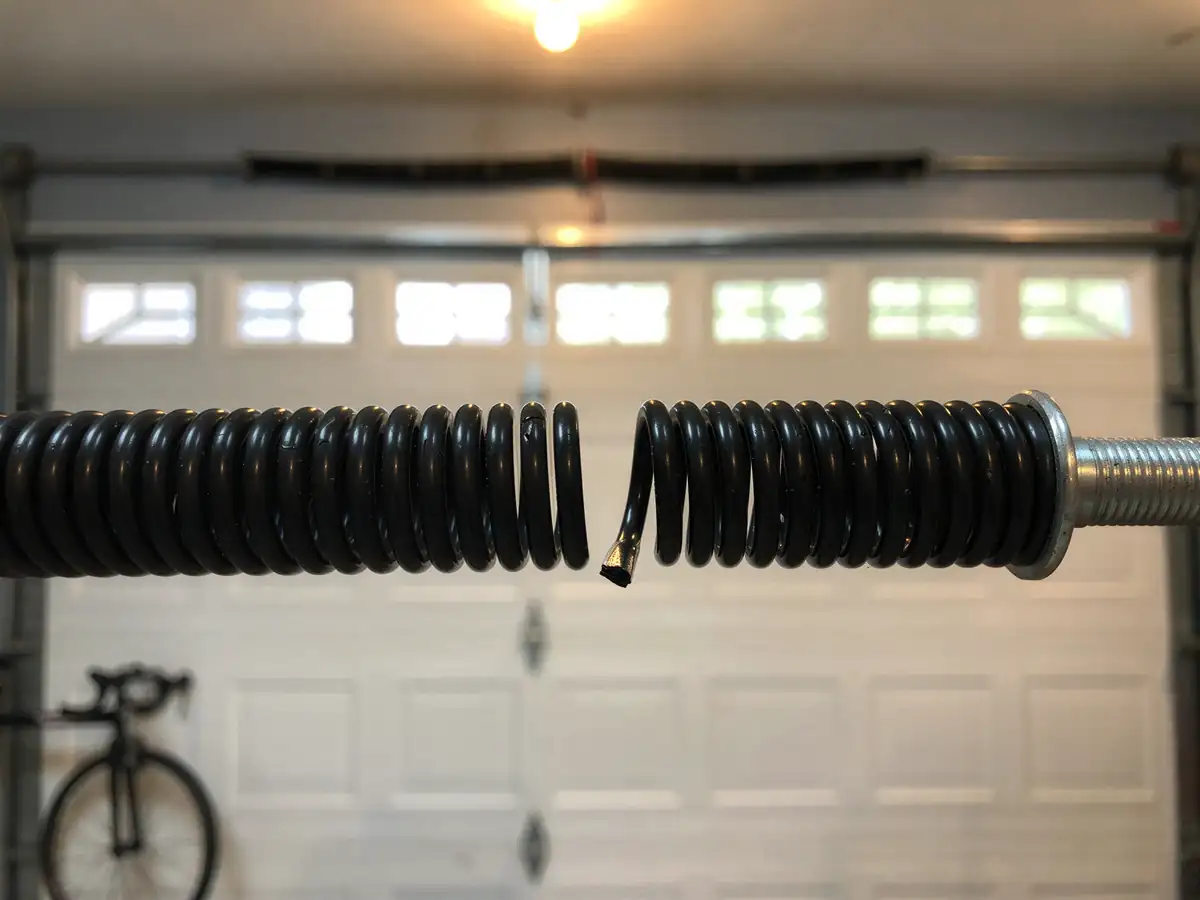
And a lot of those garage doors are still running original torsion hardware - galvanized springs rated for a specific door weight that nobody updated when a heavier insulated door went on later. That mismatch shows up often enough on houses from this era that we check spring size against door weight as a first step, not an afterthought. There's no DIY fix for a spring wound tight under 150-plus pounds of tension. That part of the job stays with us.
How It Shows Up
In a house from the mid-1970s, trouble usually starts quiet: the door hesitates half a second before the opener catches, or it shudders right at the halfway mark instead of running smooth both ways. On a torsion system with 50-year-old steel, that hesitation at the midpoint is almost always the spring telling you it's lost tension, not the opener.
Cold mornings make it worse. Oakland sits in the same moderate-cold band as the rest of the service area, so grease thickens and steel contracts on the coldest days of the year, and a spring that was marginal in October tends to finally let go in January. If the door drops hard and doesn't catch, or the cable looks unwound off the drum on one side, that's a parts problem, not something an adjustment will fix.
What Can Go Wrong
Extension springs on older double doors fatigue and snap without warning, sometimes taking a bottom bracket with them. Torsion springs on a 1970s-era door can also end up undersized if a heavier door replaced the original at some point without the spring getting swapped to match - we see that more on houses in this age bracket than on newer builds. Either way, a broken spring under tension isn't something to clear yourself.
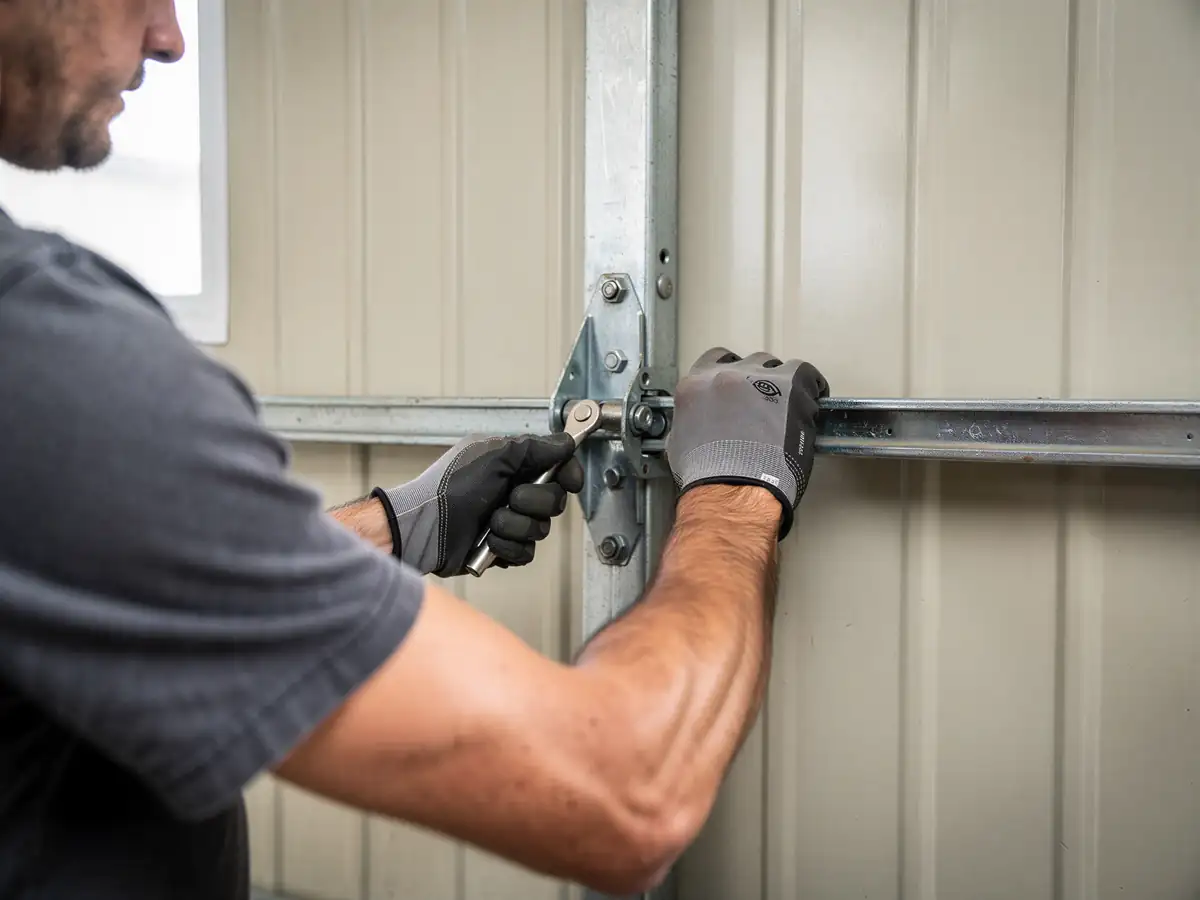
Tracks on houses this age are often the original steel, and after decades of settling they can sit out of plumb by enough that the rollers bind on one side before the door reaches the top. That shows up as a door that reverses itself mid-travel, or an opener that strains and clicks off on its own safety sensor. None of this is cosmetic - a door running on a bent track long enough will eventually walk off the track completely.
How Long It Takes
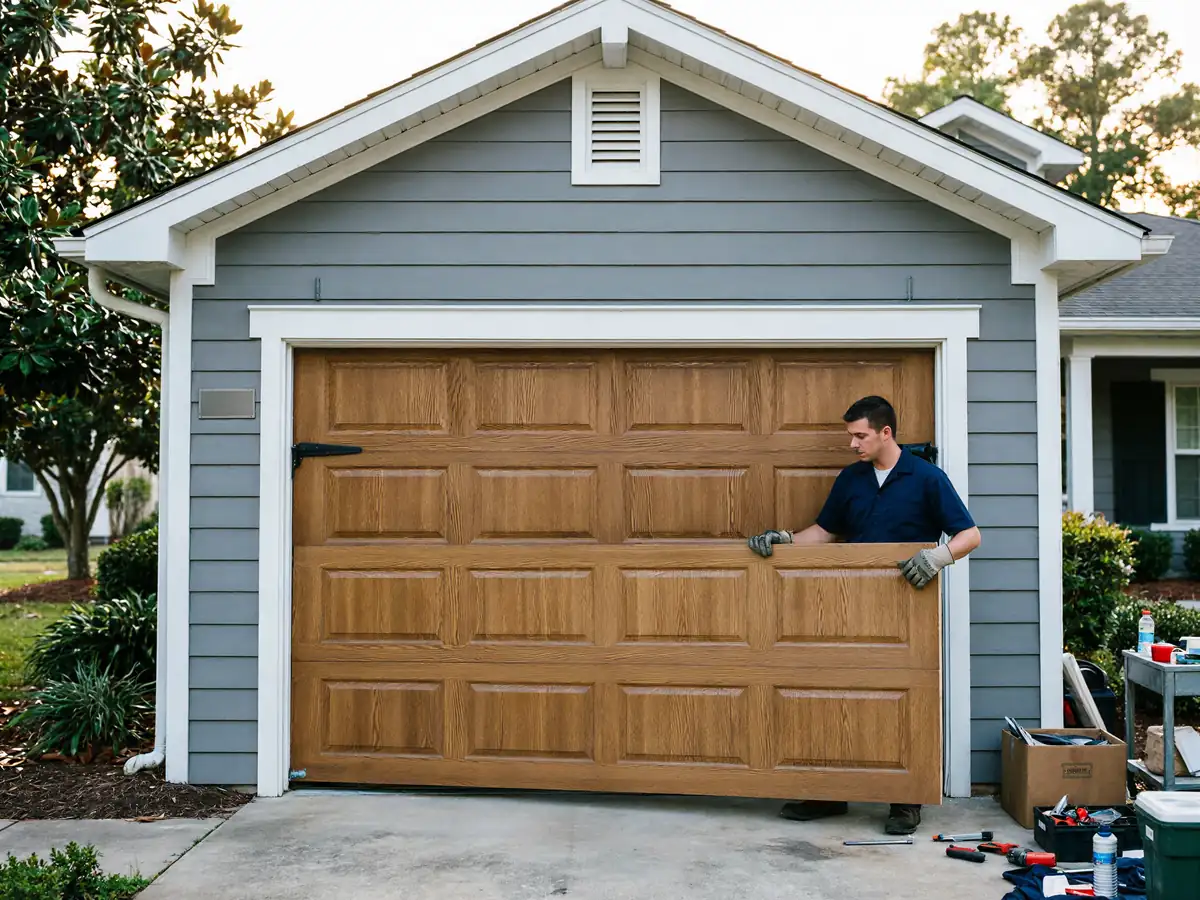
Most spring and cable jobs are a single visit
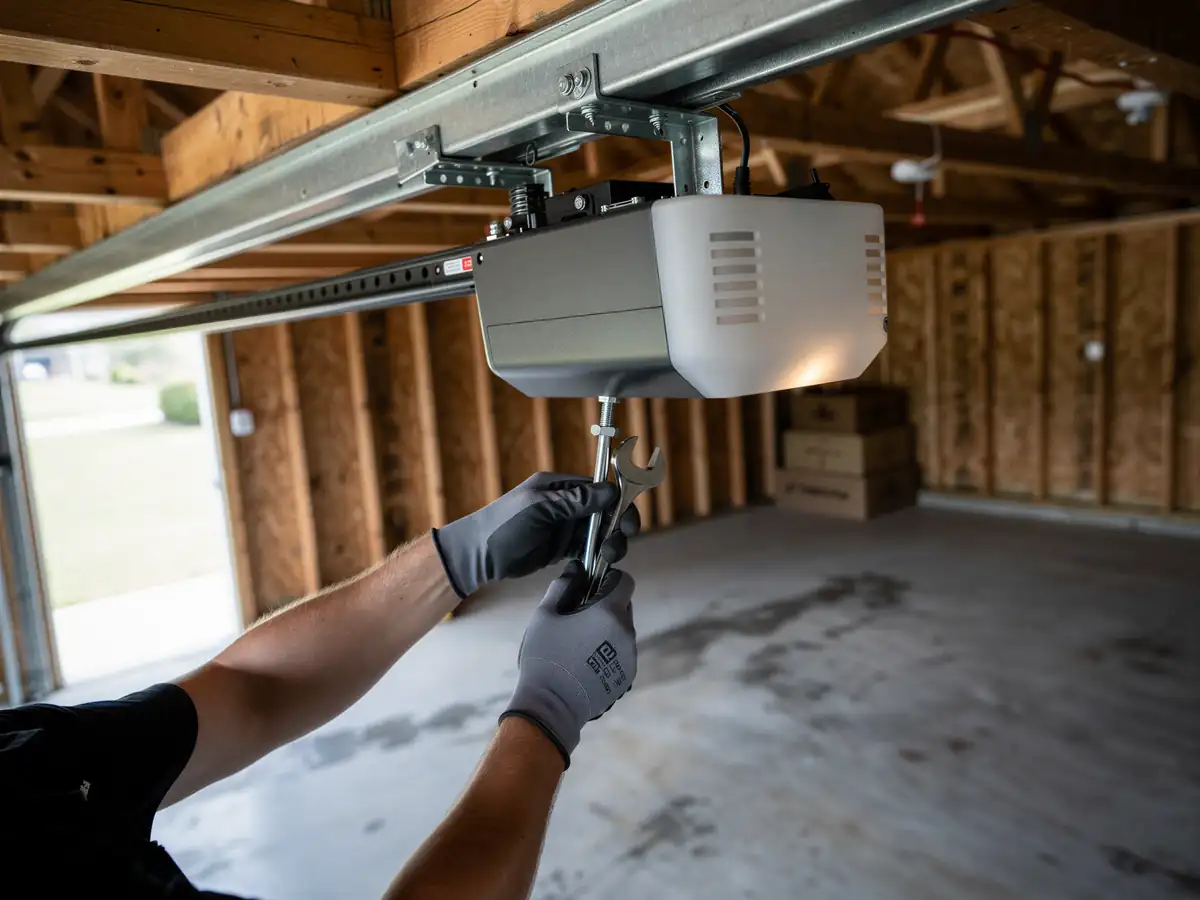
We carry common torsion spring sizes on the truck, including the heavier-duty ones that get installed when a lighter original spring gets swapped for a thicker insulated door. What slows a job down is a part we don't stock: certain older torsion drums, discontinued track sections, or a specific opener gear kit for a model that hasn't been made in years. On a house built in the mid-1970s, that older-stock issue comes up more than it would on newer construction.
The drive out from Bowling Green is about 12 miles
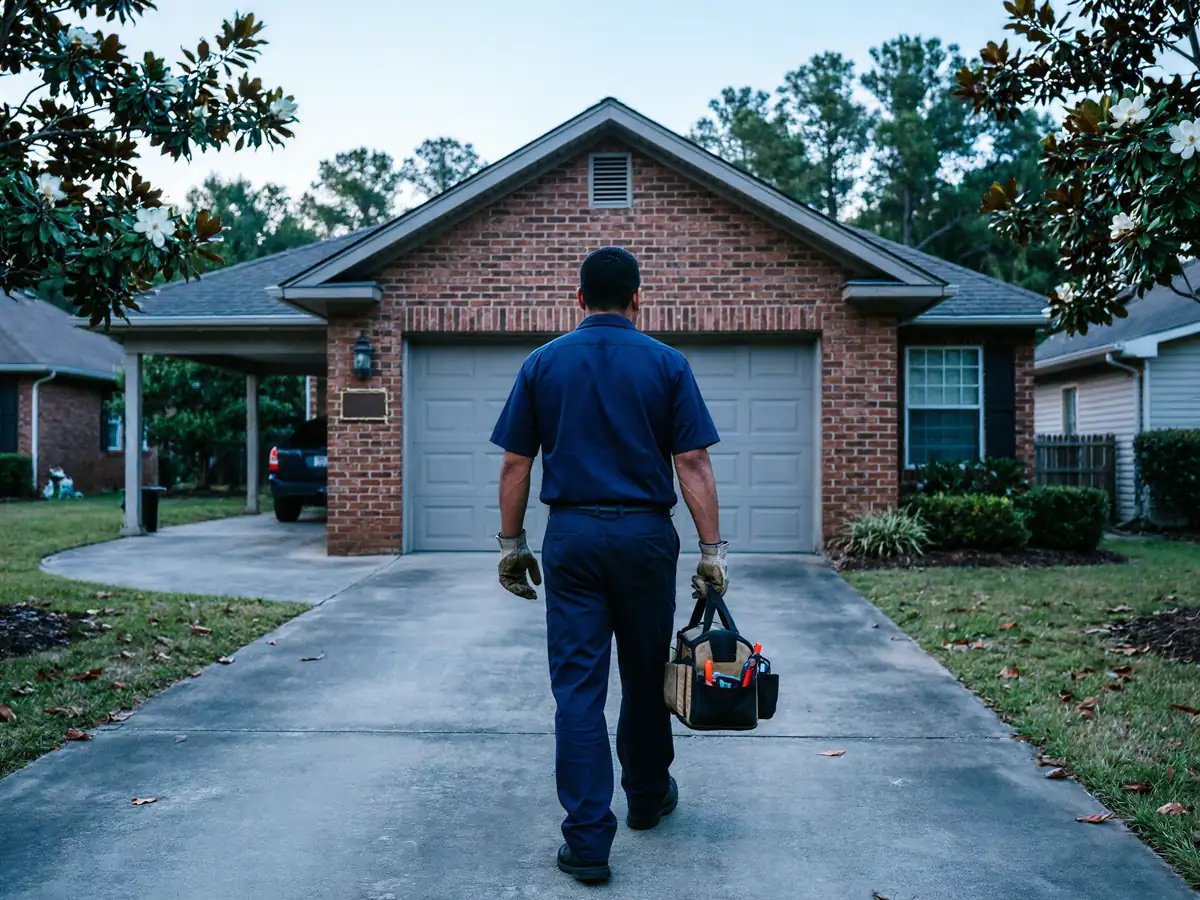
Which is routine for us - Oakland isn't out of the way. What takes time isn't the trip, it's whether the part is one we're already carrying that day or one that needs ordering. We'll tell you straight which one it is before we start, not after we've opened things up.
- 12 miles
Why This Fails Locally
A big share of the houses in this part of the service area, Oakland included, were built between 1966 and 1982, with the typical year landing around 1975 to 1976. That means a lot of garages are still running the hardware that went in with the house - galvanized torsion springs, steel tracks, and openers from at least one replacement cycle ago. None of that is unusual on its own, but it means repairs here involve matching parts to a door older than most of what shows up on a new-construction call.
Across the wider service area, median household income sits around $46,000, which is part of why most calls here are repair-first rather than full teardown-and-replace - a new spring or a cable rebuild on a door that's structurally sound makes more sense than swapping out a working panel door because one part failed. We'll tell you when a door really is past fixing, but on a house this age, that's the exception, not the rule.