Doing It Yourself
Oakland is a small place
Something like 109 households total - and that matters for what kind of job shows up here. There's no hardware store on every corner stocking torsion springs sized for a door built in 1976, so a lot of owners end up trying to wind down a spring themselves with whatever bar they found in the shed. That's the job that sends people to the ER, not the garage.
- 109 households
What you can safely do yourself
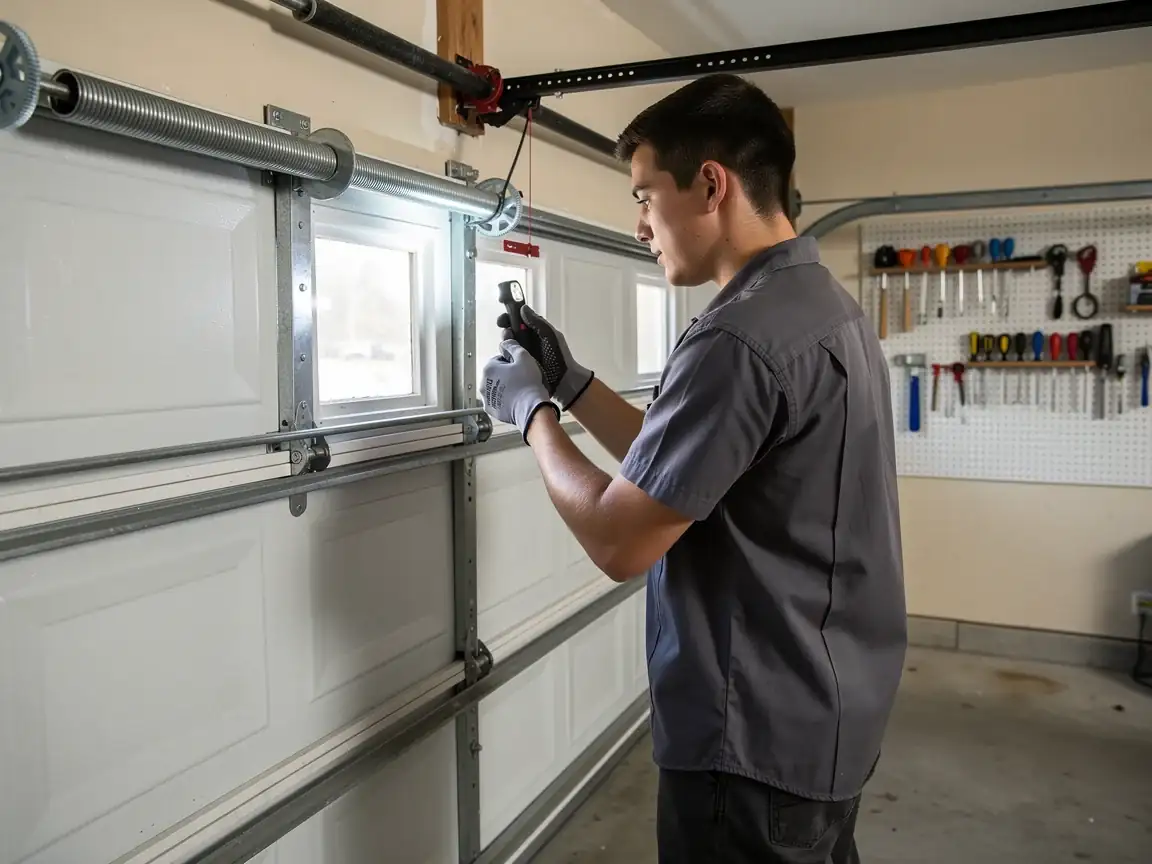
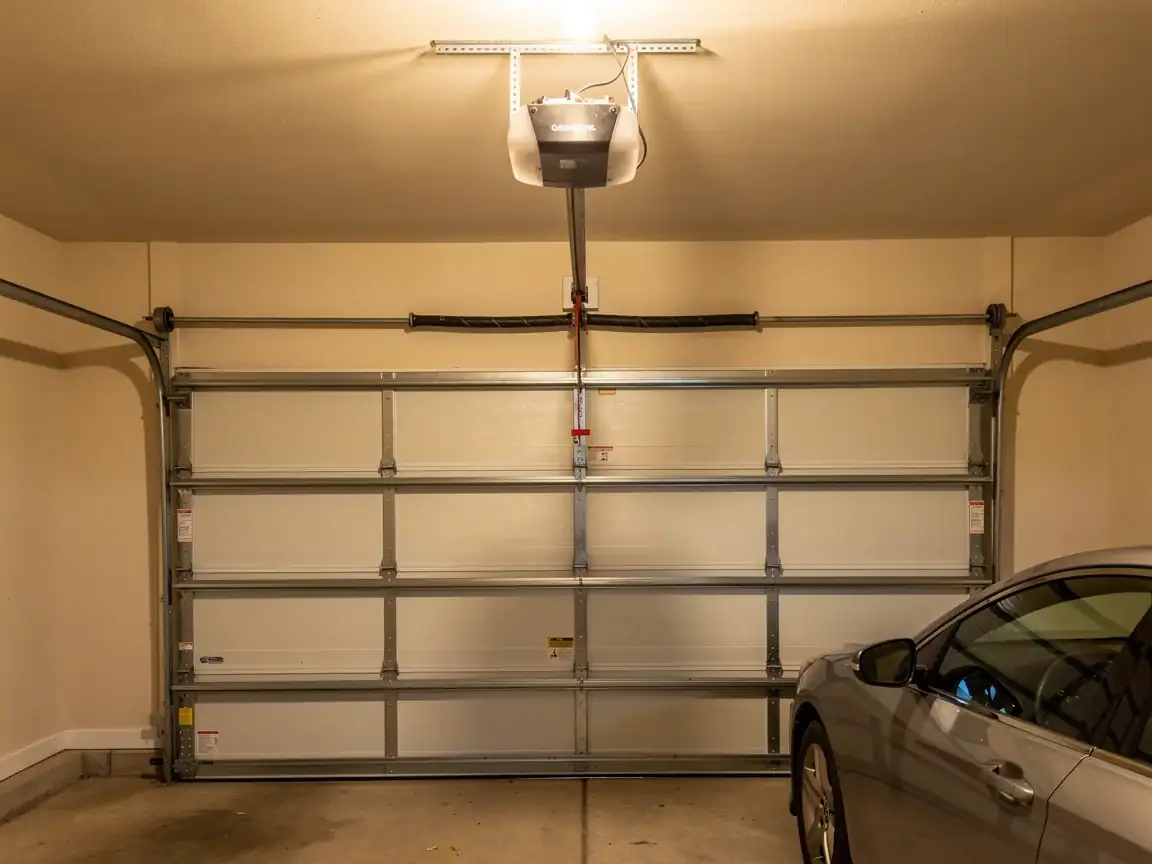
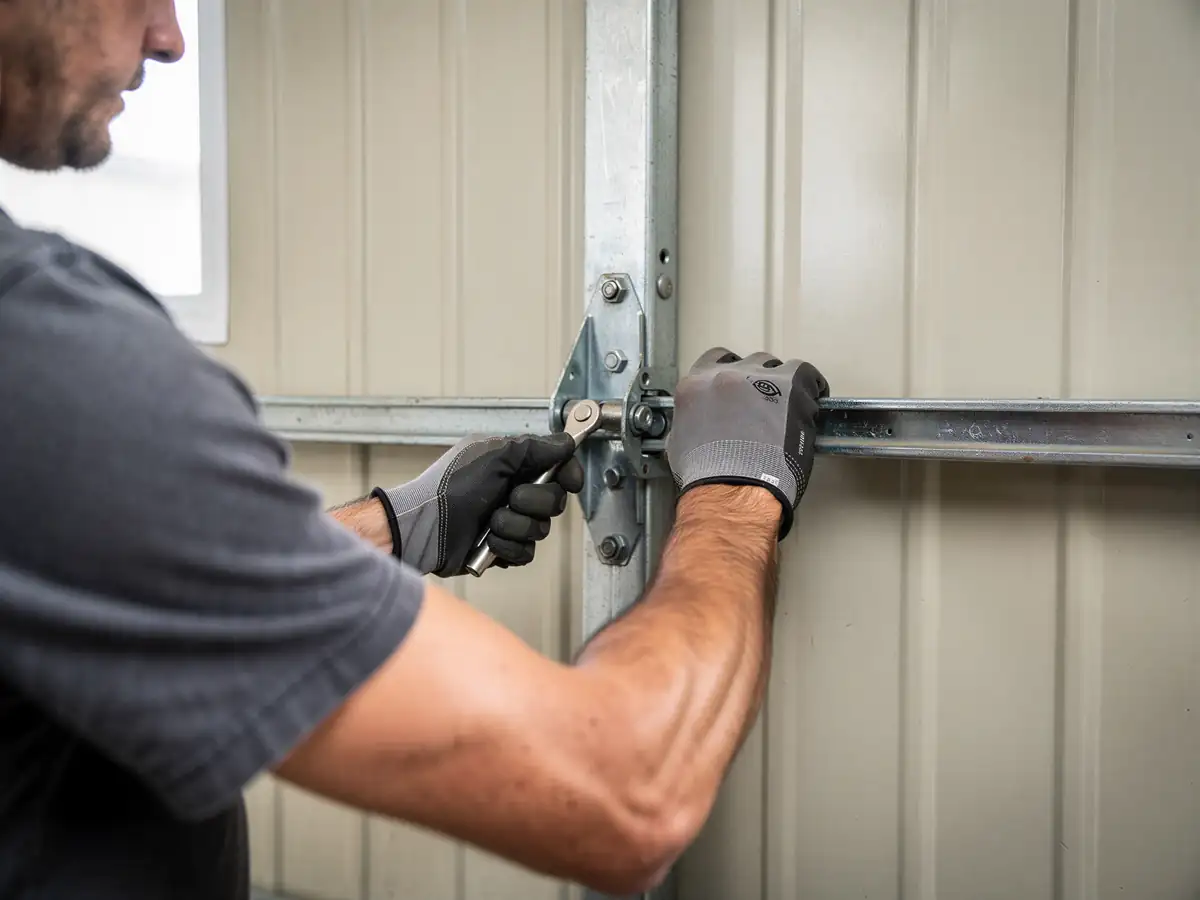
Check that the track bolts are tight, vacuum out the photo-eye sensors at the bottom of the tracks, and listen for a grinding roller before it seizes. What you shouldn't touch: anything with the spring under tension, the torsion bar itself, or a cable that's frayed but still holding. On a door this old, the hardware is often original, and original hardware doesn't forgive guesswork. If a panel is bent or a spring has let go, that's a call, not a weekend project.
We're honest that some fixes aren't worth doing at all
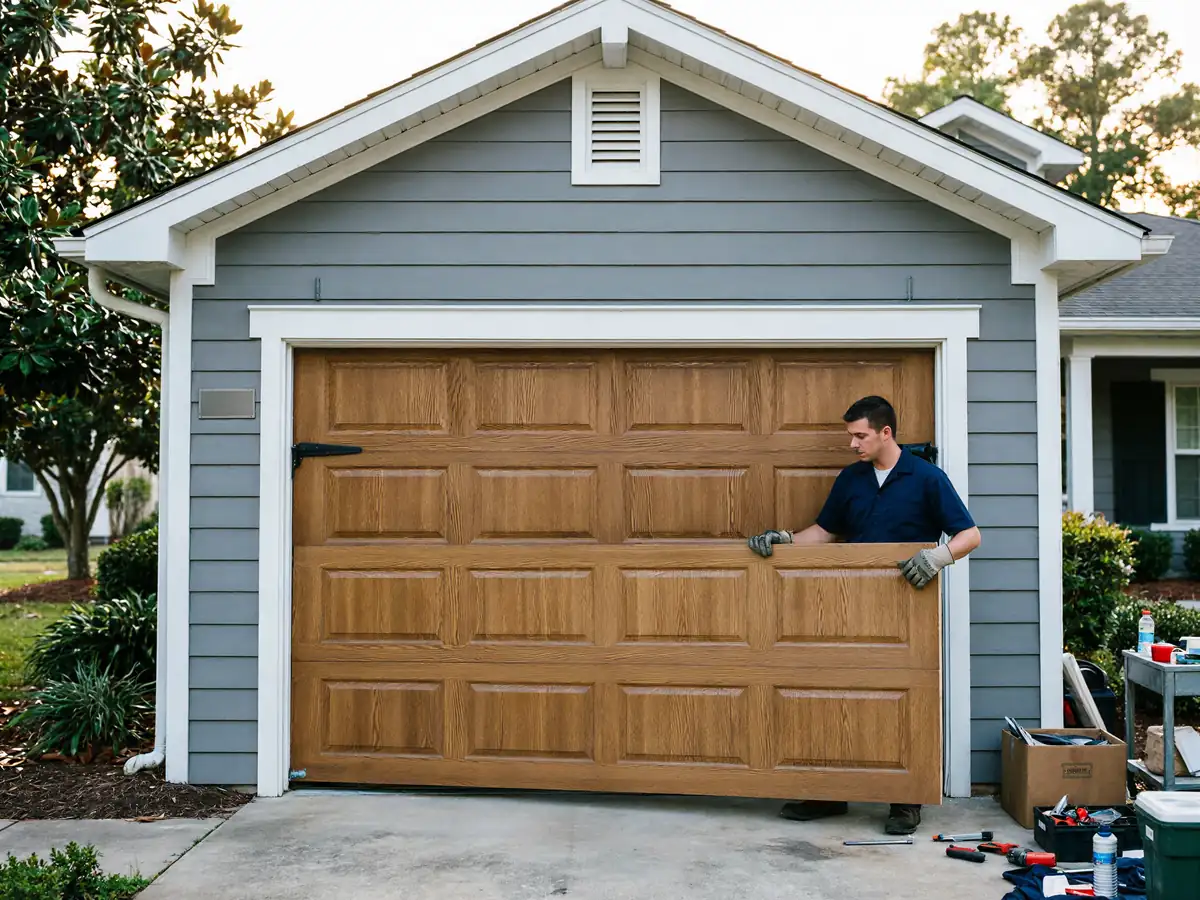
A cracked wood-composite panel from the 70s usually isn't worth patching once the core has swelled.
How It Shows Up
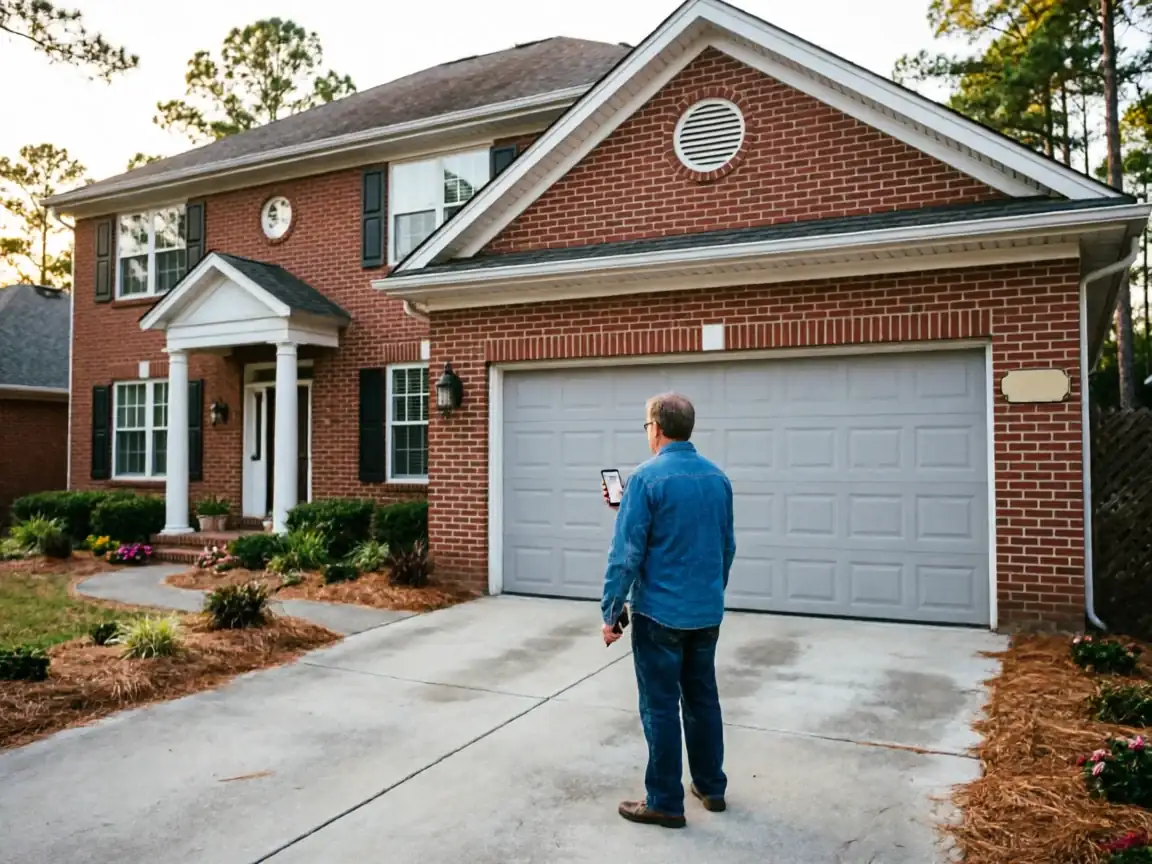
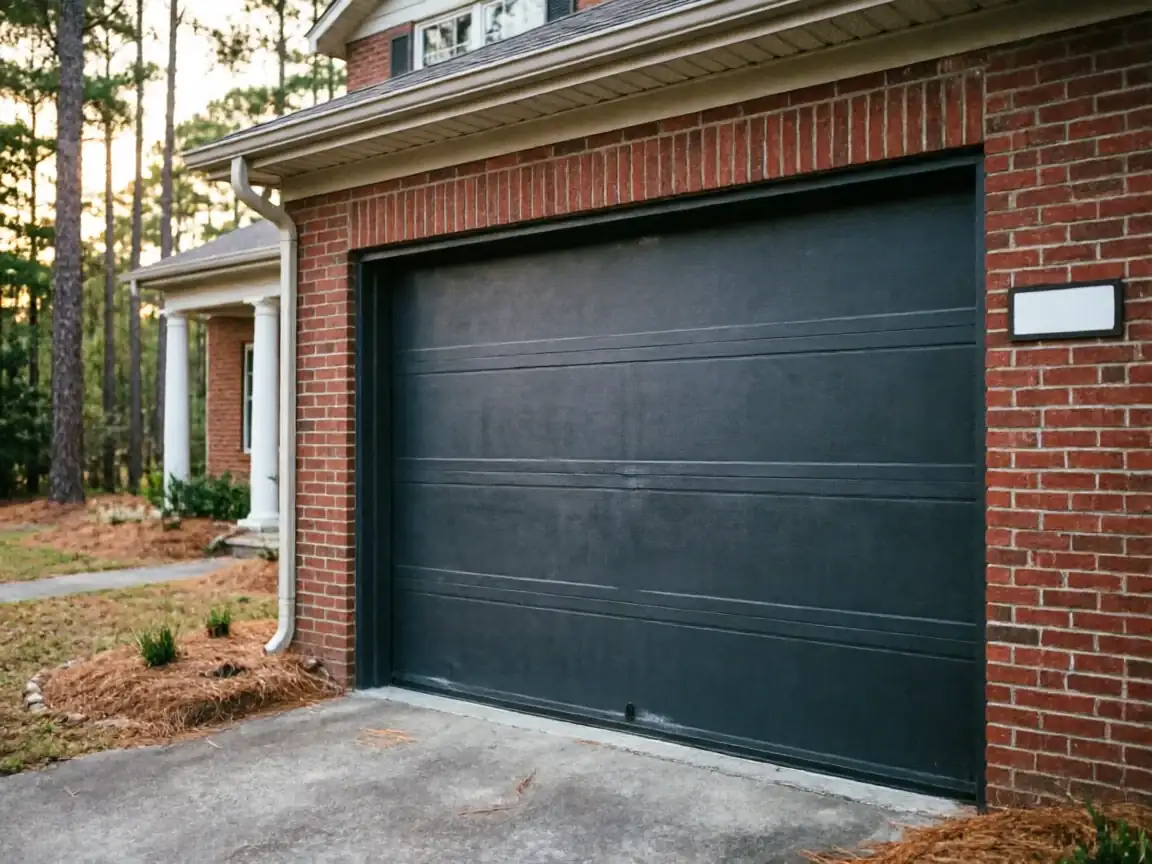
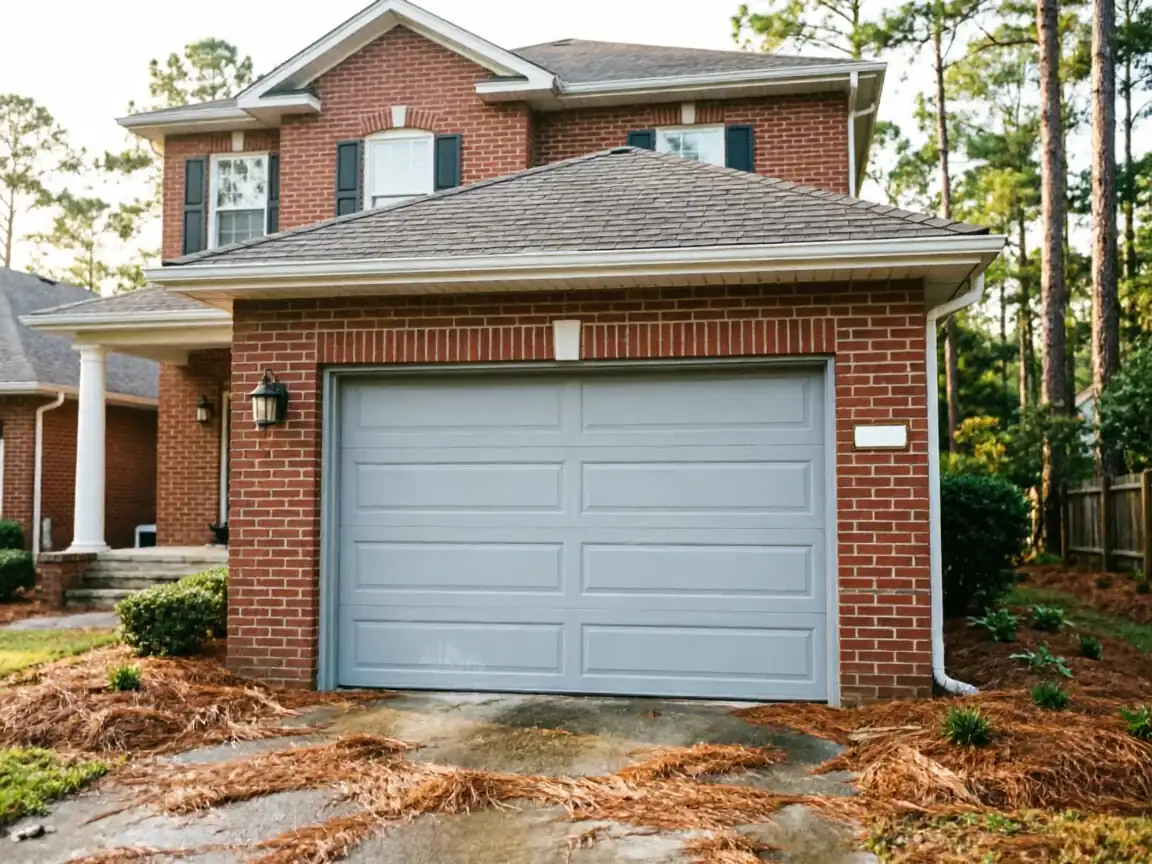
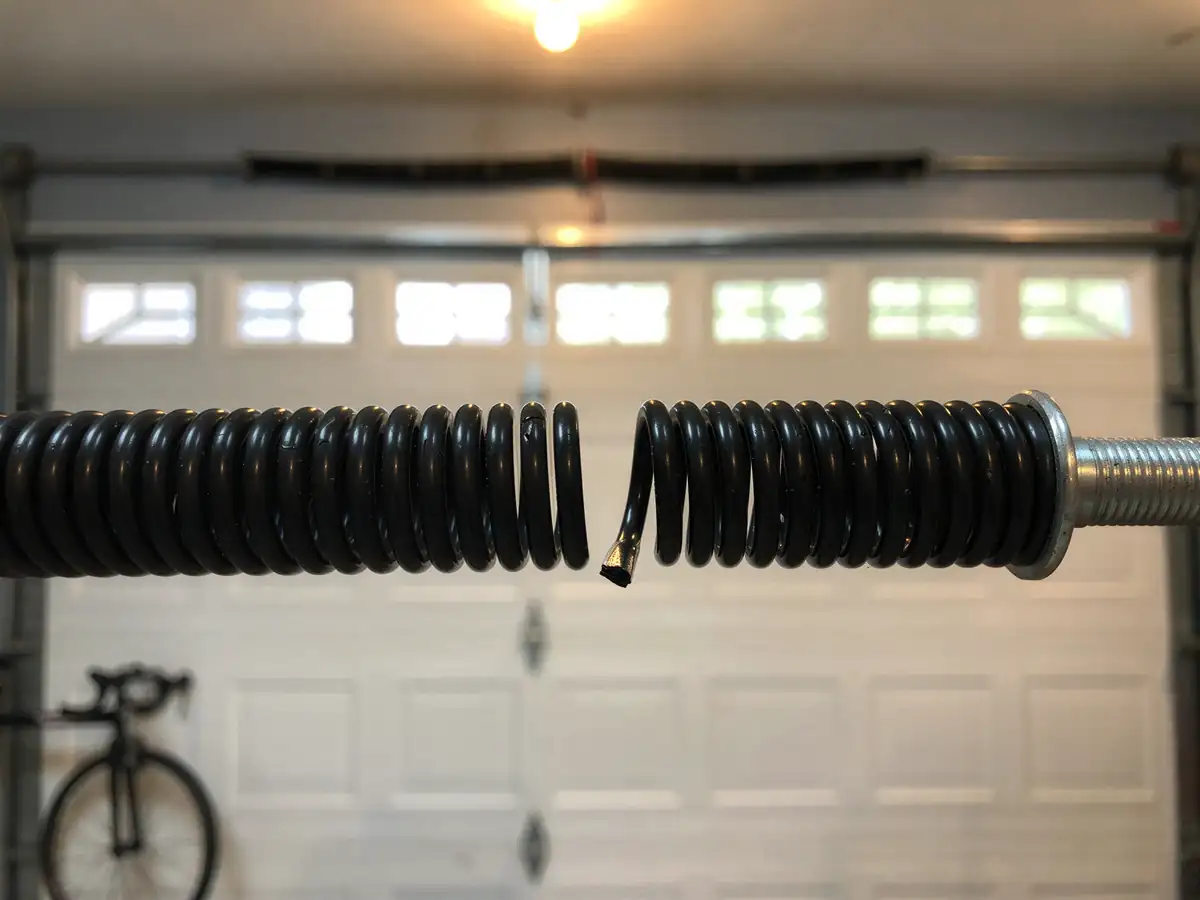
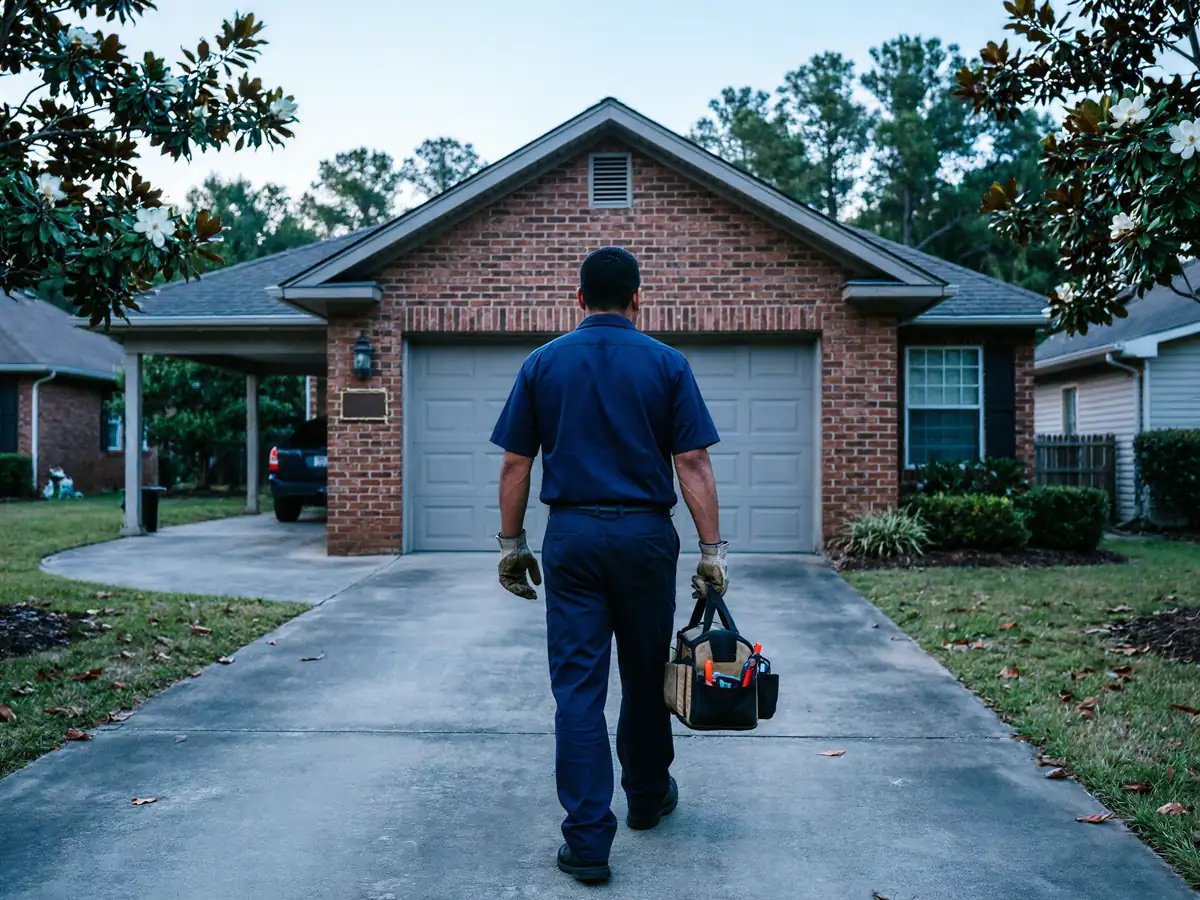
Houses in Oakland mostly date to the 1966-1982 run, with 1976 sitting right at the median. That means a specific kind of door: steel sectional, often on side-mounted torsion hardware, with openers added later rather than built in. The failure pattern follows the age. A spring that's wound the same number of cycles for close to fifty years doesn't fail gradually - it lets go on a Tuesday morning when the door's halfway up.
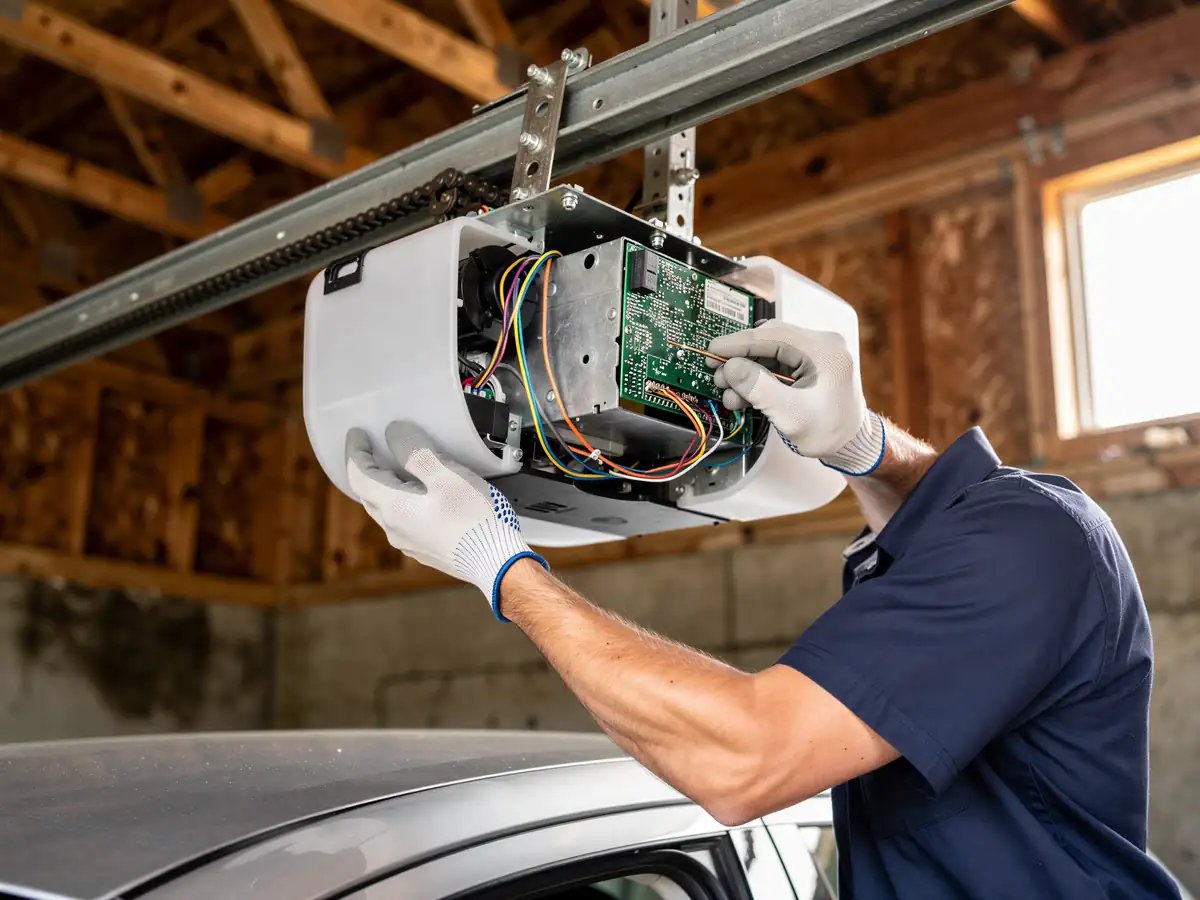
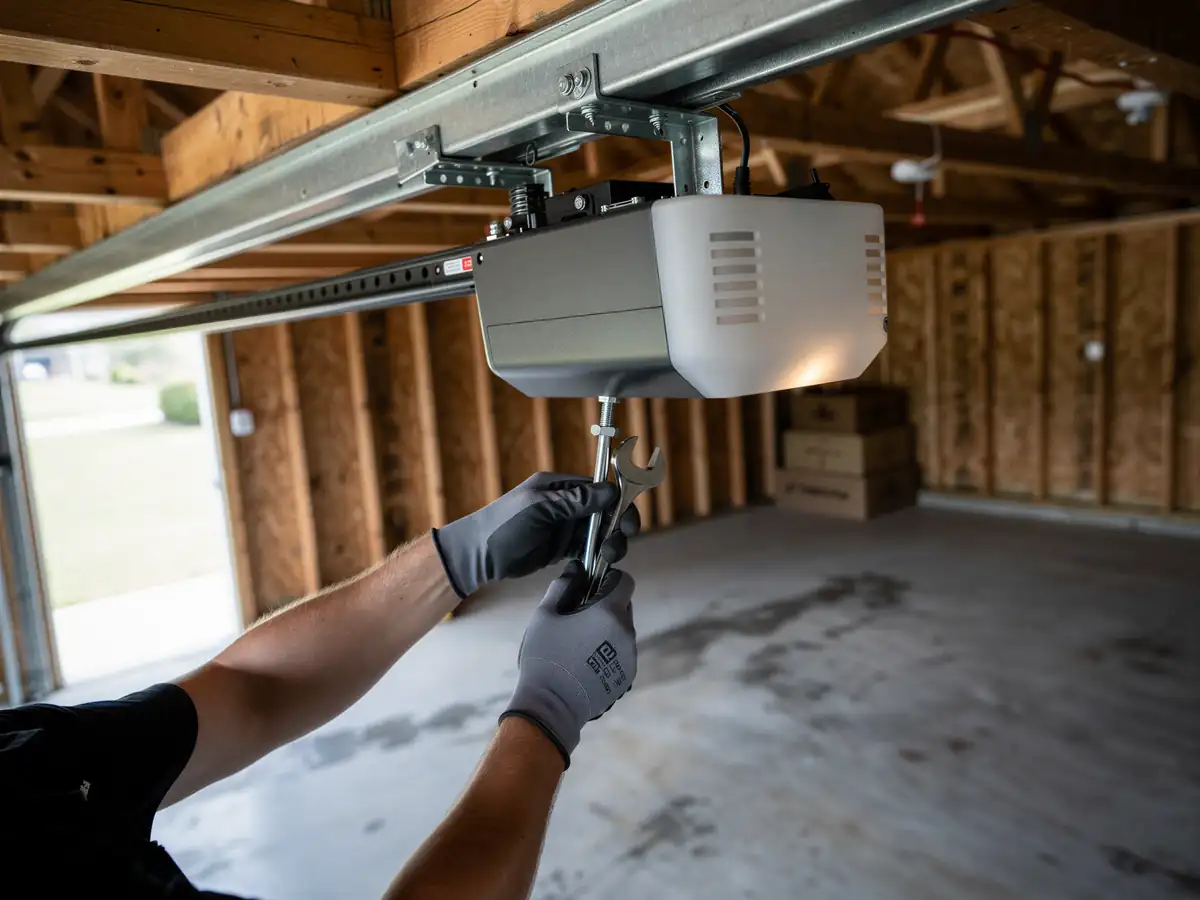
Openers here are often a second or third replacement unit bolted onto original track that was never resized for a heavier insulated door somebody swapped in during a remodel. That mismatch shows up as a door that slams the last six inches instead of settling, or a motor that strains and reverses for no clear reason.
Because Oakland's stock leans the same way as the other smaller areas this company covers out of Bowling Green, the symptoms repeat: worn rollers rattling in tracks cut for a narrower door, and cables fraying at a drum that's outlived its finish decades ago.
What Can Go Wrong
The spring is the most common failure on a door this age, and on an original torsion setup it rarely fails alone - the cable on the same side has usually taken the same cycles and the same wear. Replace one without checking the other and you're back out within a season.
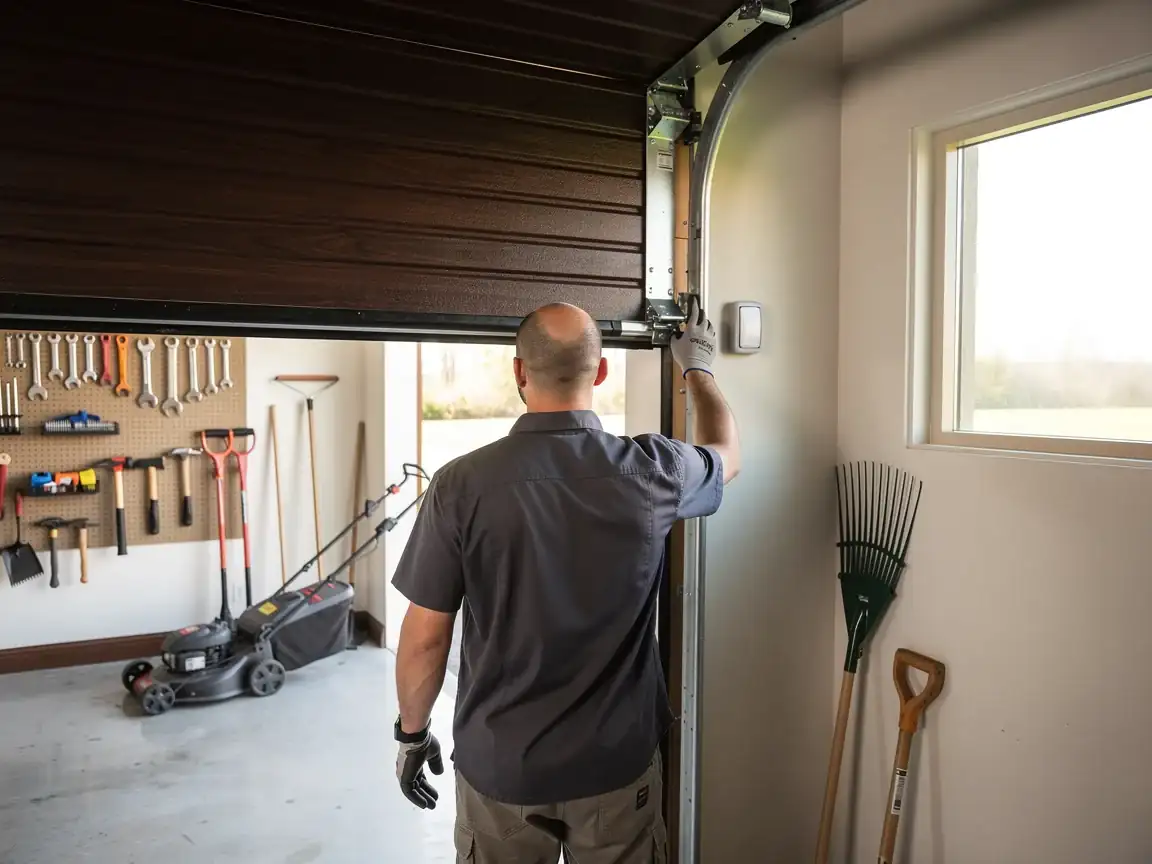
Track misalignment is the second pattern. Houses settle over fifty years, slabs shift a little, and a track that was plumb in 1976 isn't now. That shows up as a door that binds on one side, which strains the opener gears trying to compensate.
Colder, damper winters in this part of Kentucky gum up grease in an old opener gearbox faster than they wear out the spring steel, so a door that worked fine in October can start grinding by January for a reason that has nothing to do with the spring at all.
What we won't do: force a universal replacement spring onto non-standard torsion hardware just because it's faster to grab off the truck. On a door this old, that's a mismatch that fails again inside a year.
How Long It Takes
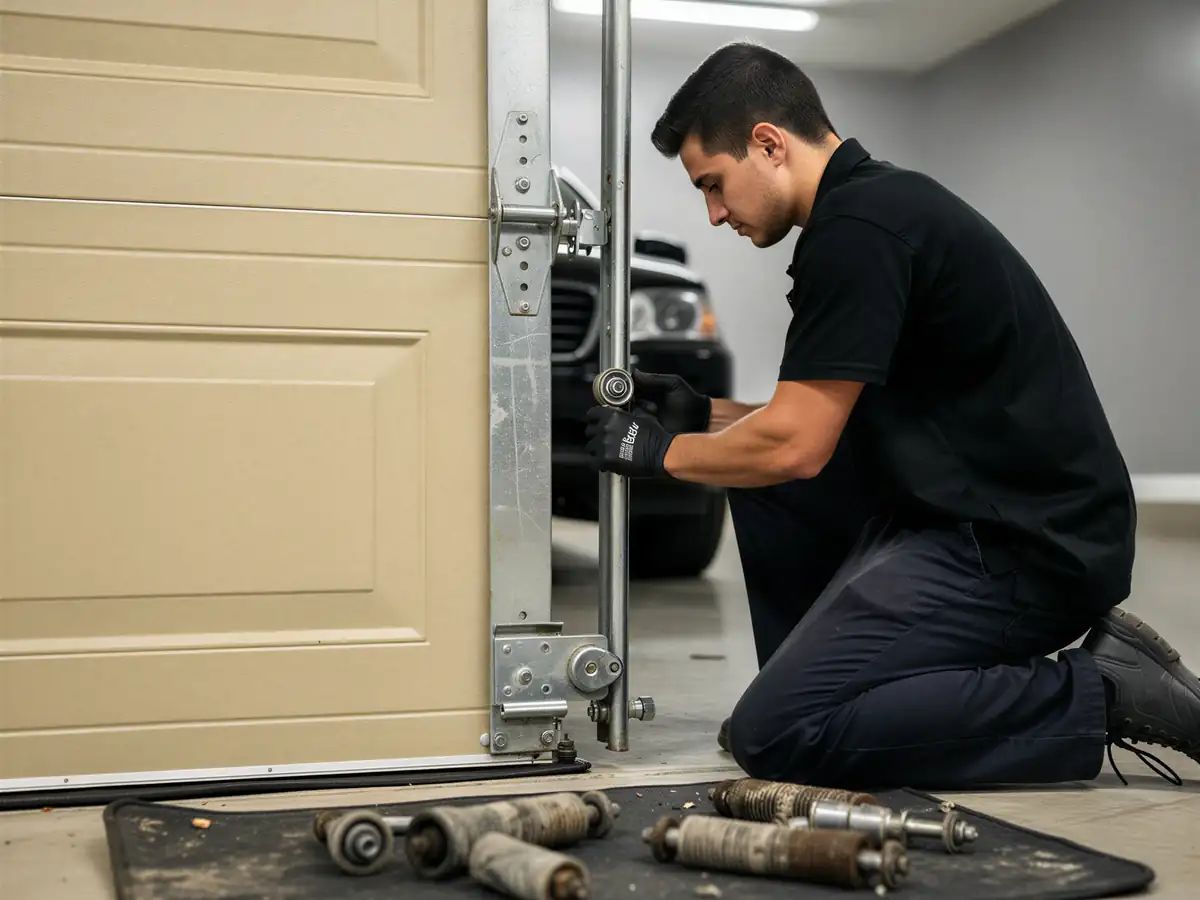
A straight spring replacement on a standard torsion setup is a same-visit job once the truck is on site
Where it slows down is parts - original hardware from the 1966-1982 era sometimes isn't a stock size, and matching a drum or a non-standard torsion bar can mean a return trip once the part's in hand rather than finishing on the first call.
Opener swaps are usually one visit, start to finish, including reprogramming the remotes and the keypad if there is one
Track and panel work takes longer to estimate honestly than to fix
We have to see how far the misalignment has traveled through the system - a track that's bent in one bay often means a roller or hinge further down is compensating and about to go too. Call it one visit to diagnose and quote, a second to do the heavier replacement work if the parts aren't something we carry standard.
Why This Fails Locally
The honest reason doors fail differently in Oakland than they might somewhere newer: almost nothing here was built after the early 80s, so almost nothing has factory-matched hardware left. Across the four smaller areas this company runs jobs in out of Bowling Green, the 1960s-70s stock is the rule, not the exception, and Oakland sits right in the middle of that pattern with a median build year of 1976.
There's no local parts house in Oakland itself, and there doesn't need to be - at 12 miles out, the trip from Bowling Green doesn't add meaningfully to the job. What it does mean is we bring the parts with us based on what the house's age tells us before we ever see the door, rather than guessing on site.
The failure that actually catches people off guard isn't the spring - it's assuming a door this old can take a generic off-the-shelf replacement part the way a 2015 build could. It usually can't, and forcing it just moves the next failure closer.