Doing It Yourself
Before you call anyone, check the easy stuff
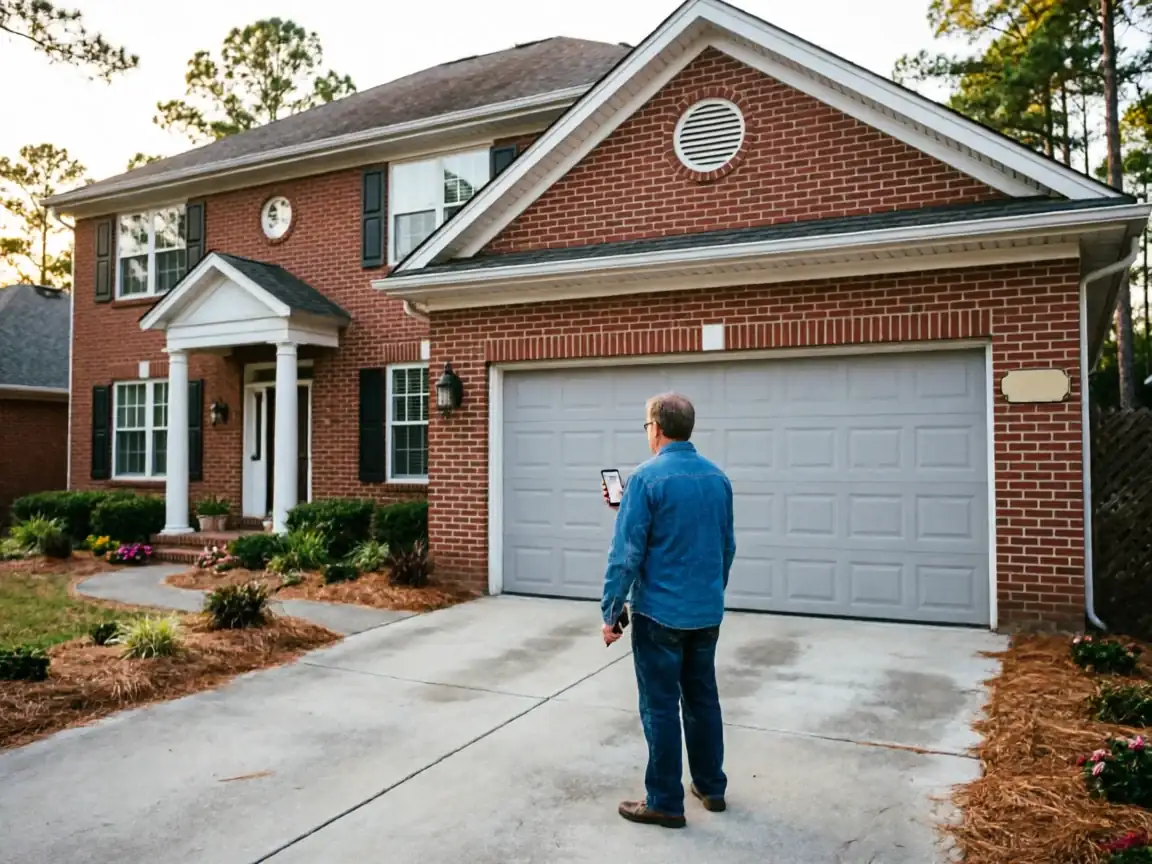
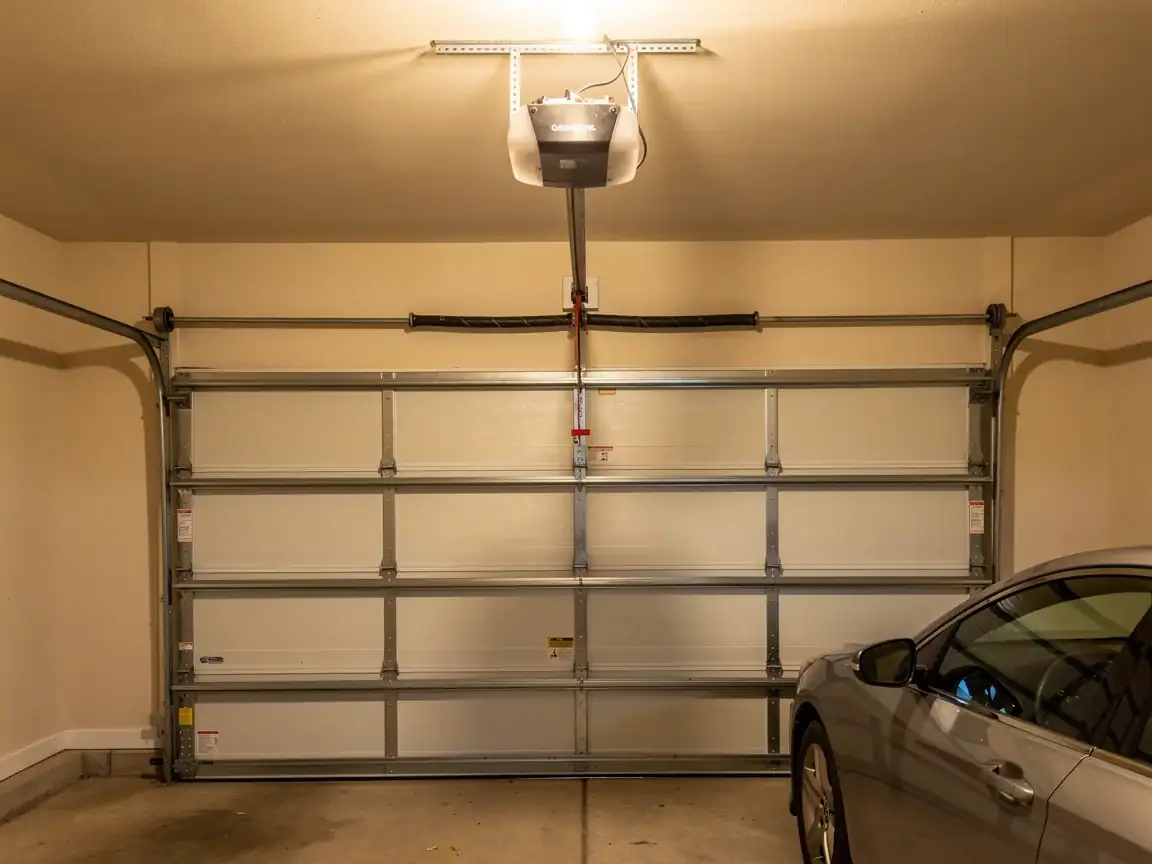
Look at the photo-eye sensors near the bottom of the track - a kicked rug or a cobweb across the lens will stop the door cold and mimic a much bigger problem. Check the wall button and the remote battery. Pull the manual release cord and see if the door moves by hand; if it's heavy or won't budge, that's spring tension talking, and that's where DIY stops.
Franklin's housing mostly dates to 1966 through 1982
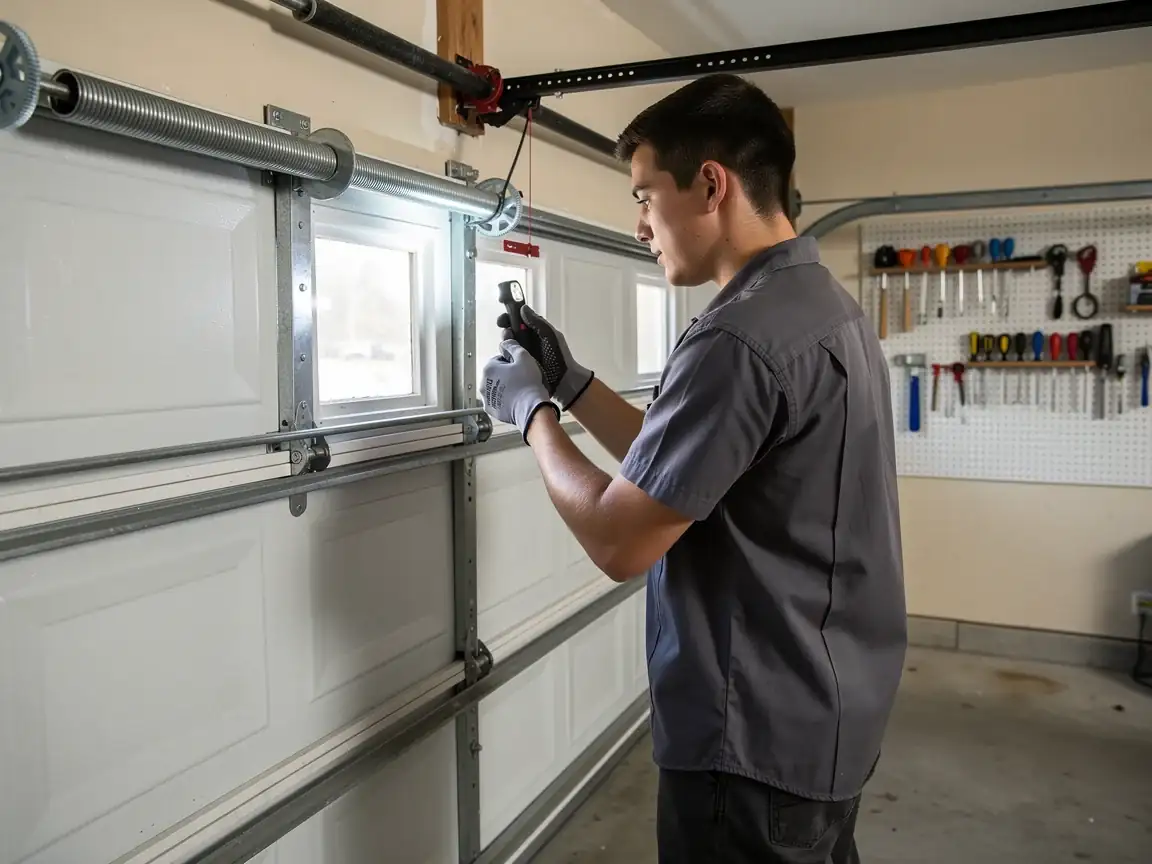
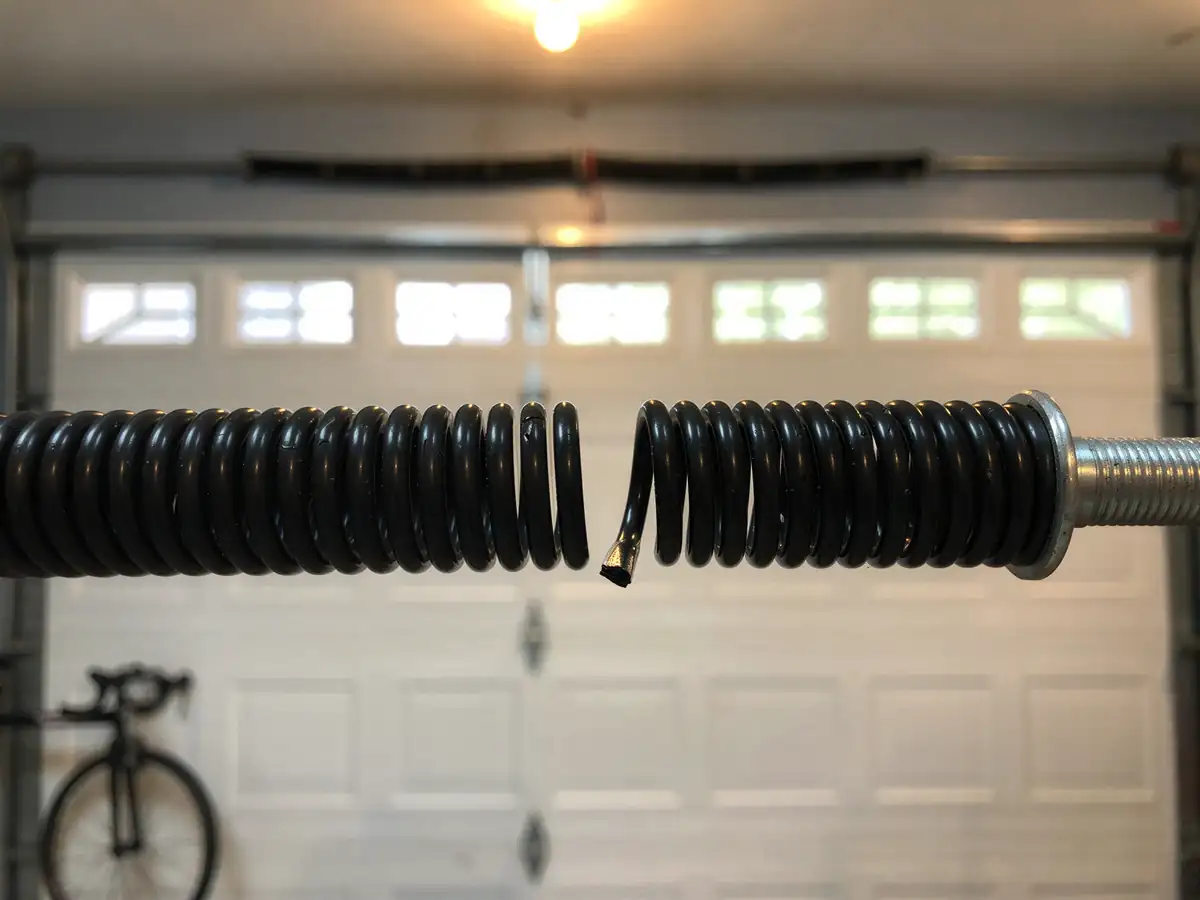
Same band as the wider area we cover out of Bowling Green. A torsion spring on a door that old has usually done its cycle count and then some. Those springs store real force, and cutting one loose yourself, or even loosening the wrong set screw, can put a steel rod through drywall or worse. We don't walk anyone through spring work over the phone - that's not us being cautious for no reason, that's the actual job. If the door won't lift by hand, stop there and call.
Getting It Booked In
We run every Franklin call out of Bowling Green. At roughly 19 miles, Franklin is the longest drive of the areas we cover - farther out than Oakland, Auburn, or Brownsville. That doesn't change whether we come, it changes how we schedule the route, so when you call, tell us straight away if the car's trapped inside or the door is stuck wide open at night. That detail moves you up the list.
We don't keep a branch or a drop box in Franklin itself, so there's no local counter to walk into - everything starts with the phone call. Have the door's rough age and whether it's one piece or sectional ready; it saves a second trip for the wrong spring size. For anything that isn't a true emergency, our general Franklin page covers routine service and installs: /franklin-garage-doors/.
What You Pay
We don't quote a flat number over the phone, and we're not going to pretend otherwise here. A broken cable costs a fraction of a broken opener gear set, and a torsion spring job on an old one-piece door is priced differently than the same fix on a newer sectional door. What we can tell you is that the quote comes after a tech looks at the actual spring size, cable condition, and opener on your door, not a guess based on the address.
Franklin's median household income runs $55,552, noticeably above the $46,071 median across the broader service area we cover from Bowling Green. That gap matters less for the diagnosis and more for the decision at the end of it - whether a forty-plus-year-old opener gets repaired one more time or replaced outright. We'll give you both numbers before we touch anything, and you decide.
How We Fix It
Franklin doors mostly fall into that 1966-1982 build window
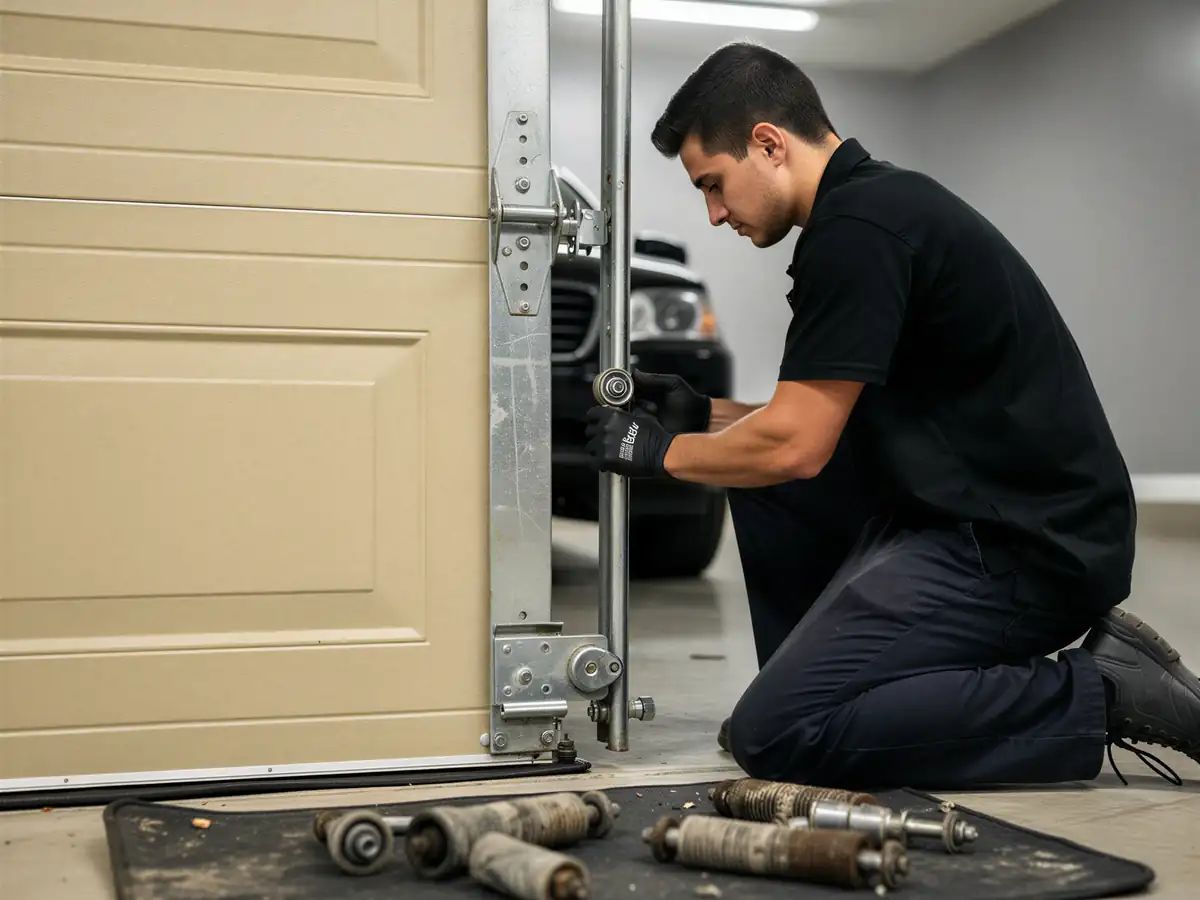
With 1975 as the rough midpoint, and that era carries its own set of parts. A lot of those garages still run the torsion hardware and spring winding sized for the original door weight, not whatever got swapped in later. First thing on site is matching the spring wire size and winding cone to what's actually on the shaft, not what a parts chart assumes for the house's age.
From there it's cable condition, roller wear, and the opener's gear and capacitor if it's struggling to lift
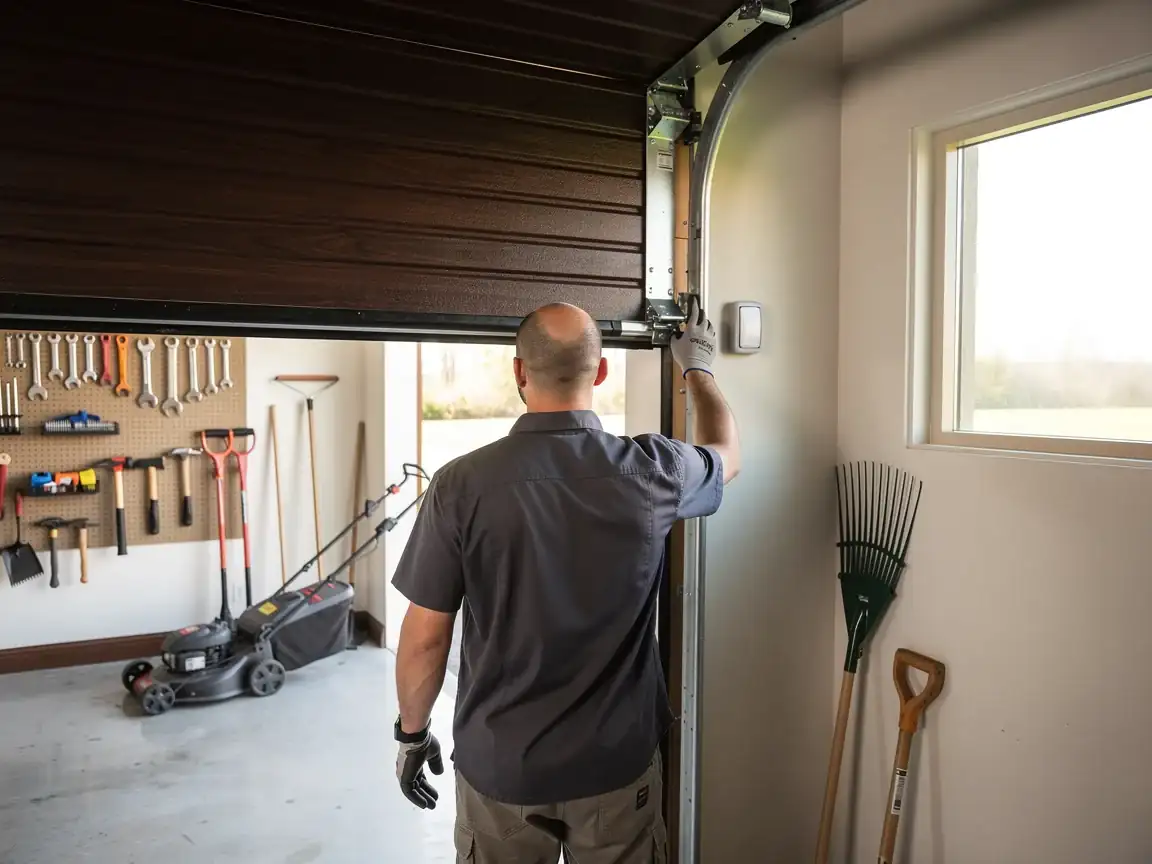
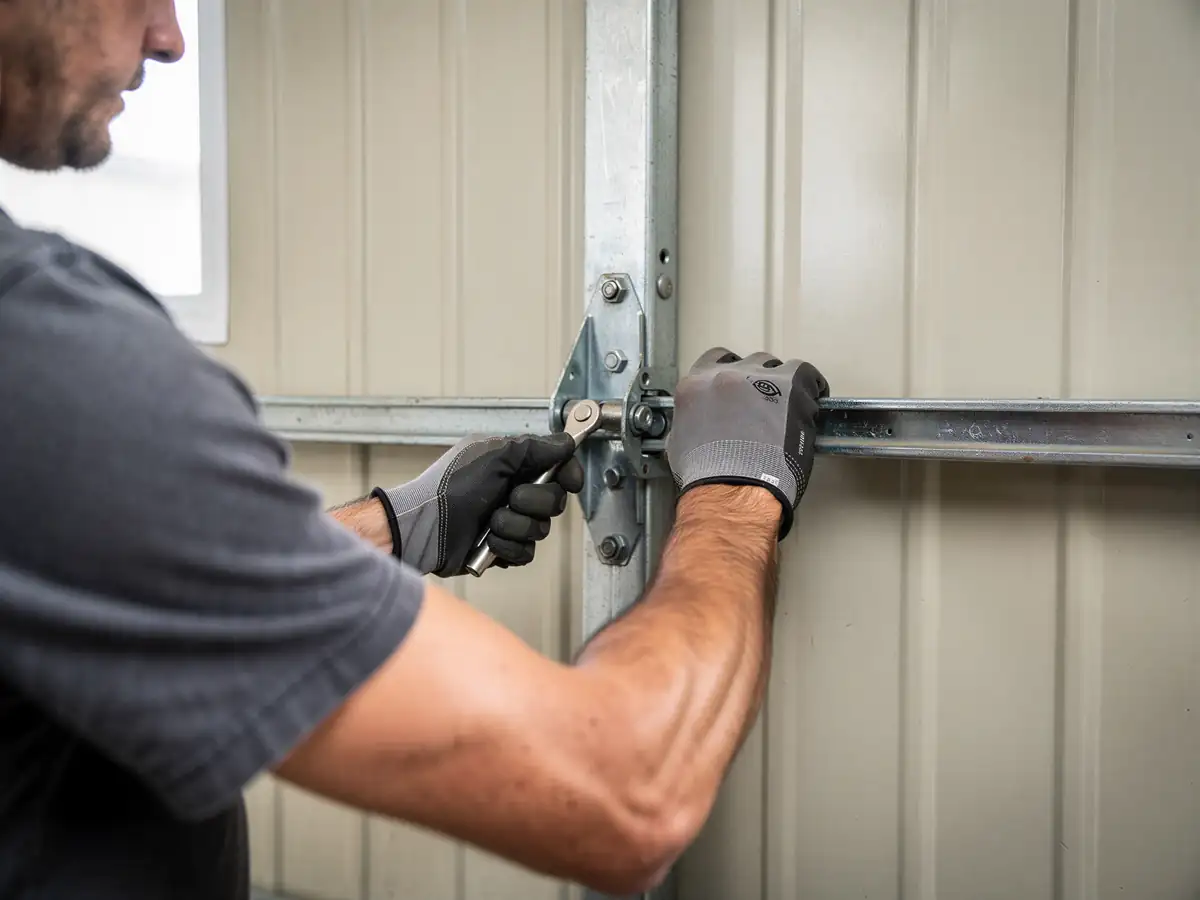
On a lot of these older doors, the track itself has shifted slightly over the decades as the slab settled, which throws off roller alignment even after a spring is replaced correctly. We check that before we call the job done, because a new spring on a bent track just fails again in a few months. We don't chase every noise with a full teardown - sometimes it's one bolt, and we'd rather tell you that.
Why This Fails Locally
Franklin sits in a cold-moderate climate band, which means the steel in these old springs and cables goes through real freeze-thaw swings every winter, not just one hard cold snap. That cycling is what tires out torsion springs faster than their rated cycle count would suggest on paper, especially on doors that have already been running on original hardware since the 1966-1982 building wave that put up most of the housing here.
Across the four areas we cover from Bowling Green - Oakland, Auburn, Brownsville, and Franklin - that 1960s-70s stock is the common thread, and it's the reason emergency calls cluster around the same handful of failures: spring, cable, and opener gear, in roughly that order. Franklin's higher median income relative to the rest of the service area doesn't change the hardware's age, but it does change what people choose to do about it - more replacements instead of patch repairs once a door's been fixed twice. That's a homeowner call, not ours to make for you.
What Can Go Wrong
The most common emergency call we get from this era of door is a snapped torsion spring - usually first thing on a cold morning, when the steel is stiffest and the door gets asked to lift without warming up first. Right behind that is a frayed cable, which on a door this old has often never been replaced once.
Rust on the rollers and hinges shows up more on these houses than on newer builds, a straight result of decades of freeze-thaw cycling in a cold-moderate climate working on hardware that was never stainless to begin with. Opener gear failure is third on the list - the nylon gear inside a decades-old opener wears down and strips, and by the time it's grinding instead of lifting, it's usually hours from quitting outright. None of these are good candidates for waiting it out, because a jammed door on a busted spring is a safety problem, not just an inconvenience.