Getting It Booked In
Brownsville doesn't have a Bowling Green Garage Door Pros truck parked in town
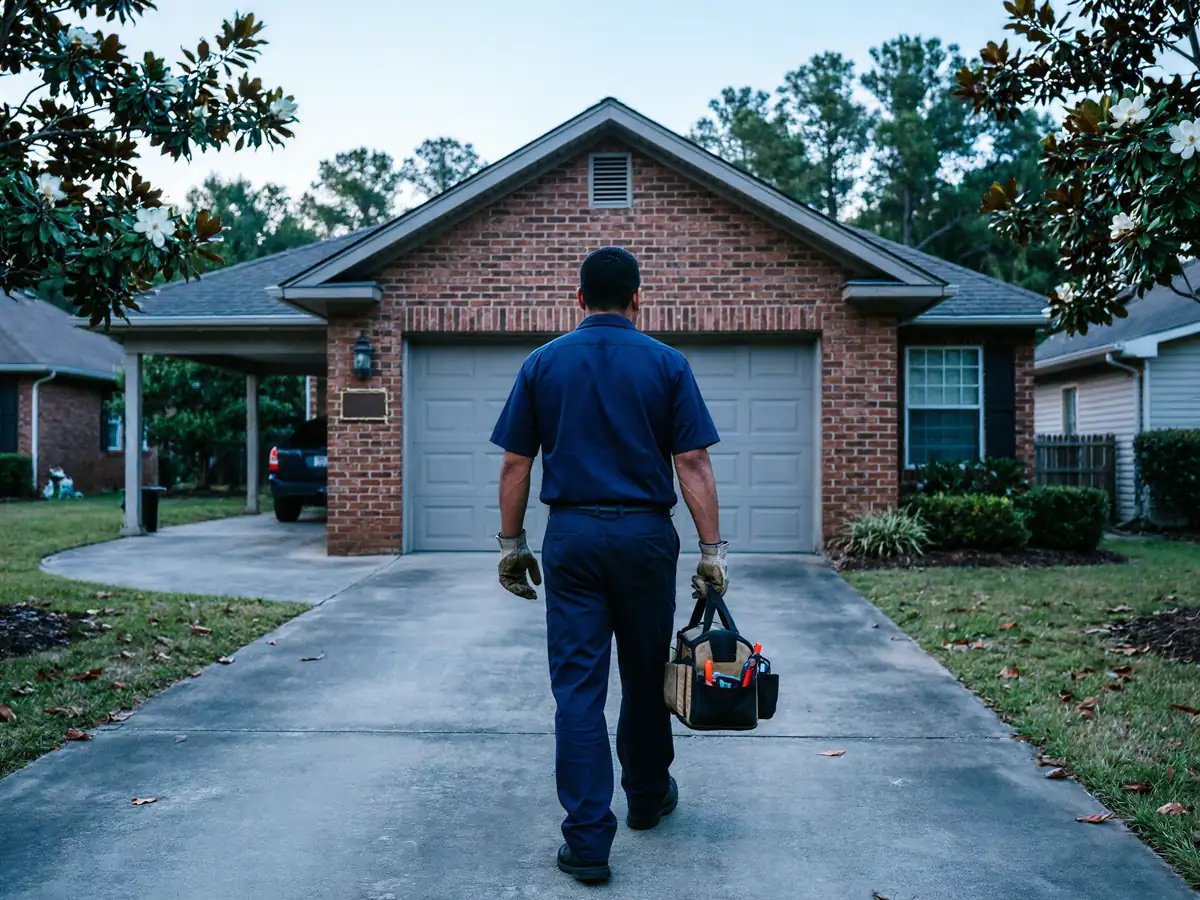
And we're not going to pretend otherwise. We cover it from Bowling Green, about 18 miles out, so when you call we ask a few more questions up front than we would for a job five minutes from the shop - what the door sounds like, whether it's stuck up or down, whether the opener still runs. That lets us bring the right spring size and the right rollers the first time instead of making a second trip. With 378 households in Brownsville, we're not out here every day, so a clear description of the problem on the phone does more for your schedule than it would in a bigger town.
- 18 miles
- 378 households
If your opener light is blinking a code, read it to us
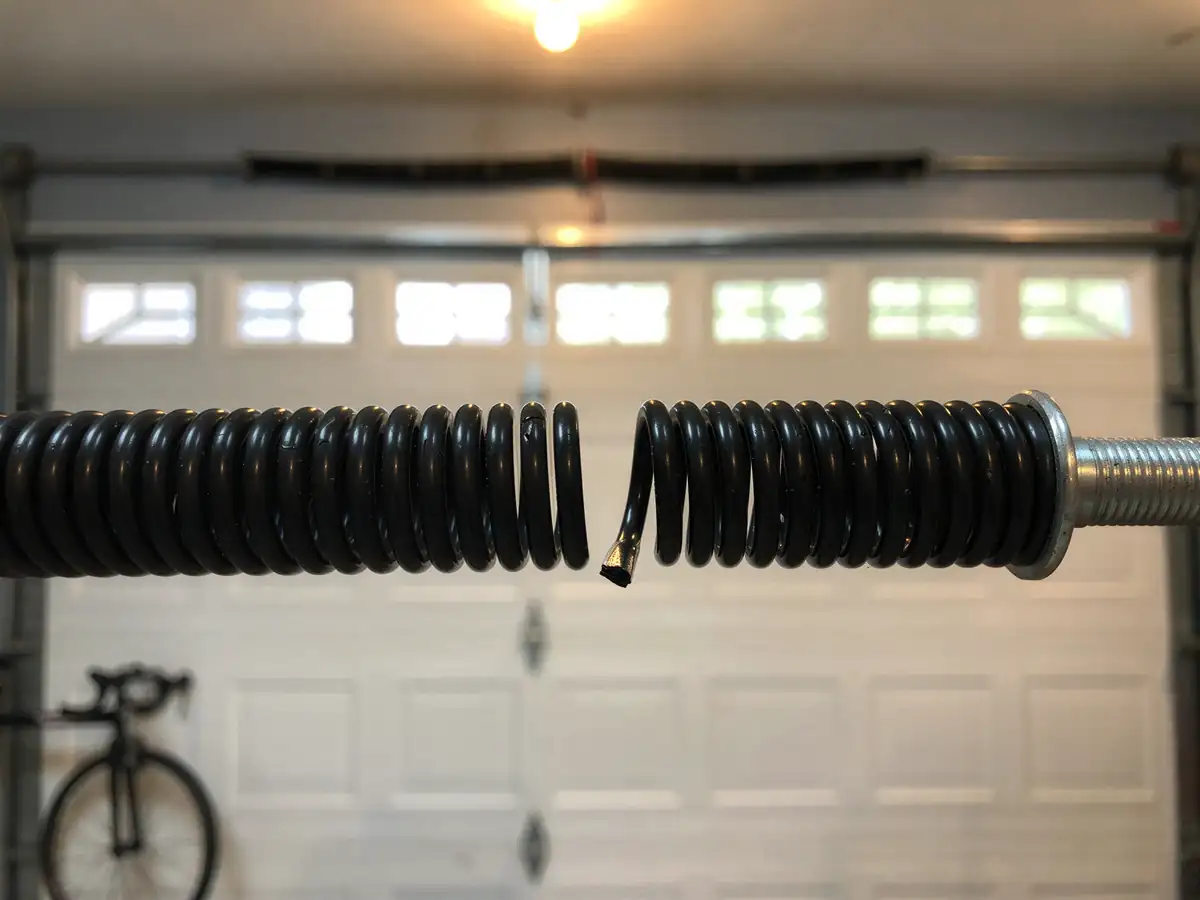
If the door won't budge, tell us whether the springs look stretched apart in the middle - that one detail alone often tells us what's riding in the truck when we leave Bowling Green.
How Long It Takes
The drive adds real time to a Brownsville call that a closer-in job wouldn't carry, so we build the 18 miles into the window we give you rather than surprise you with it. Most of what we see on doors from the early 1980s build era is a straightforward spring, cable, or roller job once we're on site - an hour or two of actual work. What stretches a job isn't the labor, it's parts that aren't common sizes anymore. A torsion spring wound for a door installed around 1982 doesn't always match what's sitting on the shelf, and if it's an odd wire gauge we may need to order it rather than carry it standard. We'll tell you straight if that's the case instead of guessing and leaving you with a door that's still broken.
How It Shows Up
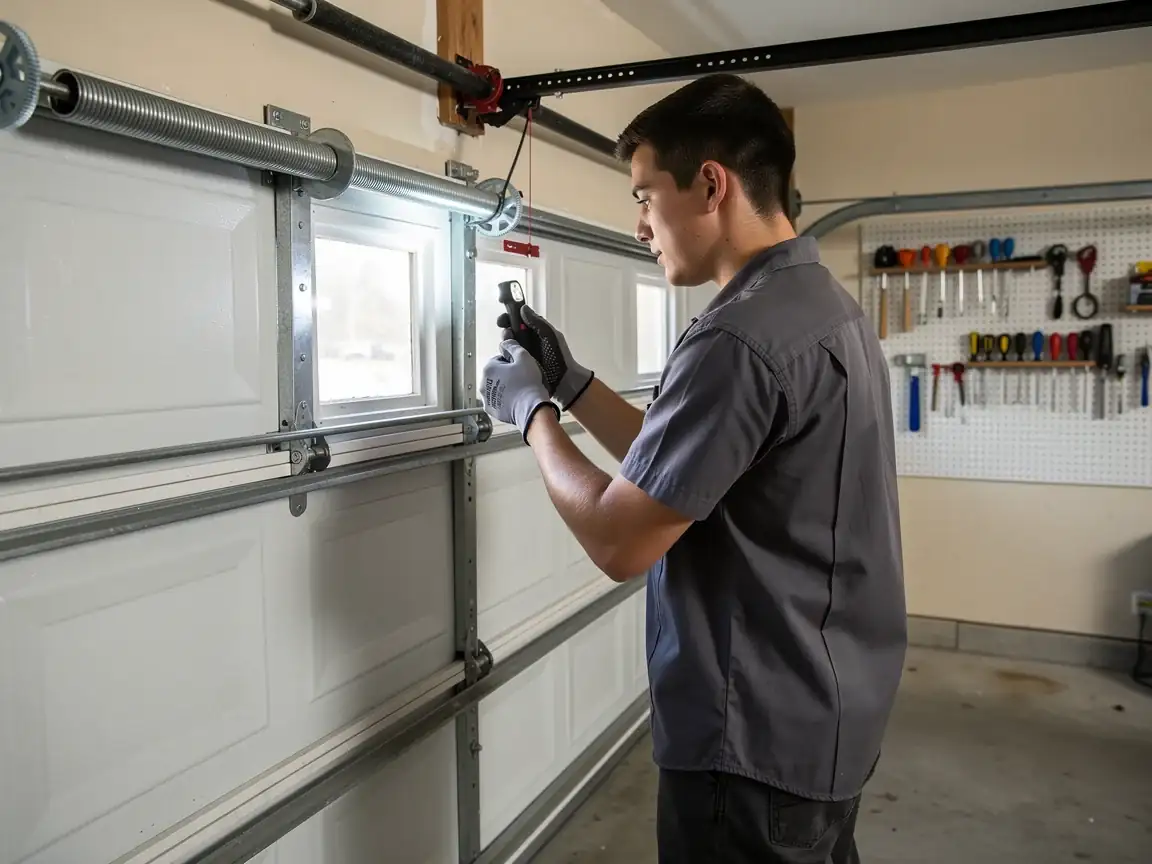
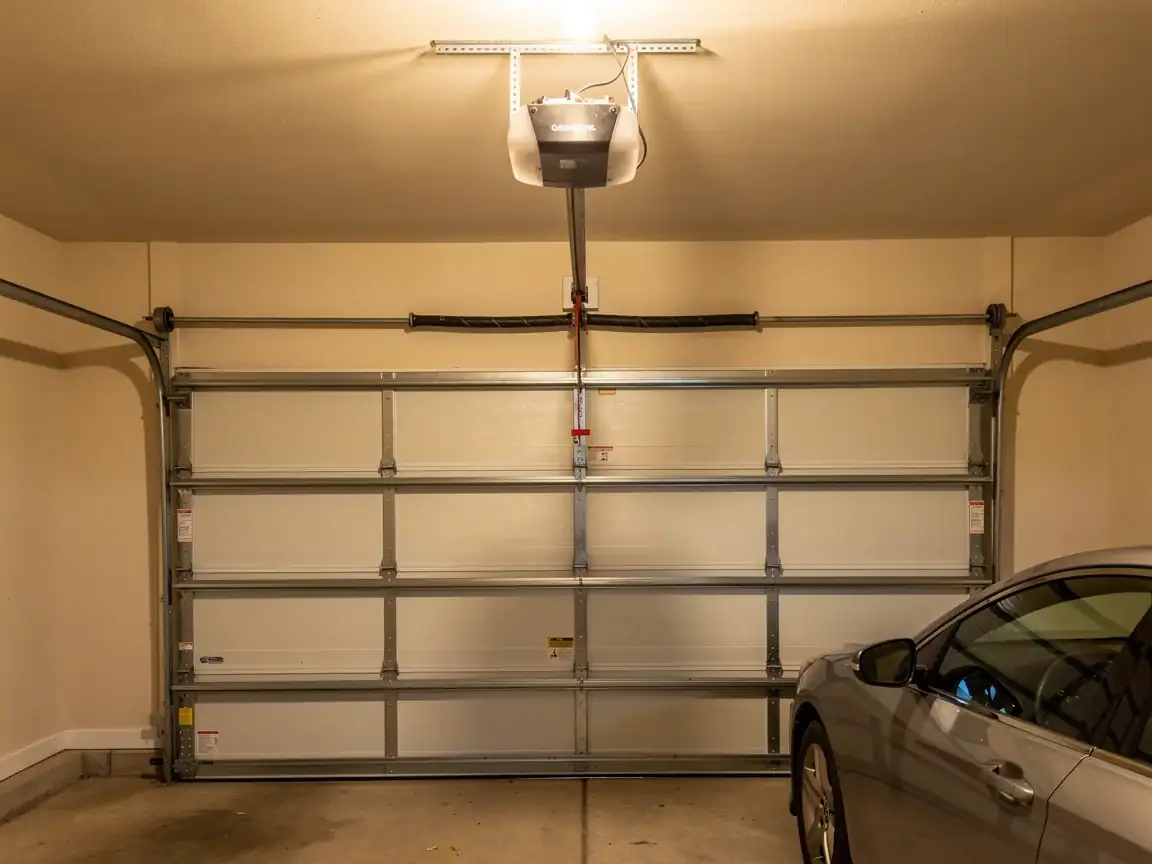
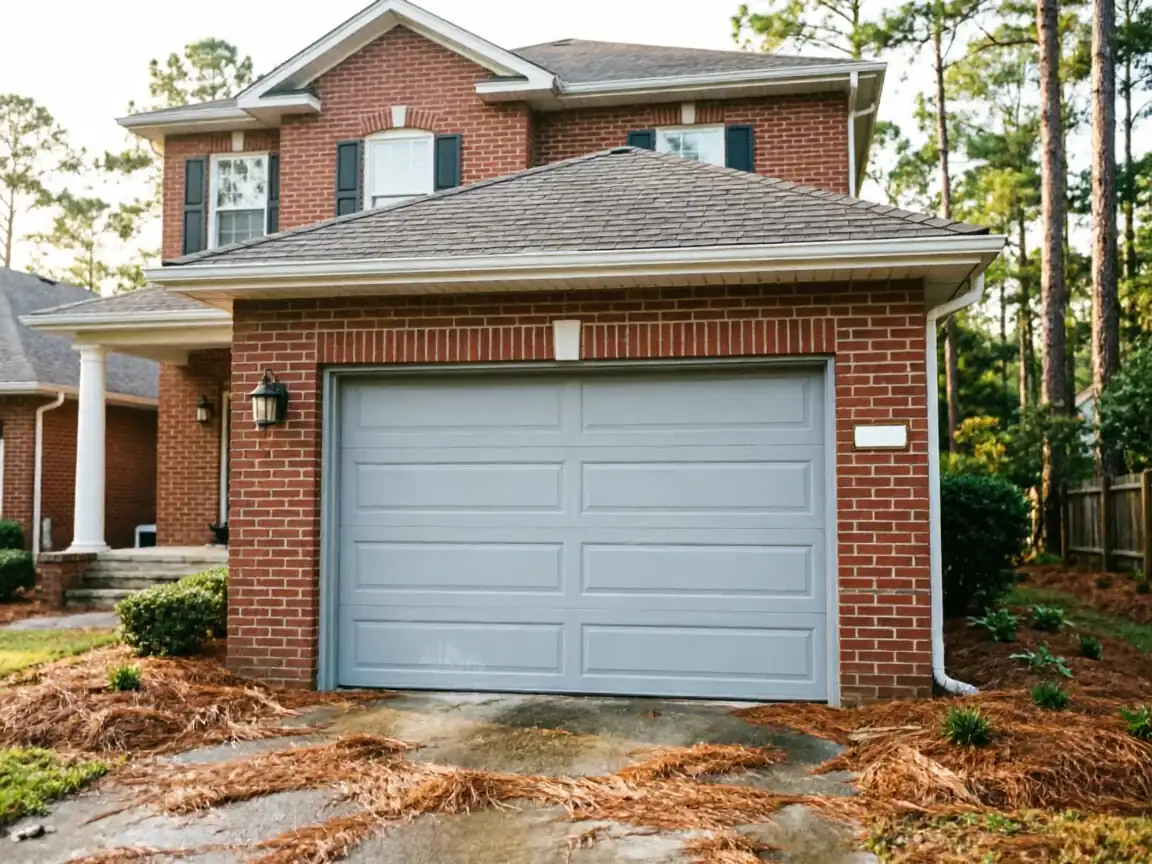
A lot of Brownsville's housing dates to right around 1982, which puts the garage doors and their hardware at an age where very little of it has likely ever been swapped out. That means original torsion springs that have cycled tens of thousands of times without replacement, original steel rollers worn oval instead of round, and track that's taken forty-plus years of expansion and contraction through cold winters without ever being reset.
The failures we see match that: a spring that finally lets go on a cold morning, a door that drops hard instead of lowering smooth, rollers grinding loud enough to hear from the kitchen. None of this is dramatic - it's just hardware reaching the end of a long, untouched run. If nobody's ever opened up the torsion assembly on a house built in that window, there's a good chance what's up there now is exactly what the builder installed.
How We Fix It
For hardware this old, we lean toward replacing the worn parts rather than patching them
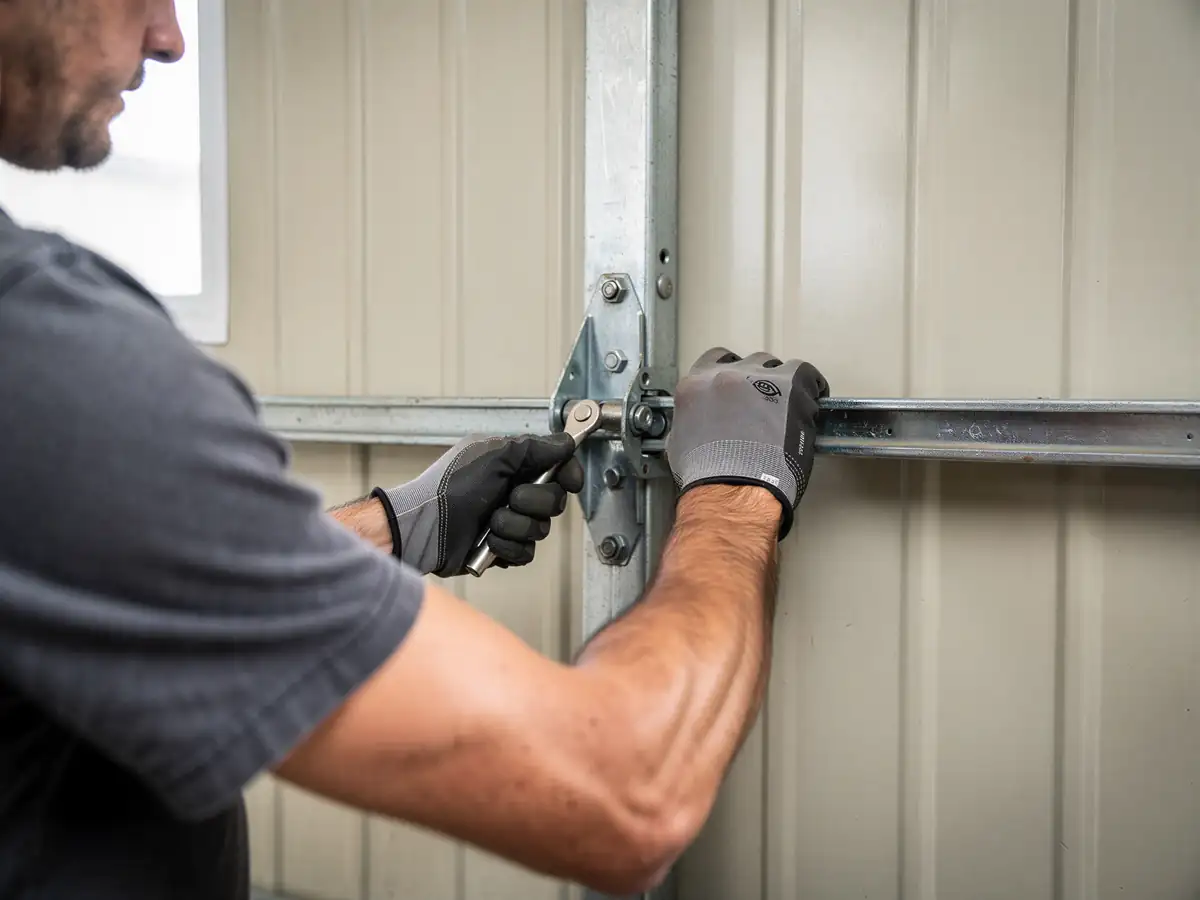
A spring that's original from a 1982 build has already outlived what most springs are rated for, and putting a new cable on next to a forty-year-old drum doesn't buy you much. We'll replace springs in matched pairs, swap rollers to sealed-bearing nylon instead of the steel ones that came with the house, and reset track that's shifted out of plumb over the decades.
What we won't do is tell you a full door replacement is the answer when a spring and roller job gets you another decade of use
Brownsville's median household income sits well under the wider service area's, and we're not going to push a $2,000 fix where $300 in hardware solves the actual problem. The honest limit here: if the door panels themselves are rusted through or the track is bent beyond resetting, repair stops making sense and we'll say so rather than keep billing hours at it.
Why This Fails Locally
Brownsville's numbers shape how these jobs get handled. Median household income here runs around $37,500, well below the roughly $46,000 median across the wider Bowling Green service area, and that gap matters when we're deciding between a repair and a replacement - a door that's merely worn gets fixed, not swapped, because a new door isn't a cost most Brownsville households can absorb for a problem a spring kit solves.
The building stock reinforces that. Most of the service area's houses date to the 1960s and 70s, with Brownsville's sitting at the later end of that run around 1982, so the openers and torsion hardware out here are a slightly newer generation than what we see on the oldest Bowling Green streets - chain-drive openers rather than the earliest screw-drive units, but still well past any manufacturer's expected spring life. With only 378 households total, there's also no local supply house holding odd parts on a shelf, which is exactly why we stock the truck before we make the drive.